In 2026, talent is everywhere, but rewards often stop at the border. If your "global" program consists of emailing a US-centric Starbucks card to employees without access to Starbucks, you aren't recognizing them, you're frustrating them. This article is about building a program where gratitude translates perfectly into every currency and culture.
While most global employee recognition programs get the platform right, many still come apart during the harder work of reaching people across a dozen countries that each have their own currency, tax rules, and idea of what recognition should look like.
Every multinational organization eventually meets this same global challenge: the head office wants one overarching system with predictable budgets, clean reporting, and a single set of rules. The employee receiving a reward in São Paulo or Jakarta wants something that fits the city they live in and the life they lead.
The problem is twofold: by centralizing everything, recognition flattens across the board. Go the other way, handing each region free rein, and you give up the consistency and oversight that ensures you can stand behind the program when the board asks what it’s buying. For years that looked like the only choice on offer. It isn't.
What is a global employee rewards program?
A global employee rewards program is a centralized system for delivering recognition and incentives across countries while accounting for local currency, tax treatment, and cultural preference. It gives organizations a single set of controls and gives each employee an experience shaped to them.
But employees expect more than just translation. Rewards that cross borders must feel equitable in impact, even when their face value shifts from one market to the next.
Truly global programs make it work by:
- Adjusting for local purchasing power
- Offering rewards people can use where they live
- Fulfilling them inside the recipient's own country instead of air-freighting a parcel across three time zones
Those are design decisions, and they take more thought than loading a single global catalog and hoping it lands everywhere.
The three pillars of global reward equity
1. Localized choice—for rewards and recognition method
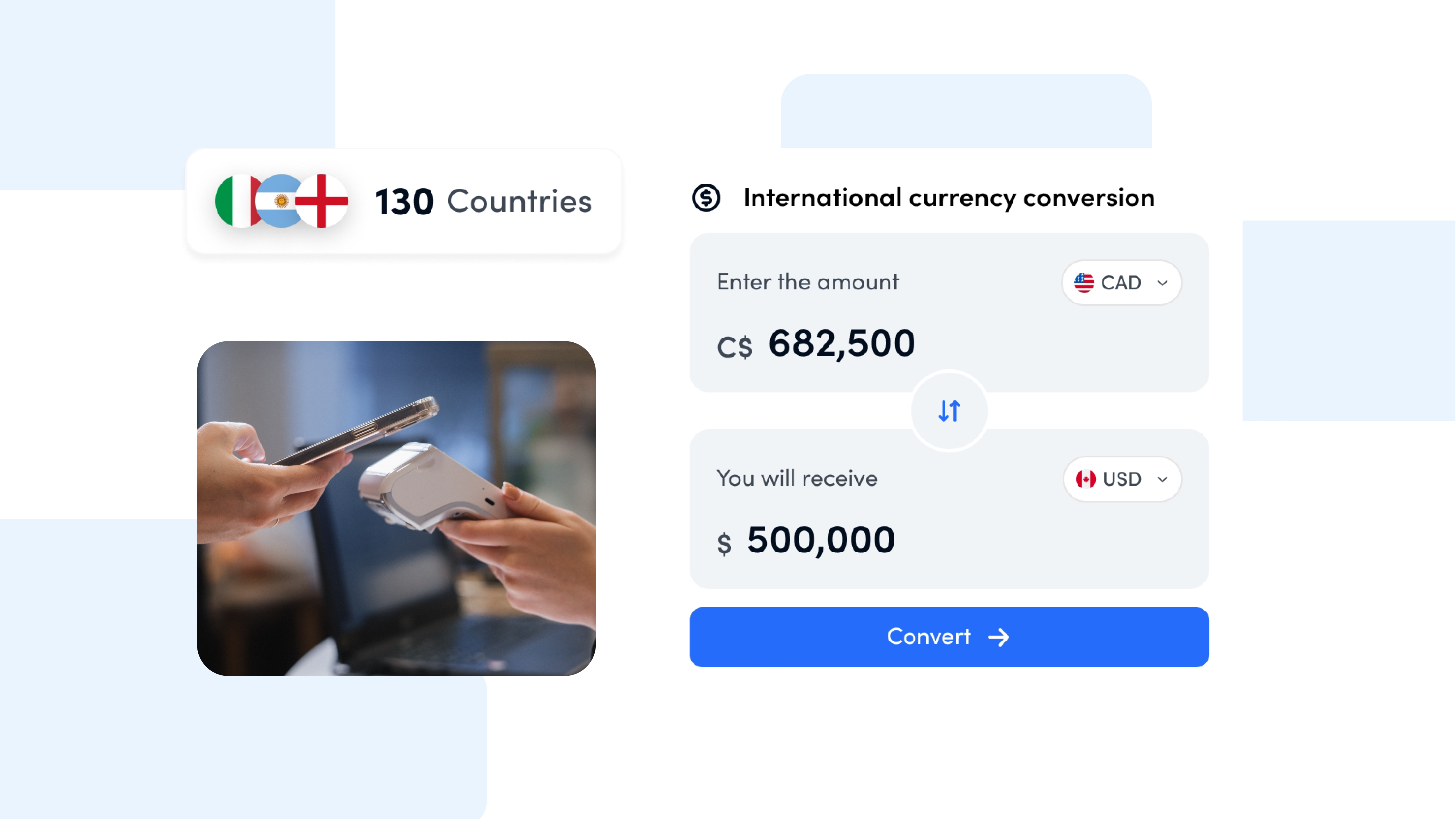
The reflex answer to make rewards global is a single multi-currency card, which sounds elegant but disappoints in practice: high fees, uneven acceptance, and ultimately something individuals have to work out for themselves.
Awardco's custom catalogs do better, letting employees spend points online, in store, and anywhere in the world that accepts a payment card, with options tailored by employee location and role. An employee in Tokyo sees brands they actually shop at, not a list of names they have to look up.
That same localization carries into how recognition is delivered, and Awardco is built to handle both. Recognition norms are not universal. Cultures differ on something as basic as whether to celebrate the individual or the team, and language adds another layer most programs never account for.
A program that only ever spotlights individuals in a company-wide feed, in English, has chosen one culture's idea of praise and handed it to everyone else under the pretense of being global. However, Awardco lets admins shape each program to its market, so managers can recognize publicly or privately, and celebrate the individual or the team, the gesture fits the person receiving it.
2. Value scaled to local reality
Five thousand points may feel generous in Mumbai but forgettable in London, because the same points buy a very different basket of goods in each.
Converting currencies doesn’t fix the issue, since it’s the same imbalance but in a new denomination. 100 points in pesos may buy a lot, but 100 points in euros may buy very little.
Purchasing power parity (PPP) does help by scaling reward value to local cost of living, so the impact someone feels stays roughly steady wherever they sit.
Learn more about equitable global rewards, rewarding offline/frontline employees, and measuring the ROI of reward programs with our guide.
3. Compliance without a massive payroll team
Gift cards, prepaid cards, and points are often taxable income, and the rules change at every border. What qualifies as a tax-free gift in one country is required reporting in another. Reconciling that by hand across dozens of countries is how finance teams lose two weeks and potentially inherit an audit risk.
A more effective approach is one place to see and adhere to everything with real-time monitoring, automated compliance, and tax categorization. Awardco's reporting, budgeting, and tax compliance capabilities streamline the parts that scale badly: tax compliance obligations with rewards and recognition for global locations.

Global employee rewards programs: three real-world examples
The “Local Hero” Strategy
Instead of one corporate card, give people in each market access to the brands they already use, the supermarket, the coffee place, the transit card, then get out of the way.
Hertz shows the model at scale. Its 26,000-person workforce spans 160 countries, with more than 80% in customer-facing, deskless roles, and Hertz uses Awardco to keep appreciation timely, personal, visible, and aligned with company values.
When most of your people never see a desk and sit in that many markets, a single uniform reward is never going to reach them. Local choice is the only version that scales.
The “Amazon Everywhere” Model
For distributed teams, the hard part of any physical reward is the last mile. Awardco's first-of-its-kind Amazon Business partnership is built for exactly that: millions of rewards delivered to employees across 180-plus countries, with free shipping, zero markups, and no inventory for anyone to manage.
Paramount put it to work after combining two companies into one 20,000-person workforce. Using Awardco's global rewards through Amazon Business, it built a single recognition culture spanning 141 countries and handed its admins back the equivalent of 52 days of manual work.
The “Lifestyle Stipend” Approach
Recognition does not have to be a one-off. Lifestyle Spending Accounts turn it into a recurring, automated benefit. Funds release on a cadence you choose, against approved categories such as wellness, home office, and personal care, with eligible spend that runs from gym memberships and fitness classes to nutrition coaching.
They can be administered for global employees and run on A-Pay cards, so spend and data sit in one system. Awardco uses this approach on its own staff, which is a fair test of whether it works: running on its own platform, the company reports a 53% year-over-year rise in eNPS, around 8% above benchmark, and retention roughly 6% higher than the industry standard.
The shipping cost nobody budgets for
Cross-border employee gifting carries a hidden line item: landed cost—the customs, duties, and freight that can often exceed the value of the gift inside the box.
So when speed matters, international gift cards for employees do the job when nothing else can: they land in an inbox in seconds, where a parcel reaches a loading dock in weeks. Digital rewards arrive in the moment, and anything sourced locally skips the cross-border friction altogether.
One cash-like reward option that offers instant, self-serve reward redemption is Awardco’s Revolut integration. Revolut supports holding, trading, and spending currencies in 160+ countries all over the world, and Awardco allows employees to redeem their points, dollar-for-dollar, to their existing Revolut accounts.

Where this leaves you
In today’s global work environment, you need reward catalogs that reach every employee and offer equal value. Otherwise, disappointment and frustration will replace the excitement and gratitude that rewards are supposed to create.
Ready to build a borderless culture? Explore Awardco's global rewards marketplace and give every employee a reward that means something where they live.





.svg)








.svg)