Maximizing Employee Recognition on Any Budget

New research reveals how recognition impacts teams, builds leaders and unlocks motivation
Employee Recognition Programmes
Learn what it takes to build the best employee recognition programmes
Rewards Marketplace
Consolidate all things recognition into one, simple-to-use platform

Employee Rewards Strategy Guide

INCENTIVE TAXONOMY & REWARD UTILITY
Core modalities of modern rewards and recognition
The most common types of employee rewards include points-based rewards, company swag, experiences, charitable donations, gift cards, prepaid cards, service awards, and performance incentives. The best reward type depends on employee preference, company culture, budget, location, and the moment being recognized.
A strong rewards program gives employees options. The more diverse your reward catalog, the easier it is to support different roles, regions, interests, and life stages.
1. Points-based rewards with freedom of choice
Points give employees the flexibility to choose the reward that matters most to them.
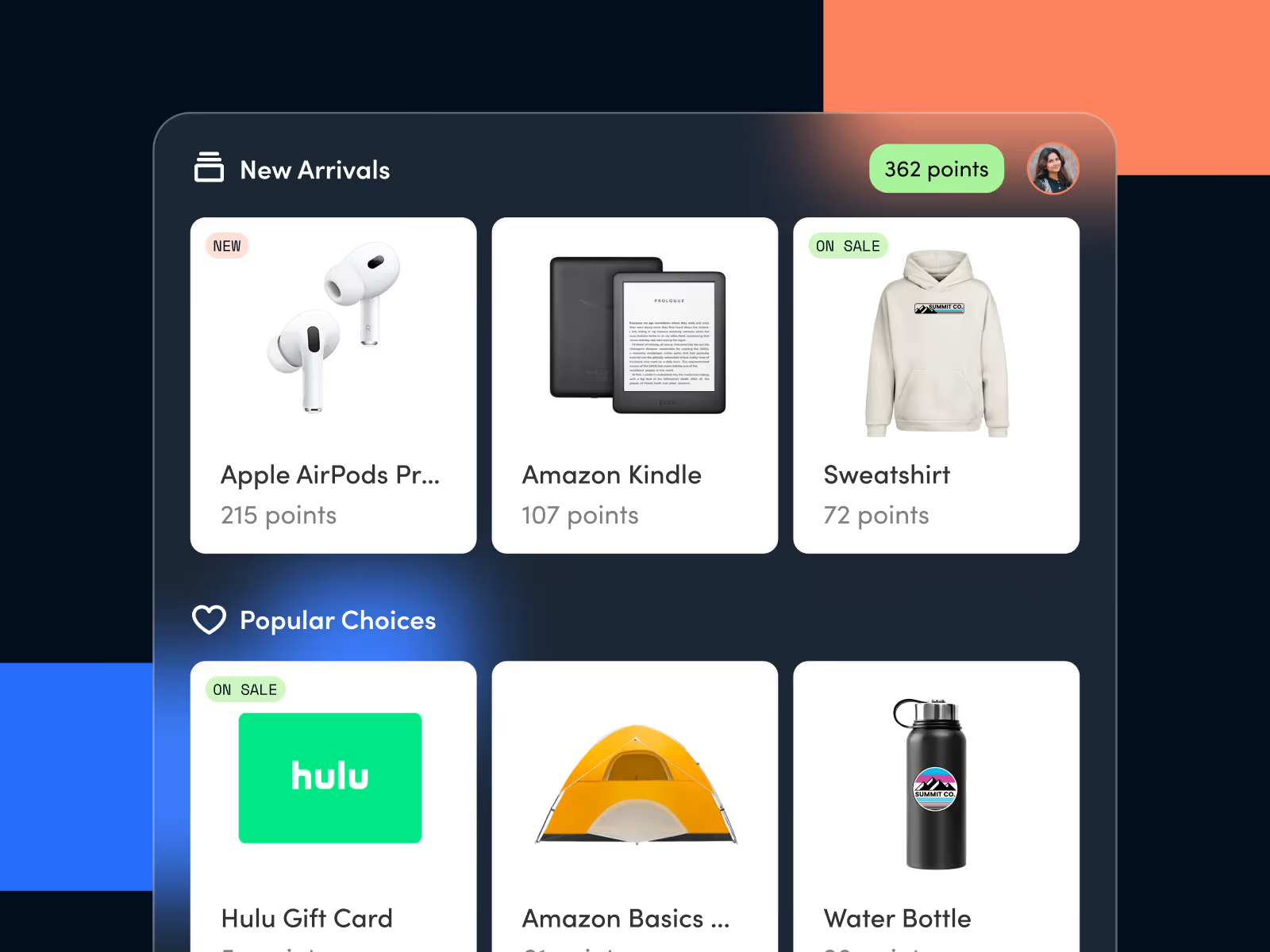
Instead of guessing what someone wants, organizations can give employees access to a broad rewards marketplace where they can redeem points for items, experiences, gift cards, donations, or other meaningful options.
This approach makes rewards more personal without creating extra administrative work for HR teams.
2. Company swag employees actually want
Company swag can work—but only when it’s high quality, useful, and not overloaded with branding.
Employees are more likely to use and appreciate swag that feels like something they would choose for themselves. Think premium apparel, practical gear, or lifestyle items with subtle branding.
3. Experiences
Experiences help employees create memories.
Event tickets, hotel stays, travel vouchers, local activities, and bucket-list experiences can turn a reward into something employees talk about long after the moment has passed.
Experiential rewards are especially powerful because they connect recognition to a real-life memory.
4. Charitable donations
Charitable donations allow employees to direct reward value toward causes they care about.
This is a meaningful option for employees who are motivated by purpose, community impact, or values alignment. It can also reinforce an organization’s broader culture and mission.
5. Prepaid and gift cards
Gift cards and prepaid cards can be useful when they align with employee preferences and regional availability.
They’re especially helpful in locations where broader reward options may be limited. However, they should be offered with care because they can feel cash-like and may have different tax implications depending on the country or region.
PURCHASING POWER PARITY & ETHICAL SCALE
Beyond Currency Conversion: Designing Globally Equitable Reward Architectures
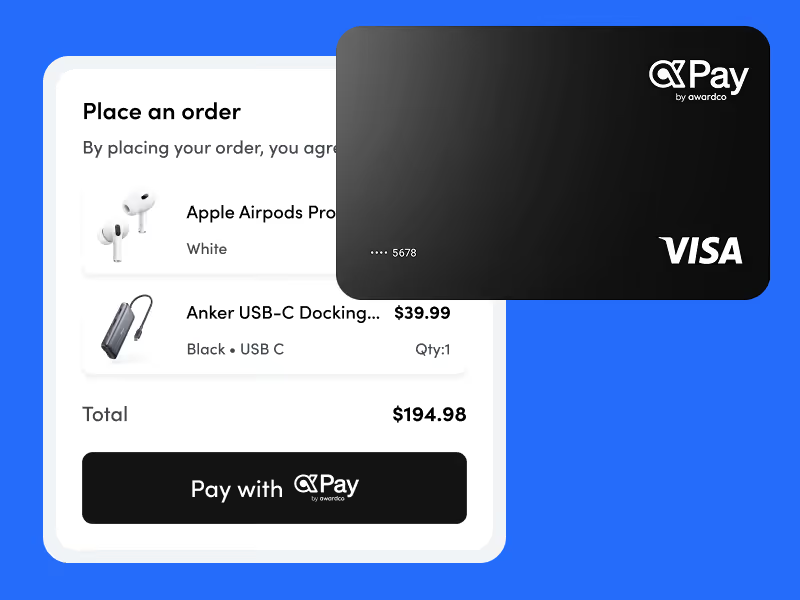
To make employee rewards equitable globally, companies should adjust reward value based on local purchasing power, offer locally relevant redemption options, use regional fulfillment where possible, and give employees flexibility to choose rewards that are meaningful in their location.
Global rewards are challenging because value changes by country, region, currency, and local availability. A reward that feels generous in one country may feel insignificant in another.
Purchasing Power Parity can help, but it doesn’t solve everything. For example, the same point value may cover a full meal in one country but barely cover a coffee in another.
That’s why global reward equity requires more than simple currency conversion.
To create equitable global rewards, organizations should consider:
- Local cost of living
- Local purchasing power
- Regional reward availability
- Shipping and fulfillment options
- Customs and duties
- Cultural preferences
- Employee choice
GLOBAL OPERATIONAL STANDARDS
Best practices for global employee rewards
Automate purchasing power adjustments so reward value feels equitable across locations.
Review local reward options so employees don’t receive gift cards or rewards they can’t realistically use.
Use local fulfillment when possible to reduce shipping delays, customs costs, and delivery friction.
Offer flexible reward options so employees can choose what fits their culture, lifestyle, and personal preferences.


PROGRAM EFFICACY & ROI
Measuring the ROI of a High-Impact Rewards Strategy
The ROI of employee rewards can be measured through redemption rate, budget utilization, participation, recognition frequency, engagement trends, and retention outcomes. Redemption rate shows whether employees value the rewards, while budget utilization shows whether managers are actively using the program.
A great rewards strategy should be measurable, not just well-intentioned. Two of the most important indicators are redemption rate and budget utilization.
SENTIMENT ANALYSIS & ADOPTION METRICS
Redemption rate: are employees using their rewards?
Redemption rate shows whether employees are actually redeeming the rewards they receive.
If employees aren’t redeeming points or rewards, your catalog may not be compelling enough. Rewards may be overpriced, irrelevant, too limited, or difficult to access.
A healthy redemption rate is often around 80%. If your rate is lower, review your reward options, pricing, accessibility, and communication strategy.
PROGRAM ADOPTION & WORKFLOW SYNERGY
Budget utilization: are managers giving rewards?
Budget utilization shows whether managers are actually using the reward budget available to them.
If budgets consistently roll over or go unused, managers may need additional training, reminders, or clearer guidance. Low utilization can also signal that the program is too difficult to use or not embedded into daily workflows.
Strategic Foresight
Other reward program metrics to track
In addition to redemption and budget utilization, consider tracking:
- Recognition frequency
- Reward frequency
- Manager participation
- Peer-to-peer participation
- Reward redemption trends
- Engagement survey movement
- Retention trends
- Program adoption by department or location
Strategic Recap
Summary: Granular Indicators of Program Vitality
Cash vs. non-cash rewards
Cash is useful, but it’s often forgotten because it blends into everyday spending. Non-cash rewards are more memorable because they create emotional connection and reinforce the behavior being recognized.
Types of employee rewards
High-impact reward options include points-based rewards, company swag, experiences, charitable donations, prepaid cards, gift cards, service awards, and performance incentives. The strongest programs give employees meaningful choice.
Global employee rewards
Global rewards should account for local purchasing power, regional reward availability, fulfillment options, and employee preferences. Equity means the reward feels meaningful wherever the employee lives.
Inclusive rewards
Deskless, offline, and remote employees need reward experiences that meet them where they are. Mobile access, QR-code reward cards, mailed gift boxes, and third-party recognition can help make rewards accessible to everyone.
Budgeting and taxes
Rewards should be meaningful, sustainable, and compliant. Gift cards, prepaid cards, points, and other cash equivalents may be taxable, so employers should review local rules and consider grossing up rewards.
Measuring ROI
Reward program ROI can be measured through redemption rate, budget utilization, participation, recognition frequency, engagement trends, and retention outcomes. Strong measurement helps teams improve the program over time.
Evaluating Reward Marketplaces
Choose a platform that delivers meaningful rewards globally and stays easy to manage
Employee Experience
Choose a rewards marketplace with real choice, local relevance, and quality employees will value
Awardco’s research suggests it should happen at least quarterly, with engagement dropping sharply when employees go longer than three months without it.
Employee Rewards FAQs
FAQs
Answers to the most frequently asked questions about employee recognition
Employee rewards are important because they reinforce behaviors that drive performance, culture, and engagement.
When rewards are timely, meaningful, and personalized, they can increase motivation, improve retention, strengthen culture, and help employees feel valued for their contributions.
Start by defining the behaviors, outcomes, and milestones you want to encourage.
Then build a balanced rewards strategy that includes monetary, non-monetary, and low-cost options. Focus on timing, personalization, manager participation, and consistency across teams.
The most effective programs make it easy for managers and peers to recognize great work in the moment.
Look for an employee rewards platform that makes rewards timely, flexible, personalized, and easy to manage.
Key features include:
- A wide range of reward options
- Employee choice
- Global scalability
- Customization controls
- Budget visibility
- Reporting and analytics
- Mobile accessibility
- Tax and compliance support
- Real-time recognition tools
A strong platform should help you deliver meaningful rewards, track program impact, and scale recognition across locations and employee groups.
Explore More
Related resources