Maximizing Employee Recognition on Any Budget

Learn how to maximize your recognition budget while driving real results for your organization's bottom line.
Rewards & Recognition in the Workplace
Transform your workplace with these practical ideas and examples for effective employee rewards and recognition.
Rewards Marketplace
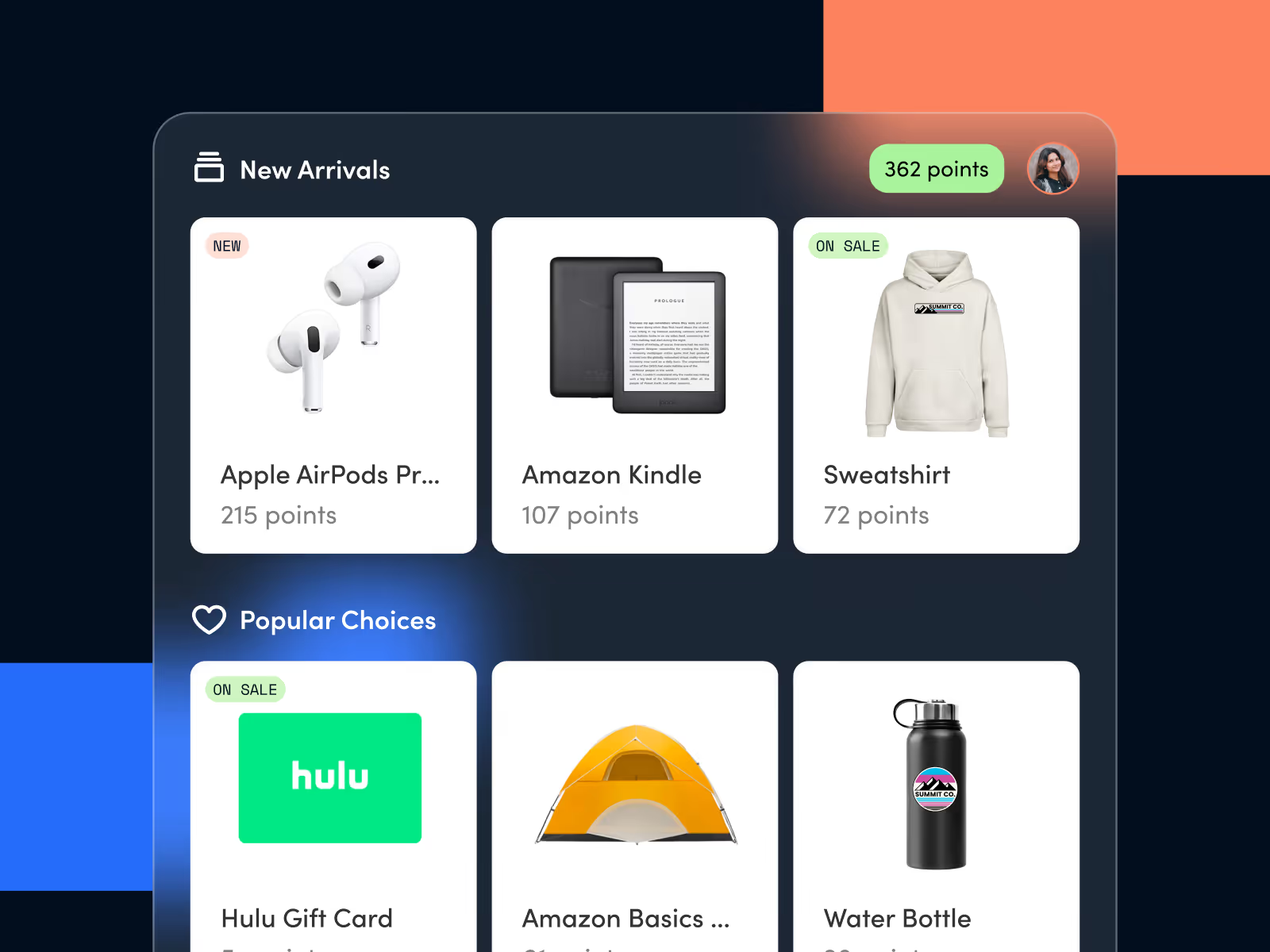
Give your team the power of choice with the world's largest rewards marketplace, featuring Amazon, travel, and global gift cards.

Employee Rewards Strategy Guide
The foundation of great employee rewards
BEHAVIORAL ECONOMICS & RETENTION
Why non-cash rewards outperform currency in emotional ROI
Research from University of Waterloo found non-cash rewards are often more effective than cash because they create stronger emotional connections, are more memorable, and better reinforce the behavior being recognized. Cash has obvious value, but it’s often spent on everyday expenses and quickly forgotten.
Many employees say they want money—and of course, cash can provide instant value. But as a reward, it can feel transactional. It may pay for groceries, gas, or a bill, but it rarely creates a lasting connection between the employee’s contribution and the organization’s appreciation.
Non-cash rewards work differently. A meaningful item, experience, donation, or personalized reward can become a story employees remember and associate with the organization.
That emotional connection matters.
Cash can feel like compensation. Non-cash rewards can feel like appreciation.
The most effective rewards programs don’t rely on a single reward type. They give employees choice, allowing each person to choose what feels most meaningful to them.

INCENTIVE TAXONOMY & REWARD UTILITY
Core modalities of modern rewards and recognition
The most common types of employee rewards include points-based rewards, company swag, experiences, charitable donations, gift cards, prepaid cards, service awards, and performance incentives. The best reward type depends on employee preference, company culture, budget, location, and the moment being recognized.
A strong rewards program gives employees options. The more diverse your reward catalog, the easier it is to support different roles, regions, interests, and life stages.
1. Points-based rewards with freedom of choice
Points give employees the flexibility to choose the reward that matters most to them.
Instead of guessing what someone wants, organizations can give employees access to a broad rewards marketplace where they can redeem points for items, experiences, gift cards, donations, or other meaningful options.
This approach makes rewards more personal without creating extra administrative work for HR teams.
2. Company swag employees actually want
Company swag can work—but only when it’s high quality, useful, and not overloaded with branding.
Employees are more likely to use and appreciate swag that feels like something they would choose for themselves. Think premium apparel, practical gear, or lifestyle items with subtle branding.
3. Experiences
Experiences help employees create memories.
Event tickets, hotel stays, travel vouchers, local activities, and bucket-list experiences can turn a reward into something employees talk about long after the moment has passed.
Experiential rewards are especially powerful because they connect recognition to a real-life memory.
4. Charitable donations
Charitable donations allow employees to direct reward value toward causes they care about.
This is a meaningful option for employees who are motivated by purpose, community impact, or values alignment. It can also reinforce an organization’s broader culture and mission.
5. Prepaid and gift cards
Gift cards and prepaid cards can be useful when they align with employee preferences and regional availability.
They’re especially helpful in locations where broader reward options may be limited. However, they should be offered with care because they can feel cash-like and may have different tax implications depending on the country or region.
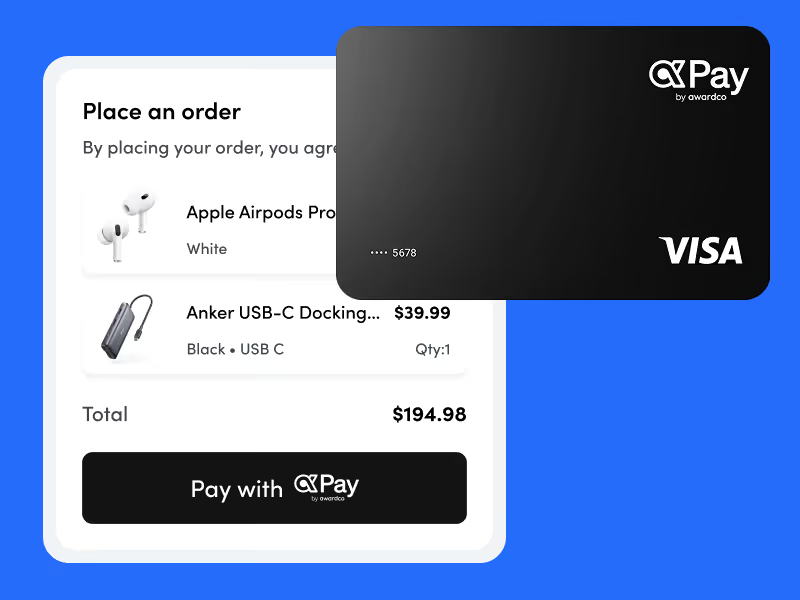
PURCHASING POWER PARITY & ETHICAL SCALE
Beyond Currency Conversion: Designing Globally Equitable Reward Architectures
To make employee rewards equitable globally, companies should adjust reward value based on local purchasing power, offer locally relevant redemption options, use regional fulfillment where possible, and give employees flexibility to choose rewards that are meaningful in their location.
Global rewards are challenging because value changes by country, region, currency, and local availability. A reward that feels generous in one country may feel insignificant in another.
Purchasing Power Parity can help, but it doesn’t solve everything. For example, the same point value may cover a full meal in one country but barely cover a coffee in another.
That’s why global reward equity requires more than simple currency conversion.
To create equitable global rewards, organizations should consider:
- Local cost of living
- Local purchasing power
- Regional reward availability
- Shipping and fulfillment options
- Customs and duties
- Cultural preferences
- Employee choice
GLOBAL OPERATIONAL STANDARDS
Best practices for global employee rewards
Automate purchasing power adjustments so reward value feels equitable across locations.
Review local reward options so employees don’t receive gift cards or rewards they can’t realistically use.
Use local fulfillment when possible to reduce shipping delays, customs costs, and delivery friction.
Offer flexible reward options so employees can choose what fits their culture, lifestyle, and personal preferences.

SUSTAINABLE BUDGETARY FRAMEWORKS
REWARD INTEGRITY & COMPLIANCE
Employee rewards may be taxable, especially gift cards, prepaid cards, points, and other cash equivalents. In the U.S., gift cards are generally taxable from the first dollar. Employers should review local tax rules and may choose to gross up rewards so employees receive the full intended value.
Employee rewards need to feel meaningful, but they also need to be financially sustainable and compliant.
A strong rewards budget should support frequent, everyday recognition as well as larger moments like holidays, anniversaries, milestones, and major accomplishments.
As a general guideline, many organizations should aim for a rewards budget around 1–2% of payroll. This gives teams enough flexibility to support smaller, frequent rewards while still funding larger recognition moments throughout the year.
GLOBAL TAXATION & COMPLIANCE PROTOCALS
Are employee rewards taxable?
In the United States, many rewards with tangible value, such as gift cards, points, merchandise, and prepaid cards, may be considered taxable income. Gift cards and other cash equivalents are generally taxable from the first dollar.
Tax rules vary by country and local region, so global employers should review local regulations and work with tax or legal advisors.
What are de minimis benefits?
De minimis benefits are low-value, infrequent benefits that may be excluded from taxable income in certain situations. However, they usually need to meet specific criteria, such as being occasional, low in value, and not cash or cash equivalent.
Because points, gift cards, and prepaid cards can be treated differently from small tangible items, employers should be careful about assuming a reward qualifies as de minimis.
Should employers gross up rewards?
Many organizations choose to gross up rewards, meaning the employer covers the tax burden so the employee receives the full intended value of the reward.
This helps preserve the emotional impact of the reward. After all, a $100 reward feels less rewarding if the employee sees a tax hit later.

PROGRAM EFFICACY & ROI
Measuring the ROI of a High-Impact Rewards Strategy
The ROI of employee rewards can be measured through redemption rate, budget utilization, participation, recognition frequency, engagement trends, and retention outcomes. Redemption rate shows whether employees value the rewards, while budget utilization shows whether managers are actively using the program.
A great rewards strategy should be measurable, not just well-intentioned. Two of the most important indicators are redemption rate and budget utilization.
SENTIMENT ANALYSIS & ADOPTION METRICS
Redemption rate: are employees using their rewards?
Redemption rate shows whether employees are actually redeeming the rewards they receive.
If employees aren’t redeeming points or rewards, your catalog may not be compelling enough. Rewards may be overpriced, irrelevant, too limited, or difficult to access.
A healthy redemption rate is often around 80%. If your rate is lower, review your reward options, pricing, accessibility, and communication strategy.
PROGRAM ADOPTION & WORKFLOW SYNERGY
Budget utilization: are managers giving rewards?
Budget utilization shows whether managers are actually using the reward budget available to them.
If budgets consistently roll over or go unused, managers may need additional training, reminders, or clearer guidance. Low utilization can also signal that the program is too difficult to use or not embedded into daily workflows.
Strategic Foresight
Other reward program metrics to track
In addition to redemption and budget utilization, consider tracking:
- Recognition frequency
- Reward frequency
- Manager participation
- Peer-to-peer participation
- Reward redemption trends
- Engagement survey movement
- Retention trends
- Program adoption by department or location
Strategic Recap
Summary: Granular Indicators of Program Vitality
Cash vs. non-cash rewards
Cash is useful, but it’s often forgotten because it blends into everyday spending. Non-cash rewards are more memorable because they create emotional connection and reinforce the behavior being recognized.
Types of employee rewards
High-impact reward options include points-based rewards, company swag, experiences, charitable donations, prepaid cards, gift cards, service awards, and performance incentives. The strongest programs give employees meaningful choice.
Global employee rewards
Global rewards should account for local purchasing power, regional reward availability, fulfillment options, and employee preferences. Equity means the reward feels meaningful wherever the employee lives.
Inclusive rewards
Deskless, offline, and remote employees need reward experiences that meet them where they are. Mobile access, QR-code reward cards, mailed gift boxes, and third-party recognition can help make rewards accessible to everyone.
Budgeting and taxes
Rewards should be meaningful, sustainable, and compliant. Gift cards, prepaid cards, points, and other cash equivalents may be taxable, so employers should review local rules and consider grossing up rewards.
Measuring ROI
Reward program ROI can be measured through redemption rate, budget utilization, participation, recognition frequency, engagement trends, and retention outcomes. Strong measurement helps teams improve the program over time.
Evaluating Reward Marketplaces
Choose a platform that delivers meaningful rewards globally and stays easy to manage
Choosing an employee rewards marketplace should be more than a feature comparison. A strong evaluation should focus on three things:
- Whether the platform helps you deliver rewards that feel meaningful to all employees
- Whether it works across different regions, roles, and currencies
- Whether it remains manageable for your team over time
Employee Experience
Choose a rewards marketplace with real choice, local relevance, and quality employees will value
The best evaluations start with the employee experience. Look for a reward marketplace that offers people real choice—marketplace breadth matters, but reward relevance, local availability, and item quality, and the flexibility to curate desirable rewards are all just as important. The goal is to make sure employees can choose rewards they actually value instead of settling for a limited set of options.
Marketplace Scale
Choose a marketplace that scales globally and stays accessible across regions and locales.
From there, evaluate how well the marketplace scales across your organization. That includes global availability, local relevance, fulfillment options, mobile accessibility, and support for deskless, remote, or offline workers. If rewards are difficult to access, ship, redeem, or use in certain regions, the experience quickly becomes inconsistent.
Admin & Reporting
Choose a marketplace with strong admin controls, clear reporting, and the flexibility to improve over time.
It is also important to closely examine the admin side of the platform. Teams should be able to manage budgets, monitor usage, support tax and compliance needs, and understand which rewards are driving engagement—all without adding manual work to their plates. Look for strong reporting that helps you measure participation, redemption, and program impact so your rewards strategy can improve over time.
In short, the right marketplace should make rewards more meaningful for employees and easier to manage for the business. When evaluating options, look for a solution that combines meaningful choice, transparent reward economics, global and locally relevant fulfillment, strong administrative control, and measurable program impact.
Admin & Reporting
Use this checklist to compare rewards platforms side by side.
- Broad reward choice with options employees truly want and can actually use
- Transparent pricing with zero hidden fees, minimal markups, and no delivery friction
- Global reach with locally relevant rewards and fulfillment
- Mobile-friendly access for deskless, frontline, and remote employees
- Budget visibility, configurable catalogs, and administrative control
- Reporting that helps track redemption, participation, and ROI
- Support for tax, compliance, and regional complexity
Employee Rewards FAQs
FAQs
Answers to the most frequently asked questions about employee recognition
Employee rewards are tangible benefits, items, experiences, or monetary-value incentives given by an organization to acknowledge employee achievements, milestones, behaviors, or contributions.
They can include points, merchandise, gift cards, experiences, company swag, charitable donations, prepaid cards, service awards, holiday gifts, and performance-based incentives.
Employee rewards are typically given in addition to regular compensation. Unlike salary or benefits, they’re designed to feel timely, meaningful, and connected to a specific moment of appreciation.
Rewards, employee recognition, and compensation each support the employee experience, but they serve different purposes.
Compensation is the baseline. It includes expected pay and benefits, such as salary, insurance, 401(k), and PTO.
Recognition is the emotional and social acknowledgment of an employee’s contribution. It might come through peer praise, manager feedback, or a public shoutout.
Rewards are the tangible validation of that recognition. They add economic or experiential value to the moment.
Put simply: recognition says, “We see what you did.” Rewards say, “We value it enough to reinforce it.” Compensation says, “This is the expected value of your role.”
Employee rewards are usually tied to a specific action, behavior, achievement, or outcome. Gifts are more often unexpected gestures of goodwill, such as birthday gifts, holiday gifts, or life event gifts.
In practice, gifts often fit under the broader employee rewards umbrella. Both rewards and gifts help create positive employee moments, reinforce company culture, and show appreciation in tangible ways.
Employee-earned points do not have to expire. Many organizations choose not to set an expiration date so employees have the flexibility to redeem rewards when the reward feels most meaningful.
However, organizations may apply “use it or lose it” rules to manager budgets, annual allocations, or accounting policies. These guidelines can encourage timely recognition and help teams use reward budgets consistently.
Yes. In the United States, the IRS generally treats gift cards and other cash equivalents, including points, as taxable from the first dollar.
For global teams, tax treatment varies by country, region, and reward type. Employers should review local rules before launching or scaling a global rewards program.
Employee rewards are important because they reinforce behaviors that drive performance, culture, and engagement.
When rewards are timely, meaningful, and personalized, they can increase motivation, improve retention, strengthen culture, and help employees feel valued for their contributions.
Start by defining the behaviors, outcomes, and milestones you want to encourage.
Then build a balanced rewards strategy that includes monetary, non-monetary, and low-cost options. Focus on timing, personalization, manager participation, and consistency across teams.
The most effective programs make it easy for managers and peers to recognize great work in the moment.
Look for an employee rewards platform that makes rewards timely, flexible, personalized, and easy to manage.
Key features include:
- A wide range of reward options
- Employee choice
- Global scalability
- Customization controls
- Budget visibility
- Reporting and analytics
- Mobile accessibility
- Tax and compliance support
- Real-time recognition tools
A strong platform should help you deliver meaningful rewards, track program impact, and scale recognition across locations and employee groups.
Explore More
Related resources