

Download white paper
Submission successful!
Submission successful!

The state of the workplace
Something has gone wrong with how organisations show appreciation for their people, and the data backs it up. Gallup's 2025 State of the Global Workplace report found that only 21% of employees worldwide are engaged at work, an 11-year low, and the drop in engagement cost the global economy an estimated $438 billion in lost productivity in 2024.
Recognition is one of the few workplace investments that moves the needle on engagement, retention, and performance without requiring a massive budget or a total culture overhaul. That makes it valuable for every organisation. But it matters differently, and arguably more urgently, for small and medium-sized businesses (SMBs).
Small businesses run on something bigger companies often lose along the way: a small-town feel. Everyone knows everyone. Wins get celebrated in real time. A struggling teammate gets noticed before a problem becomes a crisis.
That closeness is a genuine competitive advantage, but it's fragile. Maintaining the intimate culture your people love takes intentional effort—especially as your organisation grows.
The current recognition gap
Despite how much research points to recognition as a driver of engagement and retention, most employees still aren't getting enough of it. Awardco's 2026 State of Recognition report found that only 62% of employees had received meaningful recognition in the past three months, meaning more than a quarter of the workforce is going regularly unnoticed.
The impact? A 40 point drop in engagement scores between employees who were recognised and those who weren’t.
For a large enterprise, that gap will most likely be noticed and fixed by an HR team building out a formal recognition programme.
For a small business, there's often no one whose job it is to notice the gap, let alone do anything about it.
Why recognition matters in small business
Small businesses aren't just smaller versions of large enterprises. They face a distinct set of pressures that shape how (and whether) recognition happens.
- No dedicated HR support. According to BambooHR, 88% of employees have worked for a small company with no dedicated HR person. Culture-building—including recognition—tends to fall to owners, office managers, or whoever has the bandwidth that week, which means it's the first thing to slip when things get busy.
- Tighter budgets and fewer perks. SMBs typically can't match enterprise compensation, benefits, or perks pound for pound. That puts pressure on every other lever available to attract and keep good people.
- A harder hiring market. Pipedrive's State of SMB Hiring Report found that half of small and mid-sized businesses struggled to fill open roles in 2025, which makes every current employee more valuable to retain.
- Turnover costs hit harder. Small businesses spend an estimated 12.5% of their annual payroll on turnover costs. On a lean team, losing even one or two people can disrupt daily operations in a big way.
- Burnout from wearing more hats. Small teams mean employees often absorb multiple roles. Research shows the burnout levels among employees has jumped 15% in the last few years, up to 51% of people experiencing burnout in the past year. For small business owners, 84% of them say their mental health has suffered from stress.
Recognition is one of the few tools that allows for such flexibility in tackling specific cultural challenges.
How recognition solves SMB-specific challenges
More recognition instead of greater compensation
Budgets are tight, and SMBs may not be able to win a bidding war on salary. The good news? They don't have to.
A McKinsey survey of more than 1,000 employees found that non-cash forms of recognition were rated as being just as effective as the top financial incentives, including cash bonuses and increased base pay.
For a small business competing against larger, better-funded rivals for talent, this is the opening: you may not be able to out-pay the competition, but you can out-recognise them.
Building a positive culture foundation
For a small business, culture isn't a slide in an onboarding deck. It's the actual, felt experience of working there, and it's shaped by leadership more directly than it would be in a company with layers of middle management between the CEO and the front line.
Recognition gives that culture a deliberate shape instead of letting it form by accident.
Research from Bersin by Deloitte found that companies with strong, recognition-rich cultures see 31% lower voluntary turnover than those without. A large-scale, peer-reviewed study of more than 25,000 employees backs this up further, finding that recognition significantly boosts engagement.
SMBs have the amazing opportunity to create a culture by design, not default, that recognises good work, reinforces productivity, and folds company core values into daily activities. Recognition is the key to all of it.
Improve retention and lower burnout with recognition
That same academic research found recognition plays a measurable role in reducing burnout by counterbalancing job demands and improving emotional and physiological wellbeing.
Well-recognised employees are also 45% less likely to have left their organisations, reinforcing the idea that employees who feel recognised are less stressed, happier, and less likely to quit.
This is especially important for an SMB since every departure means a bigger percentage of the team walking out the door, plus the time and cost of rehiring and retraining on already-thin margins.
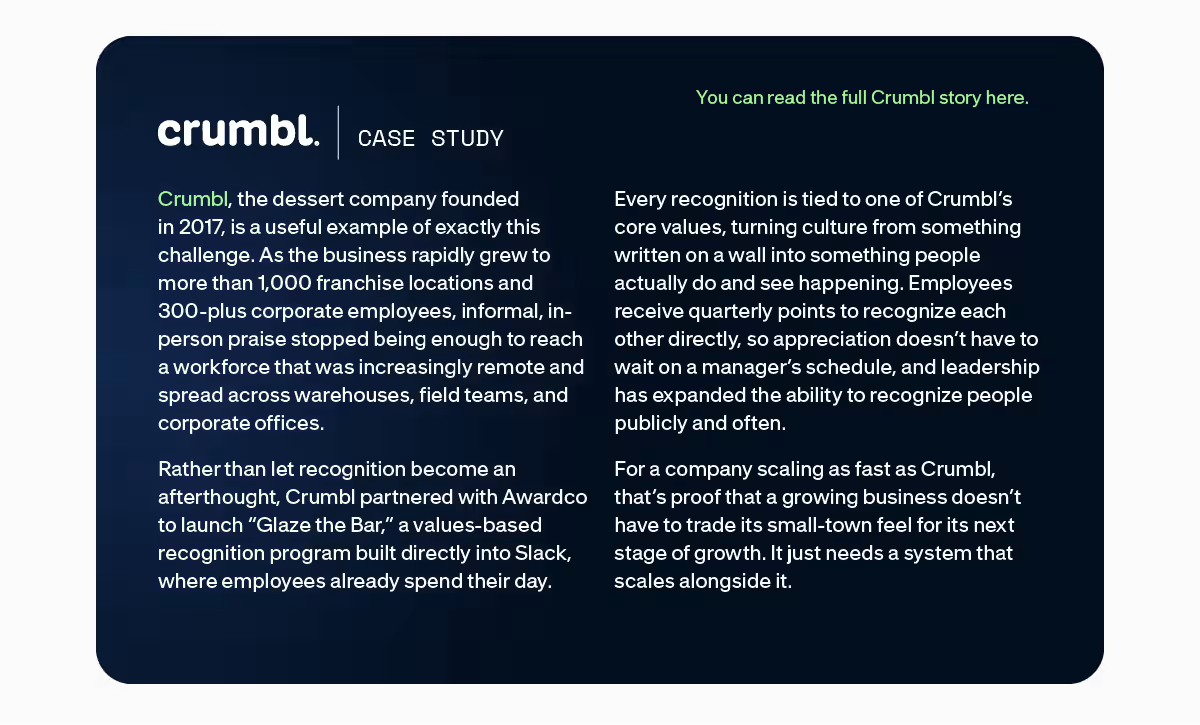
How Crumbl scaled recognition without losing its culture
Strategies for implementing recognition: data from the Awardco platform
We dug into our own platform analytics of over 1,300 SMB clients spread across multiple countries around the globe, and we pulled specific SMB data to help provide strategies for all small business owners.
Start with a strong foundation, not bells and whistles
In our platform, the most common recognition programmes among SMBs fall into five categories:
- Service awards
- Birthdays
- Peer-to-peer spot recognition
- Manager-to-peer spot recognition
- Onboarding
None of these require complex infrastructure or a big budget to get right.
For small businesses, consistency matters far more than complexity. A simple, reliable cadence of recognition, showing up the same way every time, will do more for culture than an elaborate programme that's too much for a lean team to sustain.
Best practice? Start with the basics, do them well and often, and resist the urge to build something more sophisticated than your current headcount and bandwidth can support.
As you grow: When you have the HR team, the resources, and the bandwidth:
- Layer in custom recognition programmes to fit your specific culture
- Allow teams and departments to create their own programmes
- Develop incentives to drive behaviours you want to see
Balance monetary and non-monetary recognition
Not every recognition moment needs a reward attached, but some clearly benefit from one. Data from Awardco's platform shows how monetary and non-monetary recognition typically break down across the five most common SMB programmes:
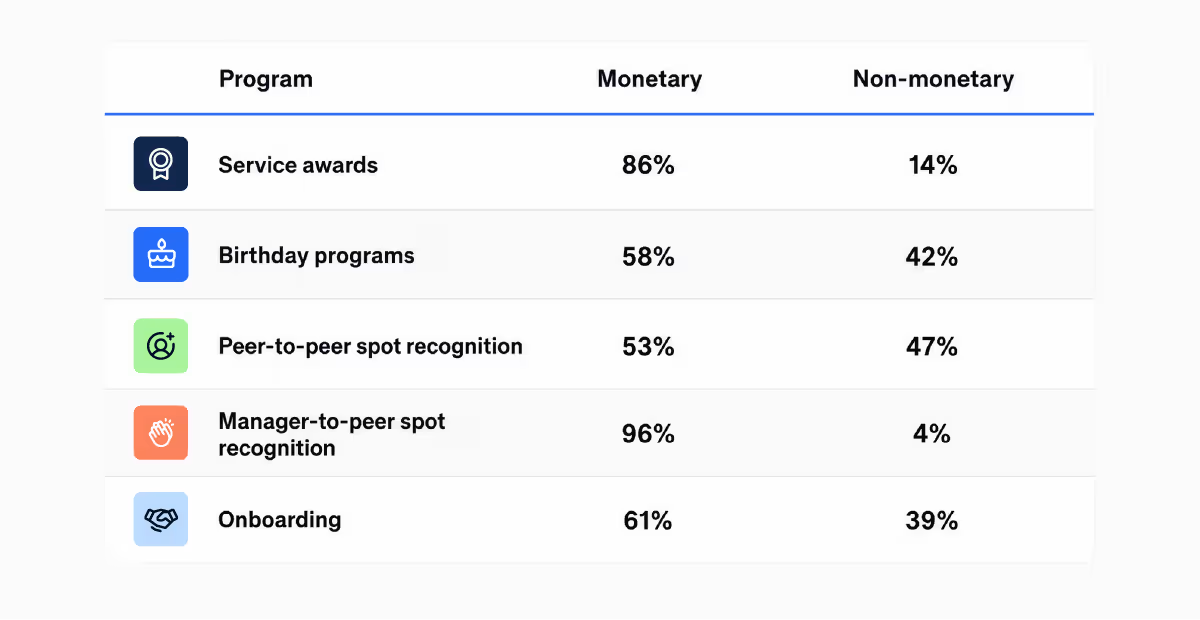
The pattern here is instructive. Service awards and manager recognition lean heavily monetary, which makes sense given that they typically mark a milestone or a specific performance moment where an employee expects something tangible.
Birthday, peer, and onboarding recognition, on the other hand, can lean more on appreciation and culture-building without needing a big budget behind them.
For SMBs, this is good news. Monetary recognition matters, and service awards and manager recognition in particular should carry a reward. But non-monetary recognition, a public shoutout, a handwritten note, a peer nomination, can and should make up a meaningful part of your overall strategy.
As you grow: Build budget into your recognition strategy deliberately rather than reactively. We recommend devoting 1-2% of payroll to recognition and rewards, so as headcount and revenue grow, plan to aim to hit that target so the programme scales with the business instead of getting squeezed out during a tight quarter.
Focus on frequency
Gallup's research shows that employees who receive recognition from their manager at least once a week are significantly more engaged than those who receive it less often. For a small business, that means favouring small, frequent moments of appreciation over occasional, elaborate ones.
Awardco’s research provides more context for this. We looked into how long the good feelings from recognition stuck around from each source. From peers, the glow faded within days. From managers, engagement was boosted for up to three months. From senior leaders, engagement stayed high for around a year.
These two findings show that frequent recognition is vital because the engagement benefits don’t last forever—however, the source of recognition is just as important as the frequency, and that should factor into your strategy.
How to make it happen:
- Create a spot recognition programme where managers and peers can recognise each other on the spot—no hoops to jump through or inconvenient tech in the way.
- Train managers how to recognise. Showing appreciation is a soft skill, and many managers may not feel comfortable with it yet.
- Consider manager budgets. Larger companies often give every employee a monthly budget to reward their peers with. For SMBs, start with giving managers 20 points a month that they can give to their teams.
- Highlight recognitions to the company. In your weekly all-hands meeting, through email, or on your company’s communication app, highlight a weekly recognition. Shout out the giver and the receiver to reinforce appreciative behaviours.
Awardco research shows that the most impactful forms of recognition are company awards, manager emails, and 1:1 conversations. So by training managers to recognise more and highlight recognitions at the company, SMBs can quickly implement the most effective form of recognition—with barely any budget.
As you grow: As your company grows and executive involvement gets more difficult, it’s even more important to delegate frequent recognition to managers and peers. Add more budget to spot recognition programmes, and consider building company-wide incentive, holiday, and culture building programmes to accompany your spot recognition.
Make recognition effortless to use
For a lean team, recognition needs to be something a manager or employee can give in seconds, not something that requires filling out a form or waiting for approval. The lower the friction, the more often it will actually happen.
Find an affordable recognition vendor that offers quick and easy access and usability for your people. Mobile access is important for offline, frontline, and remote employees, as well.
One of Awardco’s priorities is to be as seamless as possible for all users—admins, managers, and direct reports—regardless of where they work or their access to technology. (To see more about how Awardco ranks for usability, see our G2 rankings.)
As you grow: invest in your chosen platform to truly centralise recognition data so leadership can measure what's working, spot who might be getting overlooked, and make the business case for further investment in the programme as the company scales.
Tie in core values
For SMBs, building culture needs to be an intentional practice, not an accident. By tying your company core values into your recognition strategy, you not only build engagement and retention through appreciation, but you also reinforce the behaviors you want to see.
What does that mean?
If one of your core values is collaboration, and you see someone collaborate effectively, their manager, peers, or leadership should recognize them for that. When everyone else sees that recognition, they realize the company values collaboration—they know that core value isn’t just a word on the wall.
Through repeated reinforcement, organizations can shape their culture for the future.
A budget-constrained nonprofit example
Southern Oregon Head Start, a nonprofit early childhood education organization operating dozens of centers, is a good example of what a disciplined recognition foundation can do even with a limited budget. After adopting Awardco across its locations, the organization cut attrition from 45% to 8% over two years, saving thousands of dollars per retained employee in an industry known for brutal turnover.
That kind of result doesn't require a large HR department or an unlimited rewards budget. It requires making recognition a consistent, visible part of how the organization operates every day.
The ROI case for recognition
The financial argument for recognition is not abstract, and it matters more, not less, on a small business's tighter margins. Here are the real results Awardco customers have seen after implementing recognition:
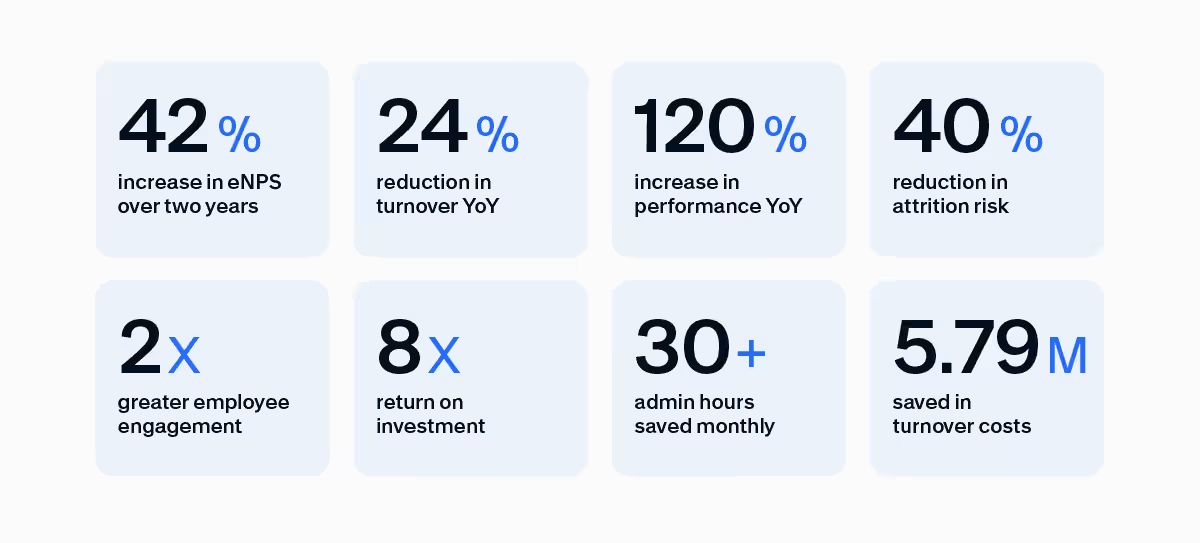
Put simply, recognition is one of the highest-leverage investments a small business can make, and one of the few that gets more valuable, not less, as budgets get tighter.
Small-town feel, at any scale
Small businesses can't always win on compensation. But they can win on culture, and recognition is one of the most direct, most affordable levers for building that culture on purpose rather than hoping it holds together as the business grows.
None of the strategies in this paper require a 20-person HR department or a large budget to get started. They require consistency, specificity, and a willingness to make recognition part of how the business runs rather than an occasional nice-to-have. And as the business scales, from a handful of employees to hundreds, these same strategies scale with it.
The goal isn't to reinvent your approach to recognition at every stage of growth. It's to build a foundation now that grows alongside you.
That's the real promise of getting recognition right as a small business: keeping the small-town feel that makes your company worth working for, no matter how big it gets.
About Awardco
Awardco's employee recognition and rewards platform builds culture, incentivizes performance, and powers modern engagement strategies for organizations of every size. With the largest reward network in the world and one of the most customizable and flexible recognition solutions available, Awardco helps businesses, from small teams to global enterprises, turn everyday appreciation into measurable business results.
Explore more in Awardco's 2026 State of Recognition report, see more real results in Awardco's customer case studies, or learn more about building a recognition strategy on our Employee Recognition page.
Ready to build a recognition program that grows with your business? Get in touch to see how a right-sized recognition strategy can work for your team, at any stage of growth.

