







.svg)





Why Awardco?
Public sector features
that tick every box
Awardco helps government agencies, municipalities, and public institutions implement recognition programmes that are cost-effective, compliant, and impactful.




ROI of recognition
Recognition that drives performance and retention
Public sector employees thrive when they feel valued, engaged, and connected.

Better engagement means better performance.
Employees who feel valued are 4x more likely to be engaged, which leads to greater productivity, retention, satisfaction, and more.

Happy employees are healthier, more resilient, and more productive.
Showing and receiving gratitude increases happiness by 25%—and happiness is the leading cause for employees staying or leaving their jobs.

Retain top public sector talent.
A strong culture of recognition lowers voluntary turnover by 31% because appreciation makes people want to stay.
.avif)

success stories
Supporting the public sector

.svg)



.avif)








Integrations & Security
Seamless connections, uncompromising security
Integrations
Awardco works seamlessly with the tools you already use, so you can naturally incorporate recognition into your day-to-day.


thought leadership & resources
Recognition and reward resources




FAQ
Frequently asked questions
How can public-sector organisations reach field, hourly, and deskless employees?
Where supported, employees can access recognition via a mobile experience, text or email notifications, QR codes, award codes, printed cards, collaboration tools, or other configured channels. This helps include employees working in the field, on campus, in public facilities, on routes, or away from a desktop computer.
Organisations can design access around the realities of their workforce, including employees who do not have a work email, use shared devices, work different shifts, or have limited access to single sign-on or multi-factor authentication.
The available channels, identity verification, personal contact information, device requirements, language options, and employee experience vary by programme. Organisations should validate accessibility, privacy, security, and account-recovery requirements before launch.
Can programmes include approval workflows and audit-ready tracking?
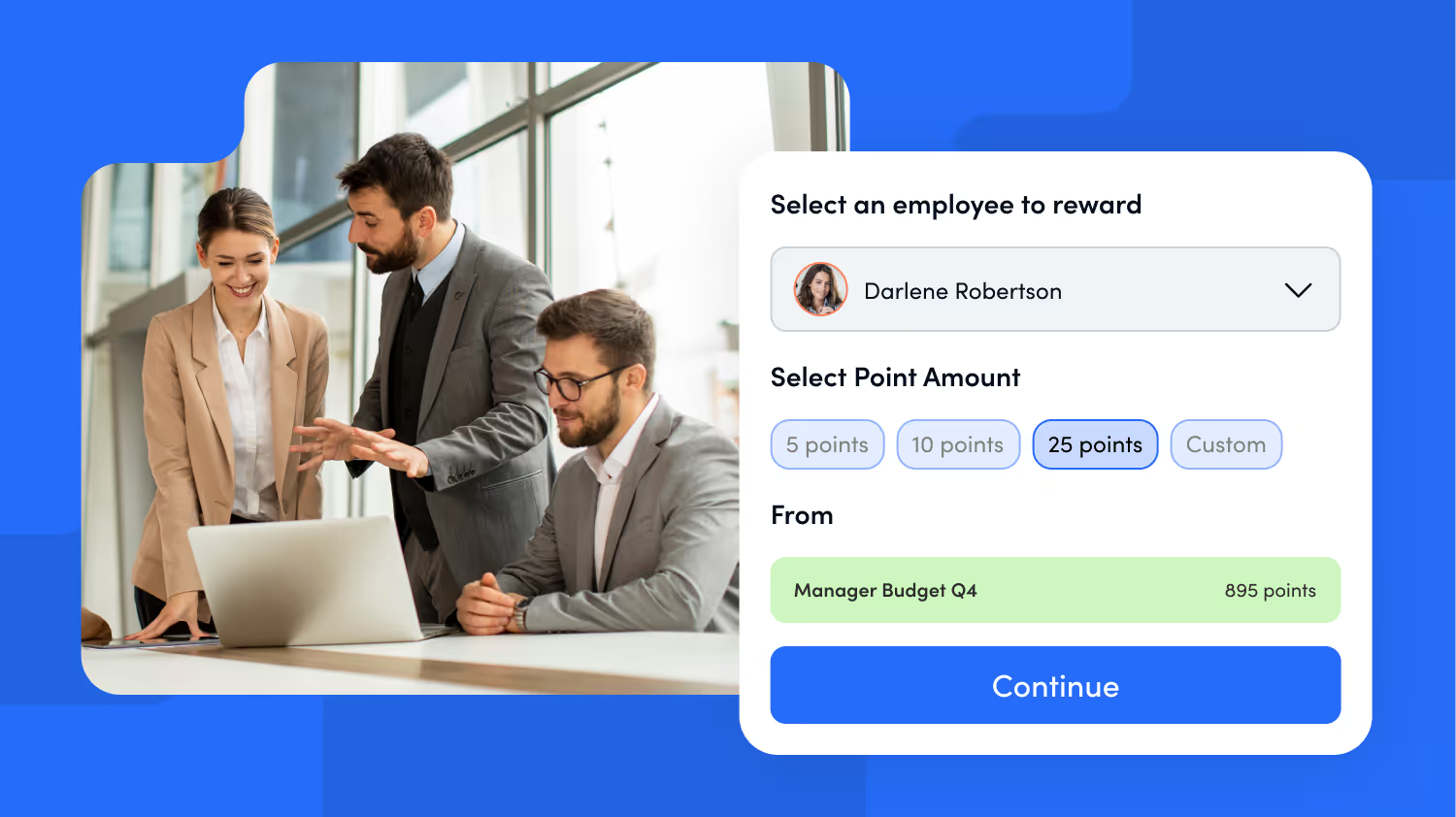
Where supported, recognition or reward submissions can be routed through an approval workflow before they are published or issued. Organisations can assign reviewers, define thresholds, set manager budgets, and require additional review for selected programmes or reward values.
Programme and budget controls can help administrators track who gave recognition, who received it, which programme or budget was used, how many points were issued or redeemed, and other activity associated with the award.
The available reports, retention, permissions, exports, approval behaviour, and audit fields depend on the programme and agreement. Public-sector organisations should confirm how records can be accessed, retained, exported, and provided to authorised reviewers.
Can Awardco support procurement and public-sector contracting requirements?
Public-sector organisations may need to follow procurement thresholds, competitive-tendering rules, cooperative purchasing requirements, contract review, data-security review, accessibility standards, public-records obligations, or other local procedures before purchasing a recognition platform.
Awardco can participate in the customer’s procurement and contracting process according to the applicable scope, but the required path depends on the jurisdiction, agency type, contract value, funding source, and purchasing rules. A public-sector organisation should not assume that a particular agreement method, exemption, cooperative contract, or procurement threshold applies without confirmation from its procurement office.
Organisations should identify required stakeholders and documents early, including security and privacy materials, accessibility information, insurance or vendor forms, data-processing terms, service levels, pricing, implementation scope, and renewal provisions.
Can public-sector organisations control how recognition funds are spent?
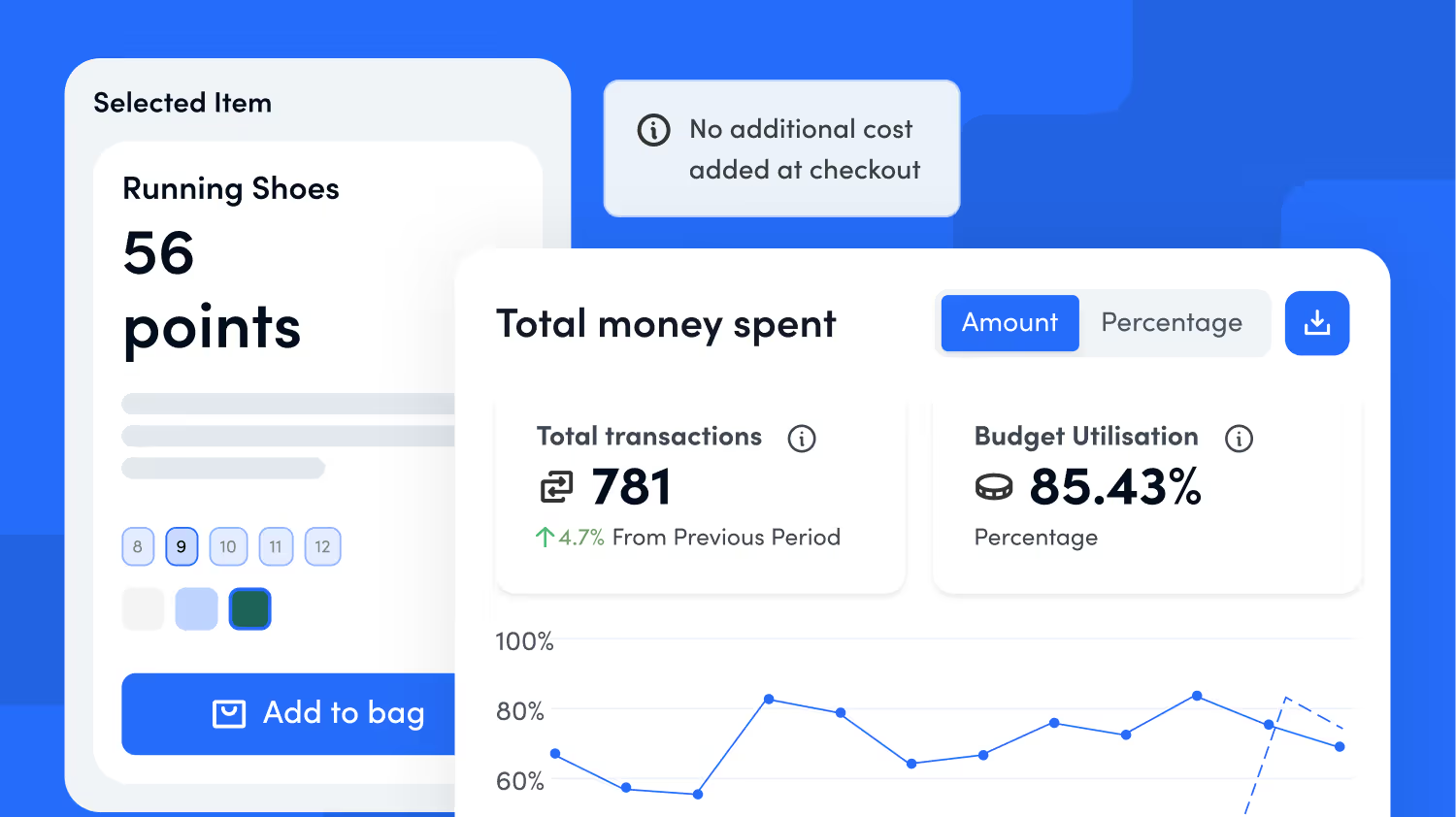
Organisations can design programmes with defined budgets, eligible employee populations, reward values, catalogues, permissions, approval rules, and spending limits where supported.
Administrators may create separate budgets or programmes for departments, locations, managers, employee groups, or recognition purposes. They can also determine who may give recognition, which reward categories are available, and whether a submission requires review before it is published or awarded.
These controls can support responsible administration, but they do not replace the organisation’s appropriations, purchasing, ethics, gift, compensation, or financial-control policies. Public-sector customers should have their appropriate finance, procurement, legal, and HR teams approve the programme design.
What can public-sector organisations use Awardco for?
Public-sector organisations can configure programmes for service anniversaries, onboarding, peer recognition, manager recognition, nominations, spot awards, employee milestones, safety or quality behaviours, wellness initiatives, training, and other approved recognition goals.
A city or county might recognise employees who reach a service milestone, a school district might support staff appreciation, a transit agency might recognise field employees, or a public utility might provide structured recognition for safety, service, or improvement ideas.
Programmes can be monetary, non-monetary, automated, peer-led, manager-led, or combined. The available programme types and eligibility rules depend on the selected products, employee data, organisation policy, and configuration.
