






.svg)








Centralised Data
Visualise your return on recognition



Actionable Insights
All the info you need, directly at your fingertips

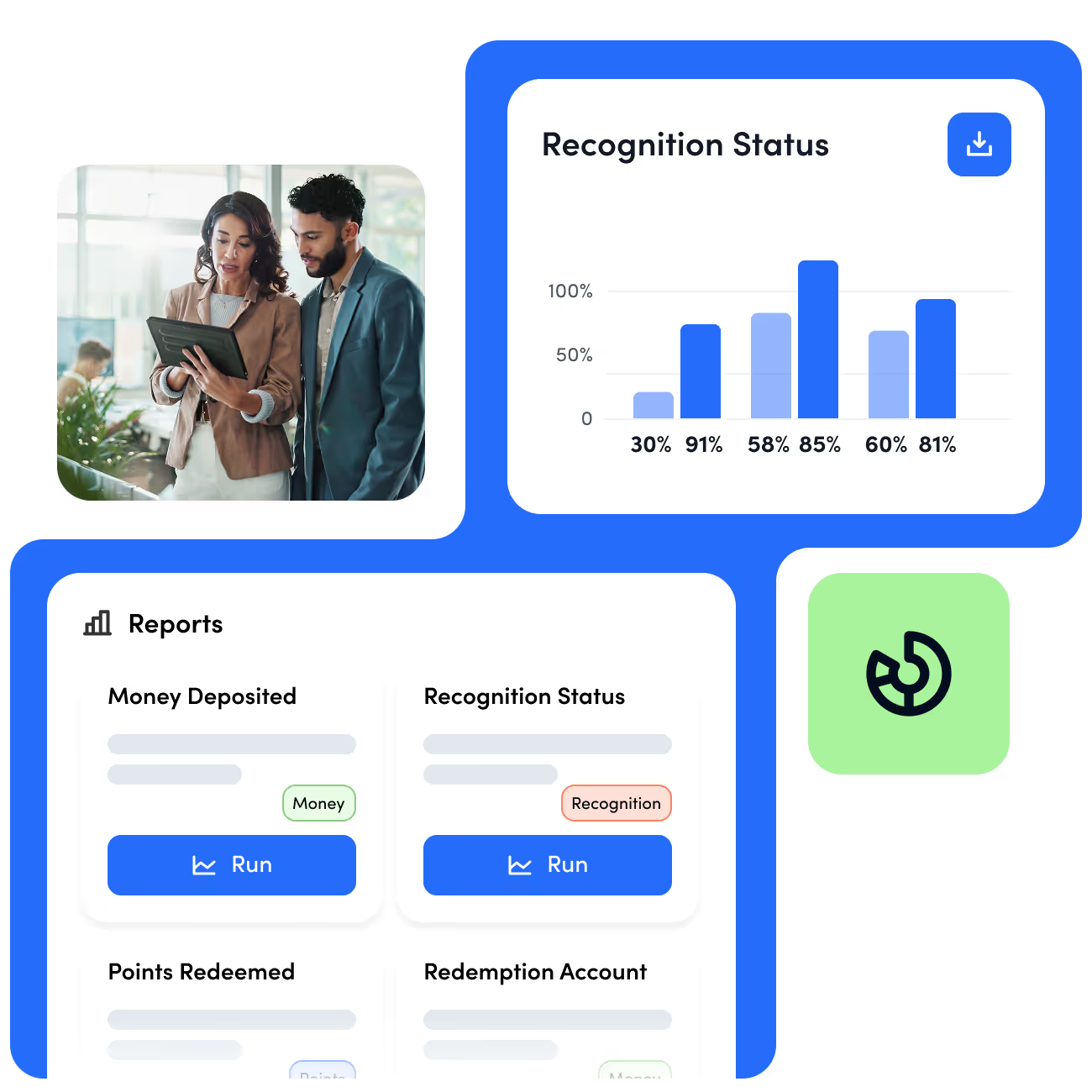
Clear insights without the data overload. See recognition trends, programme performance, and employee engagement metrics in one simple view—because data should work for you, not against.

Track rewards and recognition platform usage, engagement, and programme performance in real time. Clear, immediate insights support faster decisions and stronger outcomes.
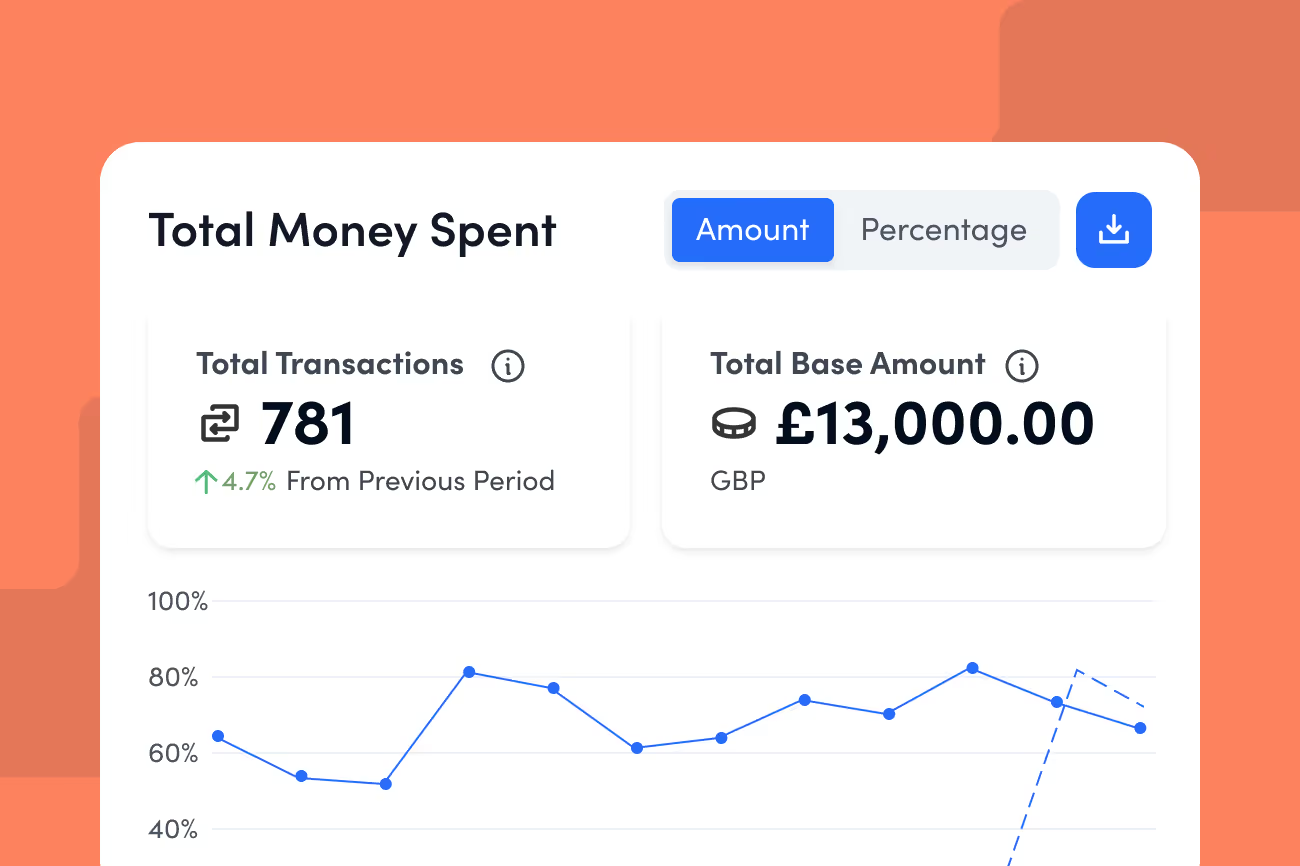
Monitor budgets, control spending, and manage allocation across teams with precision. Keep programmes on track with tools built for clarity, collaboration, and control.
Tax & Budget Controls
Take the guesswork out of budget management
Easily stay on top of your recognition budget with full transparency into every pound spent. From high-level overviews to detailed breakdowns, you’ve got everything you need to manage spending and stay tax compliant.

.png)





.svg)
.avif)


FAQ
Frequently asked questions
Can HR admins see adoption and utilisation by manager, team, department, location, programme, or employee?
Yes. Awardco reporting can help HR teams analyse adoption and utilisation across the organisational dimensions available in their employee data.
Depending on the organisation’s configuration, admins can review metrics such as login activity, recognition participation, points awarded, points redeemed, program usage and budget utilisation. Reports can typically be filtered by fields such as manager, department, location, employee group, programme and other metadata.
This helps HR teams identify underused programmes, compare participation across groups and understand where additional communication or enablement may be needed.
Can reports be filtered by HRIS data and customised to include only the columns you need?
Yes. Awardco reports can use available employee and organisational metadata to narrow the population being analysed.
Admins can often filter by fields such as department, location, manager, employee group, programme, entity, and cost center. They can also select the columns they want included in an export so that the resulting CSV or other file contains the information needed for HR, finance, payroll, or programme analysis.
Available filters and fields depend on the data configured for the organisation.
Can admins save, schedule, export, and share recurring reports?
Yes. Admins can build a report, apply filters, select the relevant fields, save the view, and schedule it for recurring delivery when that functionality is enabled for the organisation.
Scheduled reports are typically delivered through an email notification with a link to access the report in the Awardco platform. Recipients need the appropriate permissions and may need to sign in to view or download the report.
Reports can be configured for recurring HR, finance, payroll, leadership, manager, or regional use cases, with cadence and recipients based on the organisation’s requirements.
What can managers and HR business partners see in dashboards and reports?
Reporting visibility is controlled by roles, permissions, and organisational hierarchy.
Depending on their access, managers may be able to view reporting for their direct reports or broader downline. HR business partners and other administrators can be given access to specific employee populations, departments, regions, programmes, or reporting views without automatically exposing unrelated company data.
Organisations can use scoped permissions and saved views to give each audience the level of visibility needed for their work.
What payroll and tax information is included in Awardco reports?
Awardco can provide recognition, award, point, redemption and other reward-related data that organisations use for payroll and tax processes.
The relevant report and taxable amount depend on the organisation’s policies, locations, reward types and the point at which rewards become taxable. Some organisations report when points are awarded, while others may use redemption-based reporting.
Admins can select available fields for export, including award values, employee information, programme details, cost centers and other metadata. The organisation’s payroll or tax team remains responsible for reviewing the data and processing it according to applicable requirements.
Can Awardco reporting data connect to Power BI, other analytics tools, or AI assistants?
Yes. Organisations may be able to export Awardco data or connect it to analytics environments such as Power BI through supported integrations or API access.
Awardco Intelligence adds AI-powered capabilities to help organisations understand recognition and engagement data, surface insights, and reduce administrative busywork.
The Awardco MCP (Model Context Protocol) Server connects Awardco data to external AI tools such as ChatGPT, Claude, and Microsoft Copilot. This allows HR teams to ask natural-language questions about their Awardco data instead of pulling every report manually.
The Awardco MCP Server is currently in beta, and availability depends on the organisation’s configuration and access to the relevant AI capabilities.
Thought Leadership & Resources
HR industry resources