For a lot of organizations, Microsoft Teams is where work happens: meetings, files, approvals, and increasingly the app frontline employees carry in their pocket. However, while Teams includes more and more of the tools organizations use, recognition often sits in a separate system that only head office ever logs into.
When recognition lives somewhere your frontline never goes, the people most likely to be missed are the ones who were already hardest to see.
This guide covers what employee recognition in Microsoft Teams involves, the criteria that separate a Teams bot from a recognition platform, and what it looks like when recognition works at scale.
What does employee recognition in Microsoft Teams actually mean?
Employee recognition in Microsoft Teams is all about giving employees a way to recognize and reward each other without leaving the app they already work in.
That description covers a very wide range of products, from a bot that posts a congratulations card to a full recognition platform that happens to open inside Teams.
What separates them is everything that happens after the message: whether the recognition carries a reward worth having, passes through an approval, reaches someone who has never opened a laptop at work, or if anyone can report on it three months later.
Why Microsoft Teams organizations need recognition in the flow of work
Recognition often lives outside the flow of day-to-day work. Giving it means stopping, opening another system, and logging in.
Awardco's Microsoft Teams integration removes that detour by letting employees recognize each other directly in existing communication channels. Recognition gets faster, because it happens while the work is still fresh rather than at the end of a review cycle.
It gets easier, because nobody needs training for an app they already have open. And it gets further, because Teams reaches employees who never sit at a desk.
For a wider view of what makes recognition programs work, check out our employee recognition guide.
What makes the best employee recognition software for Microsoft Teams?
Evaluate employee recognition software for Microsoft Teams against the criteria below to find the right solution for your needs.
Microsoft Teams recognition bots vs. broader recognition platforms
A Teams recognition bot lets employees post messages, but the limitation is who it leaves out and what it can't do. You can post praise and maybe run a leaderboard, but there’s no reward with real value behind it, no approval path, no record beyond the conversation, and no way to answer the question of whether recognition is reaching the whole business or the same handful of teams.
A recognition platform carries it further. Points reach an employee's balance and redeem from a global catalog. Approvals apply. Milestones and service awards run automatically. Reporting shows who is being recognized and who isn’t.
Teams is where recognition should start. It isn't where it finishes.
Why visibility matters in Microsoft Teams recognition
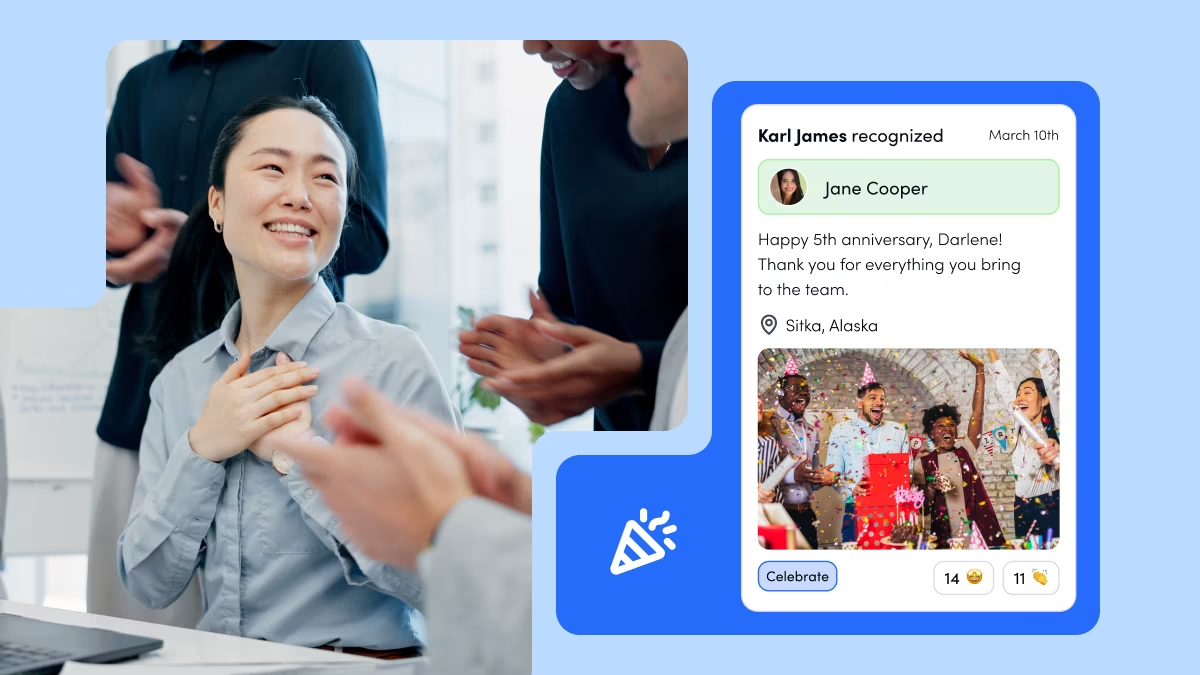
Recognition sent privately closes a loop between two people. Recognition others can see shows a much larger group what the organization values and who is delivering it.
Awardco shows the recognition feed directly in Teams for that reason, rather than leaving it in a system employees rarely open. Appreciation becomes something colleagues come across during the working day. For frontline employees who have historically been invisible to digital recognition, being seen by peers is most of the point.
How Awardco approaches employee recognition in Microsoft Teams
Employees recognize each other directly inside Teams, the recognition feed is visible there, and recognition approvals run within Teams as well, so program rules survive the move into chat instead of being traded away for convenience.
From there, the recognition joins the wider Awardco platform. Points redeem from the global rewards marketplace, including Amazon Business fulfillment. Automated milestones, service awards, and incentive programs run alongside, and reporting shows what’s happening across the program.
Learn more about Awardco's Microsoft Teams integration and how it fits with the rest of your stack.
Real-world proof: what Microsoft Teams recognition looks like at scale
Hertz employs 26,000 people across 160 countries and more than 11,000 locations, with over 80% working customer-facing, deskless roles at rental counters, lots, and service stations. Email and the occasional shoutout were too slow and too invisible to reach them.
The Microsoft Teams integration brought Awardco's recognition feed onto employees' mobile devices, so colleagues can recognize each other from their phones mid-shift. Trish Concepcion, Revenue Management Team Lead at Hertz, described the change simply: "Recognition started happening in real time, right when great work was done."
The program contributed to a 7.6% year-over-year rise in eNPS, and Hertz delivered 1,300 recognitions on Employee Appreciation Day alone. Frontline employees who had previously missed out on digital recognition gained visibility and a sense of belonging across three brands and 160 countries.
Reach the employees your program is missing
Recognition that only reaches the people already in view isn't a recognition program. It's a head office habit.
Explore Awardco employee recognition platform to see how it works, or book a demo to see recognition running inside Microsoft Teams.
FAQs
What is employee recognition in Microsoft Teams?
It's the ability for employees to recognize and reward colleagues inside Teams rather than in a separate system. The stronger solutions attach rewards, approvals, and reporting to that moment instead of leaving it as a message.
What is the best employee recognition software for Microsoft Teams organizations?
Look for recognition that works natively in Teams, a feed employees actually see, approvals that run inside Teams, a global rewards catalog, and mobile reach for staff who never use a desktop.
How does a Microsoft Teams recognition integration work?
With Awardco, employees recognize colleagues in Teams and the recognition feed is displayed there, including on mobile. Approvals can be handled inside Teams, and everything connects to the wider platform for rewards, milestones, and reporting.
Can employees recognize each other directly in Microsoft Teams?
Yes, including from the Teams mobile app, which is what makes it workable for frontline and field employees who are rarely at a computer.
What should companies look for in employee recognition software for Teams?
Ease of use in Teams, a visible feed, rewards redeemable where employees live, approvals and budget controls, access to the broader platform, mobile coverage for deskless staff, and a rollout that won't consume months of IT time.
Is a Teams recognition bot enough, or do companies need a broader recognition platform?
A bot is enough for informal praise among colleagues who already talk daily. Once you need real rewards, approval routes, budget control, and reporting that covers your whole workforce, a bot can't get you there.






.svg)