Deskless employees keep organizations moving. They manufacture products, care for patients, manage logistics, operate retail locations, and serve customers face to face every day. But despite making up nearly 80% of the global workforce, they also account for many of the biggest engagement and retention challenges organizations face.
That’s why recognition strategies built for office employees often fall short for these frontline teams.
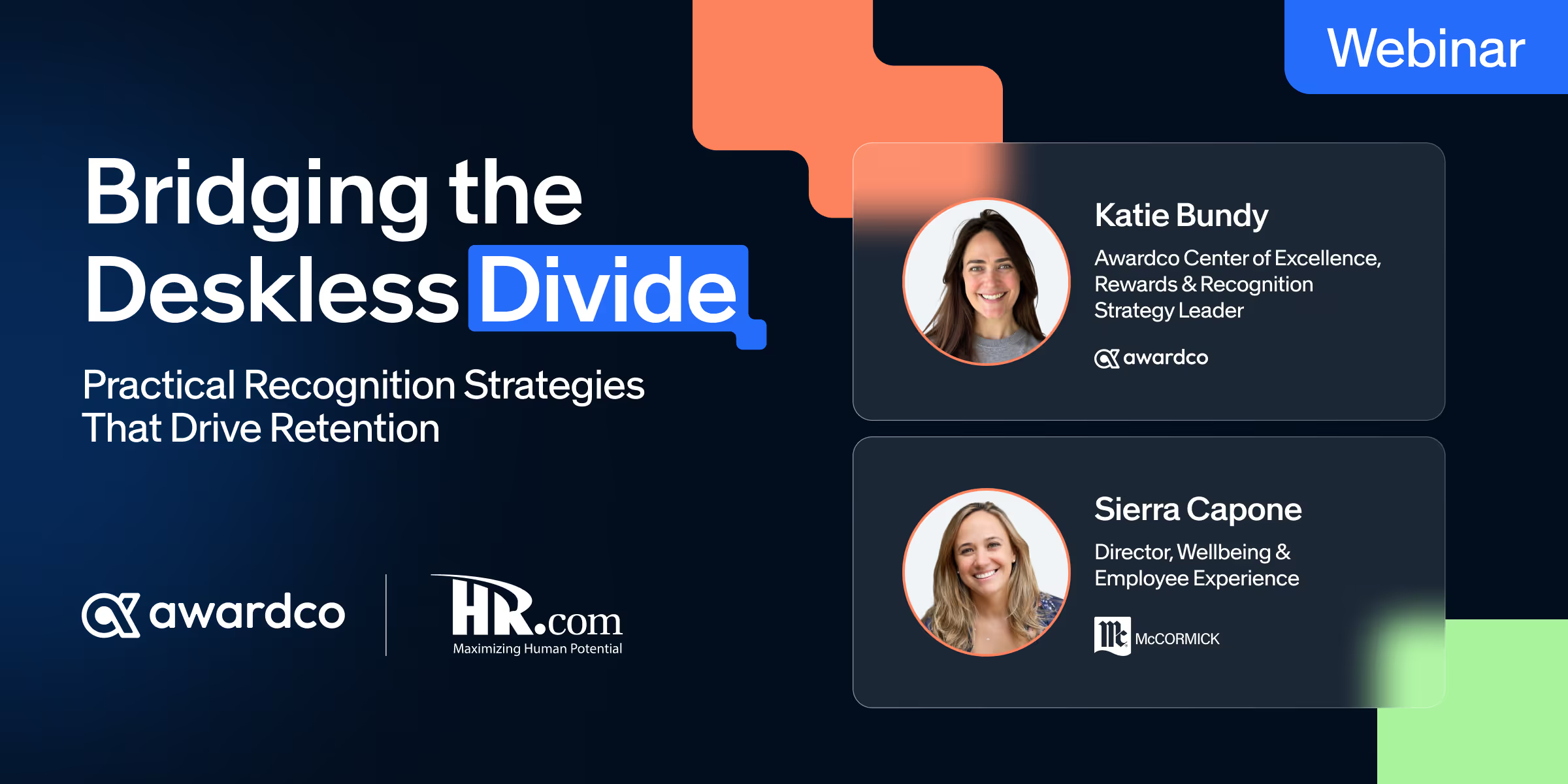
In a recent Awardco webinar, Katie Bundy from Awardco’s Center of Excellence and Sierra Capone, Director of Employee Experience and Well-Being at McCormick & Company, shared how organizations can use Awardco Engage™ to create scalable recognition experiences for deskless employees. Their conversation focused on one key idea: recognition only works when it fits naturally into employees’ day-to-day realities.
Read the recap below or watch the recording here.
Why deskless employees are harder to engage
Deskless employees face very different work environments than traditional office workers. Many operate on rotating shifts, work in physically demanding roles, or have limited access to computers and communication tools. Recognition programs that depend entirely on email, desktop logins, or corporate intranets often miss these employees completely.
McCormick, where roughly 70% of their 14,000 global employees are deskless, saw this challenge firsthand. Employees working in manufacturing plants, distribution centers, spice mills, and innovation labs all had different workflows and different levels of access to technology.
As Sierra explained during the webinar, the issue wasn’t employee willingness to participate. It was accessibility.
Recognition drives engagement because it fulfills emotional needs
One of the strongest themes from the webinar was that recognition impacts far more than morale.
Recognition directly supports emotional drivers tied to engagement and retention, including:
- feeling respected and treated fairly
- feeling valued for contributions
- feeling connected to company purpose
- feeling supported by leadership
- feeling visible within the organization
These emotional factors consistently outperform compensation alone when it comes to long-term retention and engagement.
That’s why organizations using Awardco Engage™ are shifting recognition from a nice-to-have program into a strategic part of the employee experience.
Recognition works best when it’s built around employee personas
One of the most practical strategies discussed in the webinar was designing recognition around employee personas.
Instead of launching one generic experience for everyone, organizations should identify how different groups actually work:
- manufacturing employees
- drivers and logistics teams
- retail associates
- healthcare staff
- field employees
- office employees
Each group interacts with technology differently. Some employees share devices. Some cannot carry phones on the floor. Others only access communication tools during breaks.
McCormick used these realities to shape how recognition appeared throughout the employee journey.
For some locations, that meant kiosks and shared devices. For others, it meant mobile access or QR-enabled AwardCodes™ employees could scan later. Managers could recognize employees immediately, even in environments where logging into a platform wasn’t practical in the moment.
That flexibility helped recognition become part of the workflow instead of another disconnected task.
How Awardco Engage helps organizations scale recognition
A major challenge for enterprise organizations is balancing consistency with flexibility.
McCormick discovered more than 120 separate recognition programs operating independently across the organization before consolidating into Awardco.
Using Awardco Engage, they built what Katie called a “core and more” strategy:
- core programs available to everyone across the organization
- localized programs tailored to specific teams, roles, and business goals
Core programs included:
- peer-to-peer recognition
- birthdays
- service anniversaries
- onboarding milestones
- companywide awards
Localized programs included:
- safety recognition
- attendance incentives
- site-specific achievements
- customer service awards
- operational performance programs
This approach allowed teams to maintain local relevance without losing enterprise consistency.
Non-monetary recognition still creates major impact
One of the biggest misconceptions around recognition is that meaningful programs require large budgets.
The webinar challenged that idea directly.
McCormick launched its recognition strategy with very few point-based rewards. Instead, the organization focused first on building habits of everyday recognition. Employees were encouraged to recognize one another consistently for collaboration, effort, support, and performance.
The result:
- more than 16,000 recognitions shared in the first year
- strong adoption across the organization
- increased manager participation
- greater visibility into employee contributions
Recognition succeeded because employees felt seen, not because every recognition included a reward.
That foundation created a culture where appreciation became part of daily work.
Manager participation changes everything
One of the clearest patterns discussed during the webinar was the influence managers have on recognition adoption.
When leaders recognize consistently, employees participate more frequently as well.
McCormick found that supply chain managers were among the organization’s highest recognition users, even before broader employee participation increased. Their activity helped create momentum and normalized recognition behaviors for frontline teams.
To support this, Awardco Engage helped managers through:
- automated onboarding prompts
- recognition reminders
- simplified mobile access
- integrated recognition flows
- recognition templates and guides
Reducing friction helped recognition become easier to sustain long term.
Recognition data is becoming a strategic advantage
Recognition is no longer just about appreciation. It’s becoming a powerful source of workforce insight.
One of the most forward-looking parts of the webinar focused on how organizations are integrating recognition data with broader people analytics.
McCormick is now analyzing recognition trends alongside:
- performance reviews
- attendance patterns
- engagement survey data
- retention metrics
- operational performance
This creates opportunities to identify patterns earlier and make more informed workforce decisions.
For example:
- teams with low recognition activity may show higher turnover risk
- highly recognized behaviors may correlate with stronger performance
- frontline engagement gaps may become visible sooner
Recognition data helps organizations move from reactive people strategies to proactive ones.
Building a recognition culture for deskless employees
The webinar closed with a reminder that recognition does not need to be complicated to be effective.
Employees want to feel seen. They want their work acknowledged. And they want recognition to feel authentic, timely, and accessible.
For deskless employees especially, that means designing recognition around the realities of their work instead of expecting them to adapt to corporate systems built for someone else.
With Awardco Engage, organizations can build recognition programs that:
- reach frontline employees consistently
- support manager effectiveness
- reinforce company values
- improve engagement
- strengthen retention
- connect recognition directly to business outcomes
Because when recognition becomes part of the everyday employee experience, engagement follows.



.avif)



.svg)