


Table of Contents
- What are employee incentives?
- Why employee incentive ideas matter for small businesses
- Employee incentive ideas
- Boost retention and satisfaction
- Wellness incentives
- Sales incentives
- Frontline incentives
- Team-based incentives
- Low-cost employee incentive ideas for small businesses
- Employee incentive gift ideas they’ll actually use
- Employee incentive program ideas: how to build one for a small business
For employees to perform at the highest level, they need to feel like they’re working toward something. Employee incentives are among the best ways to create that feeling for everyone, regardless of their position, skill level, or personality.
Effective employee incentives don’t require a large HR team, a complicated platform, or an enterprise budget. The best programs are clear about what they’re trying to accomplish and consistent enough that employees actually feel it.
This guide covers practical employee incentive ideas organized by goal, team type, and budget so you can find what fits and put it to work fast.
What are employee incentives?
Employee incentives are rewards or benefits used to motivate positive behaviors in the workforce. They're designed to attract, engage, and retain talent. At their best, they reinforce the specific behaviors and outcomes that matter most to your business.
For small businesses, the most effective employee incentive programs share a few qualities:
- Simple to launch
- Easy to repeat
- Flexible enough to fit different preferences
All you really need is consistency, clarity, and rewards that resonate with your team.
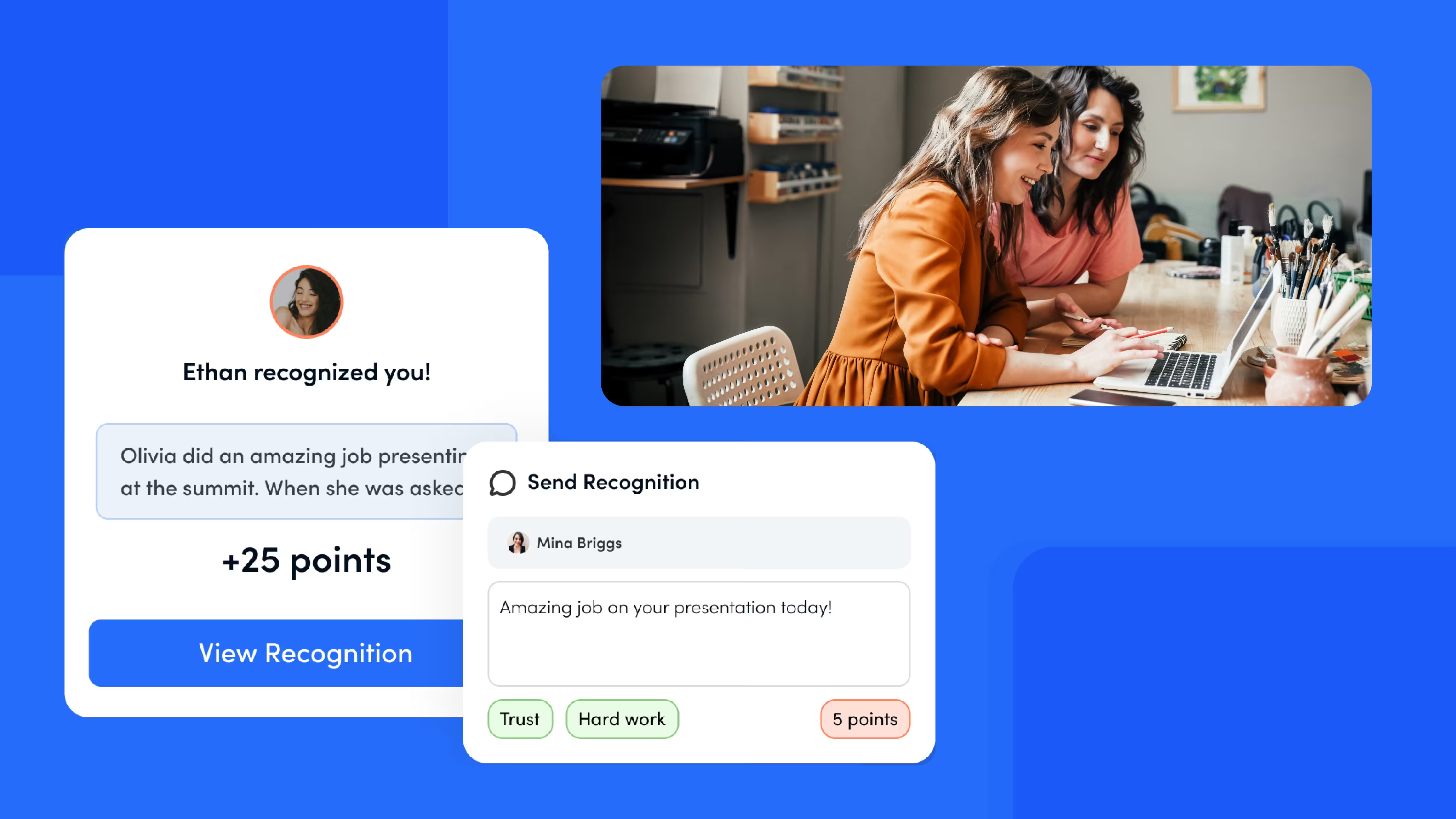
Why employee incentive ideas matter for small businesses
Small businesses compete with larger employers for the same talent. What small businesses have on larger companies is agility: the ability to recognize effort quickly and build a culture where individual employees actually feel seen.
Employee incentives can genuinely help satisfy psychological needs, such as esteem and self-actualization. They’re one of the most effective tools for doing that at any budget.
For small businesses, incentives also reinforce the kind of work you want to see:
- Productivity
- Customer service quality
- Attendance and safety
- Learning and teamwork
When employees feel recognized, they’re more likely to respond with more effort, more engagement, and more loyalty.
Choose incentives by business goal
Not sure where to start? Match your incentive type to the outcome you’re trying to encourage.
Employee incentive ideas
When there’s a meaningful reward tied to a specific goal, employees are more likely to push toward it. Use these employee incentive examples to start building your own incentive strategy.
- Project completion bonuses—reward employees who deliver on time and on spec.
- Goal-based team challenges—set a shared target (sales volume, customer satisfaction score, error reduction, etc.) and reward the whole team when they hit it.
- Productivity milestones—recognize employees who consistently exceed output expectations over a set period.
- Sales SPIFFs—offer short-term incentives tied to specific products, services, or sales windows.
- “Above and beyond” spot rewards—establish manager-nominated rewards, given in the moment for exceptional effort or problem-solving.
Base the incentives and the rewards on the specific responsibilities of each team or department to ensure that everyone feels involved, and offer rewards that are meaningful for everyone.
Awardco’s employee incentive platform is built to support exactly this kind of flexible, goal-tied program, with easy-to-use tools that let you define the behaviors you want to reward and deliver meaningful incentives.

Employee incentive ideas to boost retention and satisfaction
Reward employees who put great effort into their work with more opportunities to grow and develop their careers. At the same time, it’s important to recognize stability, tenure, and value alignment rather than just output.
Some common ideas for employee incentives include:
- Work anniversaries—offer milestone-based recognition at one, three, five years and beyond.
- Career growth stipends—give a set amount employees can use for online courses, workshop attendance, or anything the specific employee is interested in.
- Manager-nominated appreciation awards—given when a manager spots exceptional values alignment or team contribution.
- Peer recognition points—let employees nominate each other for small rewards, building a culture of mutual appreciation.
- Quarterly values awards—manager-nominated, given in the moment for exceptional effort or problem-solving.
Employee incentive ideas to support wellness
Work can sometimes be stressful. Offering wellness gifts like subscriptions to fitness apps or yoga classes can provide a much-needed boost to workers’ well-being. Help your employees maintain their health, both mental and physical, through wellness incentives like:
- Step challenge rewards—offer points or prizes when employees hit a daily or weekly step goal.
- Gym or fitness stipends—give employees a monthly or quarterly budget for wellness-related expenses.
- Mental health days—offer a designated day off, separate from PTO, that employees can use without explanation.
- Healthy lunch rewards—host occasional catered or subsidized healthy meals.
- Wellness challenge completions—reward employees for exercising, eating healthy, meditating, etc.
You can even set up a Lifestyle Spending Account that rewards employees with money to spend on specific wellness rewards.
Employee incentive ideas for sales and customer-facing teams
Sales and customer-facing employees often thrive with shorter incentive cycles and more immediate recognition. Connections like these should be visible and fast:
- Sales goals rewards—offer tiered incentives based on monthly or quarterly quota attainment.
- Customer review incentives—reward employees when customers leave positive reviews that name them specifically.
- Upsell or renewal rewards—give bonus incentives for expanding existing customer relationships.
- Service recovery awards—recognize employees who turn a difficult customer situation into a positive outcome.
- Team quota celebrations—offer these when the whole team hits the number.

Employee incentive ideas for frontline and hourly teams
Frontline and hourly employees are often underserved by traditional incentive programs. Their incentives need to be practical, fair, and easy to earn, including:
- Attendance rewards—recognize consistent attendance over a set period without making it punitive.
- Safety streak incentives—recognize consistent attendance over a set period without making it punitive.
- Shift coverage rewards—thank employees who step up to cover last-minute gaps.
- Quality control incentives—tie rewards to accuracy rates, error reduction, or customer satisfaction scores.
- On-time completion rewards—recognize employees who consistently meet production or delivery targets.
- Safety incentives—reward employees who follow guidelines, complete safety training, or finish any safety-related paperwork.
Employee incentive ideas for teams
Team-based incentives build the kind of culture where people look out for each other, share credit, and invest in collective outcomes. Consider:
- Shared goal rewards—tie a team reward to a collective metric like customer satisfaction, project delivery, or a quarterly target.
- Peer-to-peer recognition—give employees a simple way to nominate each other for contributions worth celebrating.
- Team experience rewards—a catered lunch, group outing, or activity when the team hits a milestone.
- Cross-functional challenge rewards—incentivize collaboration between departments on a shared goal.
- Culture or values awards—recognize the team or individual who most visibly lived a company value that month.
Low-cost employee incentive ideas for small businesses
Low-cost does not mean low-impact. Some of the most effective small business employee incentives cost very little—or nothing at all. These no- or low-cost bonus ideas for employees offer a solid starting point:
- Handwritten thank-you notes from a manager or owner
- Public shoutouts in team meetings or company-wide Slack channels
- LinkedIn recommendations or public professional recognition
- Preferred parking spot for the week or month
- Extended lunch break on a slow Friday
- Flex-time rewards (let top performers shift their schedule for a week)
- Team snack day (small investment, high visibility)
- Local coffee gift cards (low cost, high personal touch)
- A recognition wall in the break room or in internal comms
- Manager’s choice awards (informal, given at manager's discretion)
- Half-day Fridays for hitting a monthly goal
- Small point-based rewards redeemable for catalog items or gift cards
For small businesses looking to add more structure without adding administrative complexity, micro incentives are worth exploring. They’re specifically designed to drive specific behaviors without requiring a formal program or dedicated HR resources.

Employee incentive gift ideas they’ll actually use
Gift-based incentives work best when they feel personal. In addition to the gift itself, it means someone’s been paying attention. Consider these gift-based workplace incentive ideas:
Practical gifts
- Grocery or gas gift cards
- Meal delivery credits (DoorDash, Uber Eats)
- Home office upgrades (like a quality mouse, keyboard, or desk accessory)
- A subscription to a tool or service they already use
- Company swag
Personalized gifts
- Gift card to their favorite local restaurant
- A hobby-related item or experience
- Local experience (ex: a class, a tasting, an outing they’d enjoy)
- Personalized company swag in the right size, with something that actually fits their style
Wellness gifts
- Fitness class credits or gym membership contribution
- Meditation or sleep app subscription
- Massage or spa gift card
- A wellness stipend employees can apply wherever it’s most useful to them
Experience gifts
- Concert or event tickets
- Local activity vouchers (ex: cooking class, axe throwing, escape room)
- Travel credits or hotel stays
- A family activity voucher
The best approach, though, is often to skip the guessing entirely.
Awardco’s rewards marketplace gives employees access to millions of reward options (through partners like Amazon, Priceline, and Viator) so they can choose what’s meaningful to them. That way, you show appreciation without the risk of missing the mark.
Employee incentive program ideas: how to build one for a small business
For most small businesses, the goal is just a simple, repeatable system that managers can actually use without a lot of overhead. Here’s a straightforward framework:
- Choose one business goal. Don’t try to incentivize everything at once. Pick the behavior or outcome that matters most right now and build your first program around that.
- Identify the specific behaviors that support that goal. Goals are outcomes. Incentives should reward behaviors that lead to those outcomes.
- Set a clear budget. Decide upfront what you’re willing to spend per employee, per cycle. This prevents ad-hoc reward decisions that feel inconsistent.
- Choose rewards employees actually want. Ask. Survey. But don’t assume what will land.
- Make participation visible and simple. If employees lack clarity, the program won’t work. Communicate clearly at launch and reinforce regularly.
- Give managers easy tools to recognize employees. The best programs put recognition power in managers’ hands, not locked in an HR portal.
- Track what works and improve. Look at redemption rates, participation, and whether the target behavior actually changed. Adjust accordingly.
How Awardco makes employee incentives easy for small businesses
Whether you’re looking to boost productivity, improve morale, or foster loyalty, these employee incentive ideas offer endless opportunities to reward and recognize your employees.
The right incentive program is only as good as your ability to execute it. Awardco is built to deliver enterprise-grade recognition capabilities without the enterprise-level complexity.
For small businesses, that means:
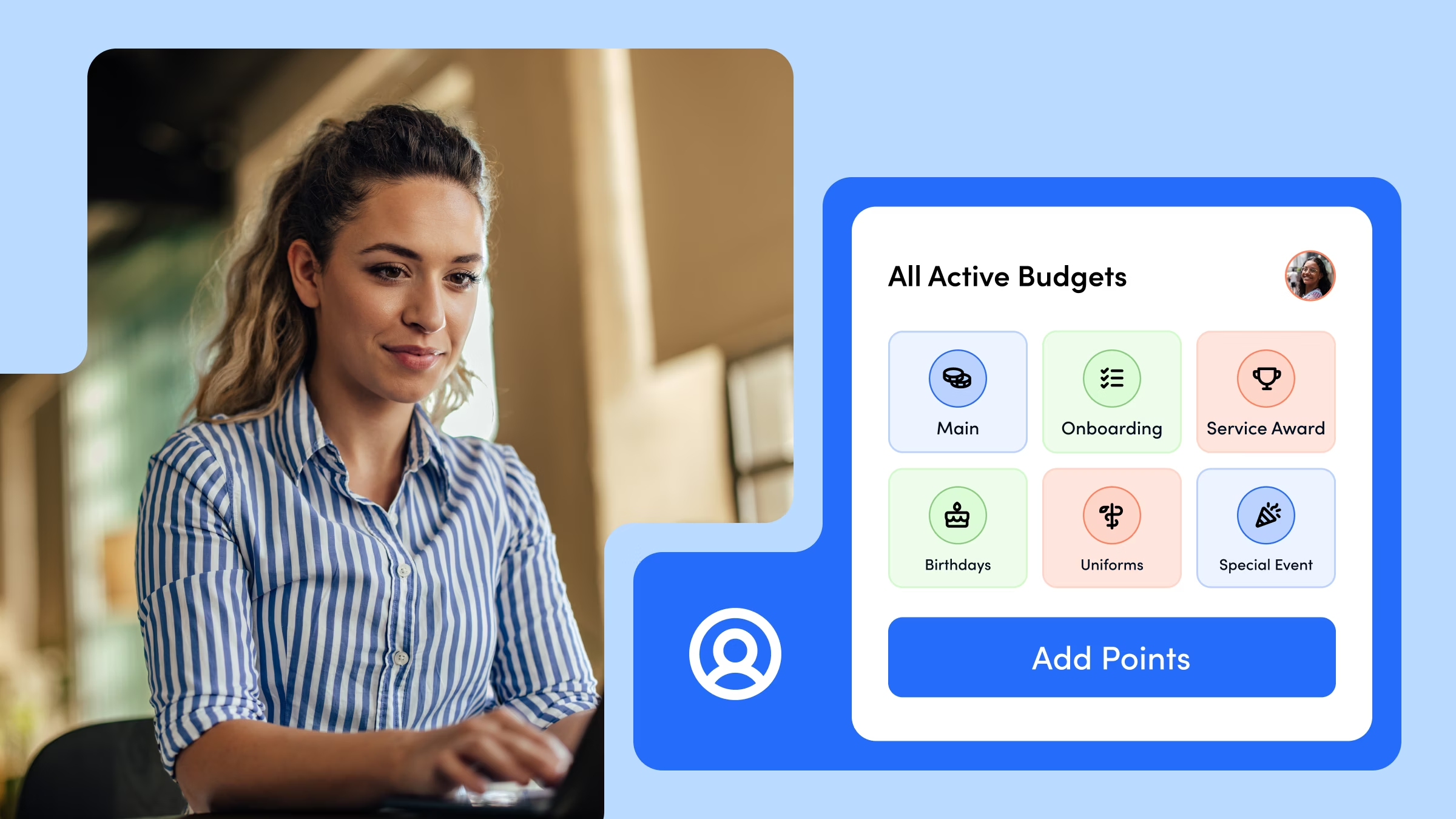
- Budget flexibility: Set program budgets that match your size and adjust as you grow.
- Automation: Trigger recognition automatically for milestones, anniversaries, and goal completions.
- Employee reward choice: Give employees access to millions of reward options instead of picking a gift for them.
- Micro incentives: Drive specific behaviors without building a full program around them.
- A platform that scales: Start simple and add programs as your business grows.
Experience tailor-made employee reward ideas that fit your organization’s unique culture. Book a demo today to explore the possibilities for teams your size.
FAQ: employee incentive ideas
What are examples of employee incentive programs?
Common employee incentive programs include performance bonus programs tied to individual or team goals, sales SPIFF programs, employee wellness challenges, work anniversary recognition programs, peer-to-peer recognition programs, and referral bonus programs.
How do you incentivize employees without cash bonuses?
Non-monetary incentives can be just as effective—and sometimes more meaningful—than cash. Options include extra time off, flexible scheduling, public recognition, professional development opportunities, experience-based gifts, preferred parking, and employee choice rewards through a platform like Awardco.
What incentives motivate employees the most?
Research on self-determination consistently points to recognition, autonomy, and growth opportunities as top motivators, not just pay. Among tangible incentives, employee choice rewards (where employees select what’s meaningful to them), extra PTO, and professional development tend to be valued highly across different employee populations.
Are gift cards good employee incentives?
Gift cards are flexible, easy to deliver, and generally well-received. They work best when they’re personalized or when they offer broad choice. Giving employees access to a full rewards marketplace can outperform a single gift card because it eliminates the guesswork entirely.
How often should small businesses offer employee incentives?
Small businesses should offer employee incentives frequently. Annual bonuses matter, but they’re not enough on their own to sustain motivation or reinforce specific behaviors throughout the year. A mix of ongoing micro-recognition combined with quarterly or milestone-based formal incentives tends to produce the best results.










.svg)


