


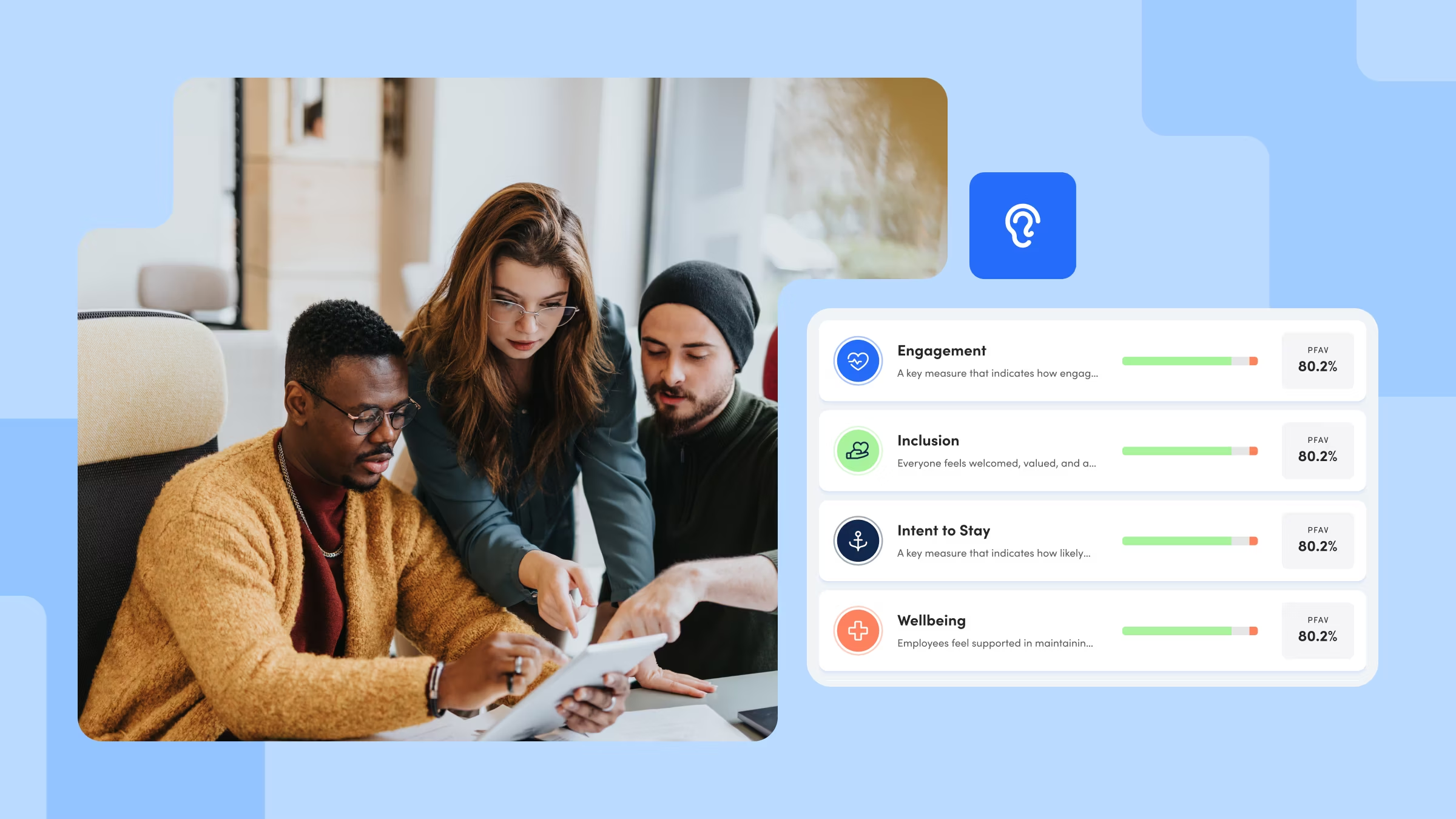
Awardco recently released our new employee feedback product, Awardco Engage™. In a recent customer conversation about their survey program, a question came up that got me thinking: are there such things as inherent “superstars” or “dead weights” in an organization?
The customer wanted to know whether it was worth segmenting employees by performance rating, and prioritising acting on feedback from higher performers. Their logic was that high performers are most valuable to the business, so optimising their employee experience should take priority.
At first glance, this sounds like reasonable logic. However, it rests on a critical assumption: is performance more a product of innate talent, or a product of environment?
The myth of the portable superstar
Research indicates performance is more a product of someone’s environment than we tend to think. There is a prevailing belief, especially in tech, that hiring “A-players” is the key to a high performing workforce. And of course, baseline skills and abilities matter, however, assuming a skills bar is met, is there something that further differentiates high performers?
The answer is yes, but it’s not employee-based. I first learned of the “portability paradox” through this fantastic MIT Sloan article by Boris Groysberg which showed that star performers who leave organizations frequently cannot replicate their performance elsewhere. It turns out talent is not entirely portable, directly challenging the notion of A-players who will shine wherever they go. The finding has since been replicated, most recently in 2025, where Professor Jérôme Barthélemy confirmed that changing companies negatively impacts worker performance, particularly in collaborative roles.
It's not what you know, it's who you know
So why does performance drop when a star moves? Research points to a loss of social capital - the trusted relationships that allow skills to be integrated and used effectively within an organization. Better relationships equals better performance.
Are some people naturally better at building relationships? Of course. As an omnivert, I can turn on my relationship-building when I need to, but I also find it genuinely draining as many introverts do. The crucial point, however, is that people are also a product of their environments. Environments that enable employees to build social capital are also environments that build high performers. This is an organizational capability, not an employee one. 2021 research by Joseph Raffiee supports this - when employees encounter friction in building relationships and integrating their skills into an organization, they're less likely to replicate their prior performance.
One important caveat to note is that social capital matters most when work is collaborative, and is less critical for largely independent work.
What this means for managers
If the “born superstar” view is outdated, what should managers actually do?
The biggest takeaway is to reduce friction for collaboration and increase opportunity for connection. Address collaboration tools that are unreliable or meeting room setups that inhibit conversation. A personal bugbear of mine, encourage (and role-model!) employees to be present in meetings, giving their attention to the conversation, allowing social cues to get picked up and relationships to deepen. Consider if your team meetings have enough room to breathe - 30 minutes rarely leaves space for the kind of relaxed conversation or jokes that build trust.
Recognition is also a fantastic way to add infrastructure to relationship building - birthday wishes, service anniversary messages, or peer-to-peer acknowledgement all encourage social capital in your organization.
Back to the original question
And for the customer considering segmenting survey results by performance? I think there is merit in the idea. But rather than focusing on what high performers are getting, use it to explore what low performers aren't getting. Where are the experience gaps between those two populations? This also reframes the whole question from "who should we care about?" to "who are we failing to enable?" - putting the onus back on the organization to do its part in creating high performing workforces.













.svg)

