


.svg)


Features for Legal Teams
Why legal teams love Awardco
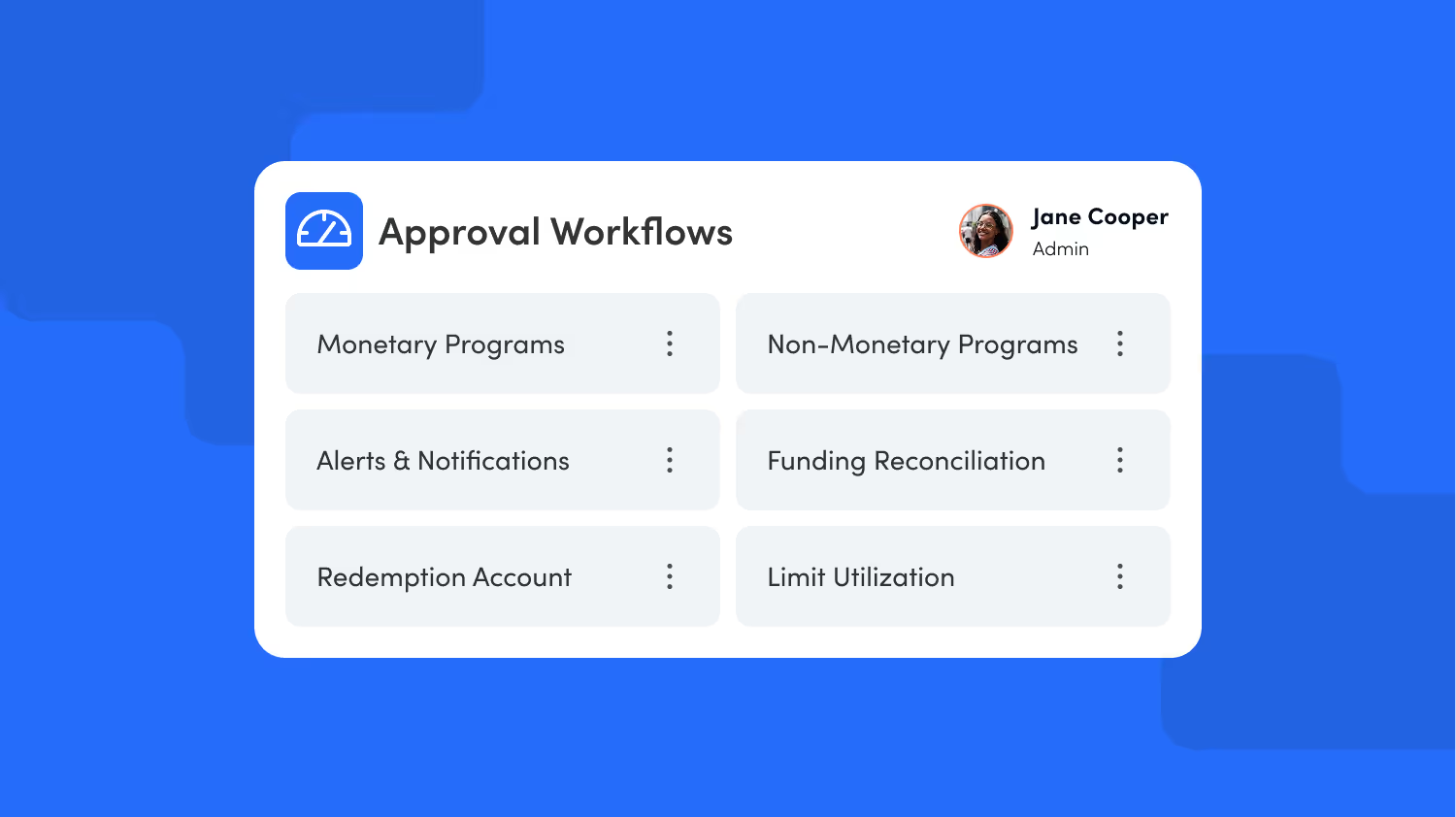
Built-in controls ensure rewards and recognition stay on-policy and audit-ready.




Premium features
Recognition that fits legal and compliance workflows
Save hours of tax compliance questions to build impactful rewards and recognition programs.


Testimonials
What our customers say












Thought leadership & resources
Thought leadership for high-performing teams





FAQ
Frequently asked questions
How does Awardco provide information to payroll and finance teams?
Awardco can provide configured data about recognition, awards, points, redemptions, reward types, employee populations, programs, budgets, and other transactions for payroll and finance processes.
Depending on the organization’s systems and requirements, information may be delivered through scheduled reports, exports, secure file feeds, APIs, or supported integrations. Reports can be configured around the organization’s selected tax and payroll process, such as including awarded or redeemed activity when that is the relevant event.
Available fields, data direction, cadence, delivery method, and automation depend on the organization’s configuration and connected systems. Payroll and Finance teams remain responsible for reviewing and processing the information.
Can organizations restrict rewards to support tax and compliance policies?
Organizations may be able to configure programs, point types, approval rules, and catalogs so that different programs offer different reward options. For example, a service-award program may use a catalog of eligible physical items, while another program may allow gift cards or other cash-like rewards when approved by the organization.
These controls can help organizations align reward choice with internal policies and the treatment their advisors have established. They do not, by themselves, determine whether a reward is taxable or compliant.
Available controls depend on the organization’s plan, configuration, reward catalog, employee data, and applicable requirements.
When does a reward become taxable: when it is awarded, redeemed, or paid?
The relevant tax event depends on the reward type, program structure, jurisdiction, and the organization’s tax and payroll policy. Some organizations evaluate taxability when points or rewards are awarded; others may use redemption or payment as the relevant event.
Awardco can support the organization’s selected approach with available recognition, award, redemption, employee, and program reports. The organization’s Finance, payroll, and tax teams must determine the applicable tax event and processing requirements.
Awardco does not make a universal tax determination for every reward or jurisdiction.
How can Awardco help organizations evaluate tax treatment for rewards?
Awardco can provide reward, program, employee, and transaction information that organizations use when evaluating tax treatment. Depending on the organization’s setup, available resources may also provide country-specific guidance and help teams understand how program settings and reward types can affect reporting considerations.
Tax treatment may differ for points, gift cards, prepaid cards, cash-like rewards, physical goods, service awards, and other reward types. It may also vary by employee location, program purpose, timing, and applicable rules.
Organizations should use Awardco’s available resources with their own tax and payroll advisors to determine the treatment that applies to their programs.
Does Awardco provide tax or legal advice?
Awardco provides technology, reporting, and resources that can help organizations evaluate and administer recognition and rewards programs. Awardco does not replace an organization’s legal, tax, payroll, finance, or compliance advisors.
Organizations remain responsible for determining how rewards should be treated under applicable laws and policies. During program design, Finance, payroll, tax, legal, and regional stakeholders should review the reward types, program rules, reporting approach, and employee populations involved.
The guidance and documentation available to an organization depend on the products, countries, and services included in its agreement.

