

For years, organizations have unintentionally relied on proximity to drive employee recognition. Leaders noticed the extra effort happening in the hallway, the person who spoke up in the meeting, or the employee who was always present in the office.
Remote and hybrid work changed that dynamic. Not because people stopped doing great work, but because great work became easier to miss.
That's why remote employee recognition has become such an important leadership conversation. The challenge isn't simply finding new ways to say "thank you" virtually. It's building recognition practices that ensure great work is acknowledged, celebrated, and rewarded regardless of where people work.
But here's what I keep coming back to: we've spent years debating whether remote work hurts culture. I think that's only part of the conversation.
Remote work changes culture, but it doesn't have to weaken it. What often erodes culture is when employees feel their contributions and impact go unseen. When recognition depends on hallway conversations, being in the room with leaders, or simply being the person a manager interacts with most often, great work can unintentionally get overlooked.
That's where recognition becomes a strategic advantage, not just a nice employee perk. The organizations that thrive are the ones that create intentional ways for people to connect, contribute, and be recognized, regardless of where they work.
I've spent much of my career focused on employee experience and people analytics, and one pattern continues to show up: distributed work doesn't automatically weaken culture. Invisible work does.
Why remote employee recognition matters now
Research continues to reinforce what many HR leaders have experienced firsthand: recognition is closely tied to connection, motivation, and retention. Data shows that 84% of remote and hybrid employees feel more connected to their company when they're recognized, and 69% of remote workers say meaningful recognition would boost their motivation. Organizations with strong recognition programs also see meaningfully lower voluntary turnover, and that holds true even in remote and hybrid environments.
None of that surprises me. Recognition has always been one of the most powerful and cost-effective levers HR has to influence engagement, reinforce culture, and help employees feel valued. And in today's workforce, recognition does more than celebrate individual contributions. It reinforces the behaviors, values, and outcomes organizations want more of.
The challenge is that many organizations measure whether recognition exists, but fewer measure whether it reaches people consistently across different work models. What's changed is the delivery challenge.
The practices that worked when teams were primarily together in the office don't always translate in a distributed environment. When recognition depends on hallway moments, live meeting attendance, or physical proximity to a manager, employees can unintentionally become easier to overlook.
Not because their work matters less. Because their impact is harder to see.

Remote and hybrid recognition are not the same problem
This is the part I think gets flattened too often. "Distributed work" gets treated as one category, but fully remote teams and hybrid teams experience different recognition challenges.
Fully remote: the risk is invisibility
When a whole team works from home, the challenge is making contribution visible at all. There's no hallway conversation to overhear, no desk to walk by. If recognition isn't built into the way the team communicates and works, remote employees can go weeks without anyone outside their immediate team knowing what they've accomplished.
The answer is creating intentional ways for great work to be shared and celebrated: async shout-outs, public recognition feeds, and recognition that lives inside the tools people already use every day.
Hybrid: the risk is proximity bias
Hybrid is a different challenge because it's not just about visibility. It's about how naturally proximity influences what leaders notice and remember. When some employees are in the office and others aren't, recognition can unintentionally follow the people who are easiest to see rather than the people contributing meaningful work and creating impact.
The person who happens to be in the room when a success gets discussed often gets associated with that success. The person doing equally strong work from home may not be as top of mind.
This usually isn't intentional. Most leaders aren't overlooking remote employees on purpose. They're responding to what they naturally see and experience. That's exactly why recognition systems and manager habits matter.
That's proximity bias, and addressing it requires intentional management habits, not just another culture initiative. The goal isn't asking in-office employees to recognize less. It's building habits and systems that ensure recognition tracks contribution instead of physical presence.
Why technology alone doesn’t complete a recognition strategy
Technology can make recognition easier, more consistent, and more scalable. But a platform alone can't solve the deeper challenge: creating a recognition strategy that works for how people actually contribute.
In a hybrid and distributed workforce, recognition can't depend on being in the right room, attending the right meeting, or having the right informal connection. Technology can help close those gaps, but only when it's paired with intentional leadership habits and a clear recognition strategy.
The goal isn't simply to add another tool or create more moments of recognition. It's to build recognition into the way work happens. That means creating opportunities for appreciation that are timely, meaningful, and accessible across different work models. Manager habits, peer-to-peer recognition, asynchronous appreciation, and meaningful rewards all play a role.
The best recognition programs don't replace human connection with technology. They use technology to make sure human connection doesn't depend on proximity.
How do you recognize remote employees effectively?
Effective remote employee recognition starts with making appreciation visible, accessible, and meaningful regardless of where employees work. That means using asynchronous recognition, integrating recognition into everyday workflows, offering relevant rewards, and measuring whether recognition reaches employees across different work models.
Here's what that looks like in practice.
4 recognition practices that actually work for distributed workforces
1. Build recognition into everyday work
Recognition shouldn't depend on who happens to be online at the same moment or sitting in the same room. Distributed teams need ways to celebrate contributions asynchronously, so great work doesn't disappear when meetings end or time zones don't align.
The goal isn't another meeting or another task on someone's calendar. It's creating moments of connection that become part of how work gets shared and celebrated.
What this looks like in practice:
- Create a public recognition feed where employees can celebrate wins beyond private thank-yous or one-on-one messages
- Automate milestone recognition (work anniversaries, onboarding completions, project milestones) so recognition doesn't depend on someone remembering in the moment
- Encourage leaders to publicly comment on or amplify recognitions, not just send private thank-yous
See how Awardco’s recogrnition platform creates these spontaneous, meaningful moments of appreciation for both online, in-person, and deskless workforces.
2. Integrate recognition into existing workflows
Recognition works best when it's part of the flow of work, not another task employees have to remember. The easier it is to recognize someone in the moment, the more likely it is to become a habit instead of another HR initiative.
One of the biggest mistakes I see organizations make is treating recognition as something separate from work. The strongest programs weave recognition into the moments where collaboration is already happening, meeting employees where they already work, whether that's Slack, Teams, Outlook, a mobile device, or another tool they use every day.
What this looks like in practice:
- Integrate recognition into collaboration tools like Slack or Teams so celebrating great work becomes part of everyday conversations.
- Make recognition accessible from mobile devices and SMS so employees can participate regardless of where or how they work.
- Build recognition into existing team rituals like daily stand-ups, weekly check-ins, company or team meetings, and project retrospectives, instead of creating separate recognition meetings.
- Make recognition a two-tap action, not a five-step form. If recognizing someone feels complicated, it won't become part of the culture.
Awardco’s integration library is impressive—and if you don’t see what you need, chances are we can build an integration to suit your needs.
3. Make recognition meaningful wherever employees work
This is the part I think gets overlooked. Meaningful recognition doesn't always require a reward, but when rewards are part of the experience, they should feel just as thoughtful as the recognition itself.
For global and distributed teams, that means offering rewards employees can actually use and appreciate where they live. Recognition that only makes sense in one country isn't truly global recognition. The goal is to create an experience that feels personal and relevant, regardless of an employee's location.
What this looks like in practice:
- Offer reward options that reflect local preferences instead of relying on a one-size-fits-all catalog.
- Make currency conversion, language support, and fulfillment seamless so employees don't have to navigate the logistics themselves.
- Give managers the flexibility to recognize contributions in ways that feel meaningful, whether that's a public thank-you, points, experiences, charitable donations, or personalized rewards.
- Don't underestimate physical moments. A handwritten note, a mailed card, or a small gift can create a memorable experience for employees who rarely interact with colleagues in person.
Platforms like Awardco make it easier to deliver locally relevant rewards at a global scale, without sacrificing a consistent employee experience.
Consistency doesn't mean every employee is recognized in the same way. It means every employee has the opportunity to receive recognition that feels meaningful, whether that's a public thank-you, a personalized note, or a reward that's relevant to where they live and work.
See how Awardco empowers global appreciation for our 7M+ users.
4. Measure recognition across work models
This is the leadership habit that ties everything together. Recognition programs shouldn't just tell you how often recognition is happening. They should help you understand who is being recognized, when, and whether those patterns differ across work models.
One of the biggest shifts I've seen in HR over the last decade is moving from measuring activity to measuring outcomes. Recognition should be no different. Are remote, hybrid, and in-office employees being recognized with similar frequency? Are recognitions tied to meaningful contributions, or simply to who is most visible?
The data is there. The opportunity is using it to coach leaders before recognition gaps become engagement problems.
What this looks like in practice:
- Review recognition activity across remote, hybrid, and in-office employees, not just overall program participation.
- Look for patterns where recognition clusters around employees who regularly attend in-person meetings or events.
- Give managers a simple monthly check: Has every team member been recognized recently for a meaningful contribution?
- Share recognition trends with leaders during talent reviews so they can identify patterns and adjust their habits.
Recognition data shouldn't be used to grade managers. It should be used to help them become better leaders.
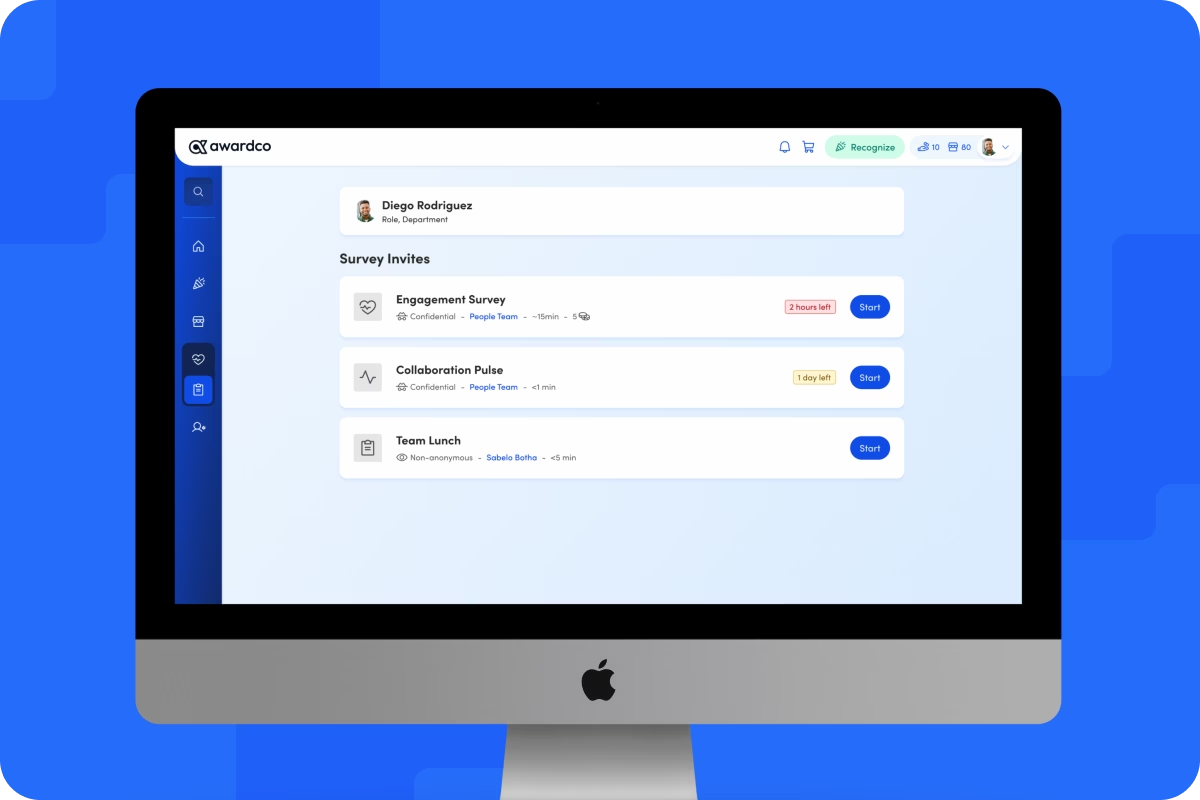
Platforms like Awardco Engage™, can help leaders monitor recognition trends, gather employee feedback, and strengthen recognition strategies over time.
One strategy for remote, hybrid, and frontline employees
This is where I think the story gets bigger than simply "home office culture." The strongest recognition strategies don't start with where people work. They start with how people contribute.
The best programs don't treat remote, hybrid, deskless, and frontline employees as separate groups that require separate approaches. They create consistent opportunities for people to be recognized while still allowing flexibility for different work environments.
Recognition access and visibility are shared challenges across every work model. The goal isn't to create a different recognition strategy for every employee population. It's to build a strategy that works wherever and however employees contribute.
For example, CloudFit Software, a distributed organization, built recognition into daily workflows rather than treating it as a quarterly event. The result was a significant increase in employee engagement, reinforcing an important lesson: recognition is most effective when it becomes part of how work happens every day, not something reserved for special occasions. That's a pattern worth paying attention to: recognition that's built for how people actually work, not for where they happen to sit.
Recognition moments that matter across distributed teams
Everyday recognition
- Peer-to-peer shout-outs celebrating great work
- Quick recognition moments through Slack, Teams, or mobile
- Public celebrations of everyday wins and contributions
Team recognition rituals
- Rotating team spotlights that highlight contributions across locations
- Async "win of the week" threads
- Manager recognition after project milestones or key accomplishments
Meaningful rewards and experiences
- Home-office support or thoughtful remote-work perks
- Localized experiences or regionally relevant rewards
- Care packages, handwritten notes, or milestone gifts
These are recognition habits, and habits are what ultimately shape whether employees feel seen, valued, and connected.
The bottom line
The future of remote and hybrid recognition isn't about where employees work. It's about building a recognition strategy that makes contributions visible, creates meaningful moments of appreciation, and keeps employees connected no matter where they work.
The strongest recognition programs don't eliminate distance. They ensure distance doesn't determine who gets seen.
Great work happens everywhere. Recognition should too.
Get a demo to see how Awardco helps organizations build recognition strategies that reach every employee, wherever they work.








.svg)