


The best employee recognition programs don’t happen by accident. They’re intentionally built, aligned to company culture, and supported by the right technology.
And while many organizations understand why recognition matters, the real differentiator is how you design a program that inspires your people and delivers measurable ROI.
We’ll walk through everything you need to build the best program possible, covering:
- What types of employee recognition programs are best?
- What makes an effective employee recognition program?
- How to overcome common challenges when implementing a program?
- How can technology help run a recognition program?
- What employee rewards are best to offer?
By the end, you’ll see exactly why Awardco is G2's highest rated recognition platform of choice for organizations determined to build a recognition program that truly moves the needle.
TL;DR: Key takeaways
- Employee recognition can lower turnover, improve performance, and raise overall employee satisfaction when done right.
- Utilize different recognition programs to reach everyone equally, such as peer-to-peer, performance-based, incentives, and wellness programs.
- Build the best recognition program with these strategies:
- Understand the why
- Define program objectives
- Get leadership buy-in
- Create a team of recognition heroes
- Train managers
- Implement successfully
- Make it easy
- Remind and refine regularly
Awardco has become the leading employee recognition software for organizations seeking the best employee recognition program—one that’s flexible, automated, rewarding, and designed for long-term engagement. From global enterprises to fast-growing teams, Awardco helps HR leaders create recognition experiences that actually work.

7 must have employee recognition programs
The best employee recognition programs offer variety. Because one type of appreciation rarely fits or aligns with each moment. Awardco makes it easy to support all these recognition types in one place, seamlessly and at scale.
Peer-to-peer recognition program
A peer-to-peer recognition program is one that enables coworkers and peers to acknowledge an employee's efforts. Because this recognition comes from peers and friends who often know the employee better than leadership, this recognition is often seen as more genuine and truthful.
Peer recognition can boost performance and feelings of belonging—and the best part is that it is often easy to implement and requires little to no oversight. Simply encourage all employees to pay attention to their peers and empower them to recognize each other.
Examples of peer recognition programs include:
- On-the-spot programs, where employees can instantly send a message of gratitude to their coworkers whenever they feel like it.
- Shoutout programs, where employees have a small budget each month to send points to their coworkers.
- MemoryBooks™, where employees write personalized messages for their coworkers’ service anniversary celebrations.
One Awardco client, ClickUp, built a hugely impactful peer recognition program, where they give each employee 100 points every month to reward their peers. This has had a big impact on their culture of engagement and appreciation, contributing to a 94% recognition rate.
Performance-based recognition program
While it’s vital to recognize employees for everything they bring to the table, recognizing employees who work hard and perform at a high standard is also important. When leaders recognize employees who go above and beyond, they reinforce those productive behaviors.
In fact, 92% of employees are more likely to repeat a specific behavior after they’re recognized for it.
Some examples of performance-based programs include:
- Weekly shoutout on social media. Shoutout an employee who did great work that week on the company’s social media platform. Add a small monetary reward or gift card to really make the program pop.
- Employee of the month. Pick an employee each month who consistently exceeded expectations and reward them with points, cash, a public mention, or some other fitting recognition that shows how much you value their contributions.
- Wall of fame. Similar to an Employee of the Month, creating a permanent shrine to the excellence of your employees is a fun and visible way to show your appreciation.
The purpose of performance-based employee recognition is to recognize the people in your organization who work hard. They deserve to be thanked for their efforts, and by receiving thanks, they’re more likely to stay at the company and continue to work hard.
Incentive programs
Employee incentives are a great way to drive specific behaviors and build a company culture that is based around healthy behaviors and company values. They can also be used to get employees more engaged and excited about your company!
Here are some great incentive program ideas to help you get started:
- Wellness incentives. Help your people build and maintain healthy habits by setting up programs that reward things like walking more, eating healthy, going to the gym, meditating, or similar wellness activities.
- Safety incentives. If your employees work on a manufacturing floor or in similar high-risk environments, incentivize safety and compliance by recognizing and rewarding those who follow all of your safety practices.
- Sales incentives. Sales is the foundation of any business growth, so getting the most out of your sales team is key. With a rewarding sales incentive, you can motivate your salespeople in a healthy, rewarding, and sustainable way.
Southwest Gas, another Awardco client, developed a customized safety program that included the necessary courses and certifications for its workforce. They then ensured that everyone who participated was recognized and rewarded. This got everyone excited about safety and has helped them improve their culture.
Employee milestone programs
Organizations can implement various milestone programs, the most common of which is service awards. For every year an employee stays at the company, they get recognized and potentially rewarded with a gift. (Check out our guide for creating an effective service award catalog!)
While service awards are a great starting point, employees go through many milestones in both their professional and personal lives. Getting a promotion, graduating, getting married, having a child, buying a home, and retiring are just a few examples.
Creating recognition programs that celebrate these milestones demonstrates to employees that the company values their happiness and well-being beyond the workplace. And when individuals feel valued, they’re more motivated and engaged.
Here are some specific ideas for recognition programs for employee milestones:
- Service awards. Recognize each employee’s work anniversary every year. Not each year has to include an expensive gift, but a program that at least provides genuine messages of gratitude will go a long way.
- Employee birthday celebrations. Celebrate employee birthdays the right way with a hand written card, a snack that the employee likes, and some points that they can spend on themselves in whatever way they want.
- Personal milestone gift boxes. Are employees getting married? Provide a gift box with marriage-centered gifts. Did they buy a new home? Give them a house-warming box with gift cards for furniture. Did they have a baby? Give them a box full of diapers, toys, and other essentials.
CPS Group utilized Awardco’s automation and reward network to make their service awards more meaningful, personalized, and timely. This has resulted in a 20% increase in employee engagement scores!
Wellness-focused recognition programs
Burnout, stress, and a lack of work-life balance are running rampant in the workforce today. Stress makes turnover 3X more likely, and burnout costs the U.S. $300 billion each year in lost productivity. Because of how common these feelings are, 87% of employees expect their organizations to support their work-life balance.
The good news is that you can create wellness programs that help employees maintain both mental and physical health. Some good examples of these programs include:
- Gym membership reimbursement. This makes it easy for employees to afford a gym membership.
- Wellness classes. Hold classes where nutritionists, personal trainers, financial professionals, or mental health professionals provide training for employees in overall wellness.
- Fitness equipment rewards. Recognize employees’ efforts to work out by rewarding them with a catalog of fitness equipment, such as running shoes, workout clothes, or sports equipment.
- Spa days. Give everyone a gift card and a day to go to the spa for some good old-fashioned pampering. You can also send self-care items in a care box to remote employees or those who don’t have a spa in their area.
- Therapy help. Provide mental health app subscription fees or subsidize therapy costs.
- Extra PTO. Reward employees with the occasional extra day off. At Awardco, everyone gets one extra day off after each quarter, just as a way to thank employees for their months of hard work.
By recognizing your people with cash that can be spent on wellness costs, fitness apparel, or mental health support, employees will be able to combat stress and burnout much more effectively.
Seven Bridges has leveraged Awardco’s customization options. Not only have they created a wellness program for their employees, but they’ve also developed nearly a dozen additional programs for employees to participate in.
Employee award programs
Employee awards are an important part of recognition—many of the recognition programs listed in this post are for wide-reaching appreciation, which is great. But employee awards are meant to honor the achievements of your top performers and keep them engaged and satisfied.
In addition to rewarding top performers, good employee award programs can incentivize and motivate everyone else to put in greater efforts. Here are some examples of employee award programs to help you brainstorm:
- Monthly awards. Whether you set up an Employee of the Month, Mentor of the Month, culture champion, or any other program, it's key to set up clear criteria for how to win, offer rewarding awards, and host a small award ceremony each month, announcing the winner to the company.
- Department-specific awards. Every department has different responsibilities and ways of measuring success. Instead of sticking everyone into a broad award program, let each department come up with its own. That way, everyone from IT and Marketing to Sales, Quality Assurance, and HR will have ways to be recognized for their work.
- Professional development awards. Growth and learning are important for every employee. After you create professional development programs, award those who participate and achieve their goals to show them you appreciate their efforts.
Visionworks has created multiple custom recognition programs, including an annual award program and Gold and Silver Vision awards to recognize the achievements of its employees on a regular basis.
Remote employee recognition programs
Nearly 40% of employees are working fully remote or on a hybrid schedule. Companies can implement a few different remote recognition programs to help these employees feel supported and cared for, even if they don’t go into the office.
Here are some ideas:
- Offer each employee a budget to buy home office equipment they may need, such as ergonomic equipment, a computer monitor, or nice headphones.
- Create a “care package” program that sends boxes full of goodies to remote employees for holidays, service anniversaries, or just to show gratitude.
- Let remote employees choose some personalized swag so that they can feel like a part of the company.
- Set up Lifestyle Spending Accounts to provide a regular allowance that employees can spend on approved expenses. (Learn more about LSAs here!)
Remote workers may have a harder time participating in your work culture, but these remote recognition programs will help them get involved and feel supported.
CloudFit Software has a mostly remote workforce, and they were able to bring everyone together in a culture of appreciation with Awardco. With their powerful recognition capabilities, they’ve seen a 350% increase in employee engagement.
.avif)
An ineffective vs. an effective recognition program
Sometimes, seeing what a bad recognition program looks like is a great way to ensure your program is on the right track. Dive into the ineffective vs. effective attributes of a recognition program below.
What makes an ineffective employee recognition program?
An ineffective employee recognition program can be a missed opportunity to boost morale, increase productivity, and retain top talent.
Here’s a table to visualize the difference between effective and ineffective programs:
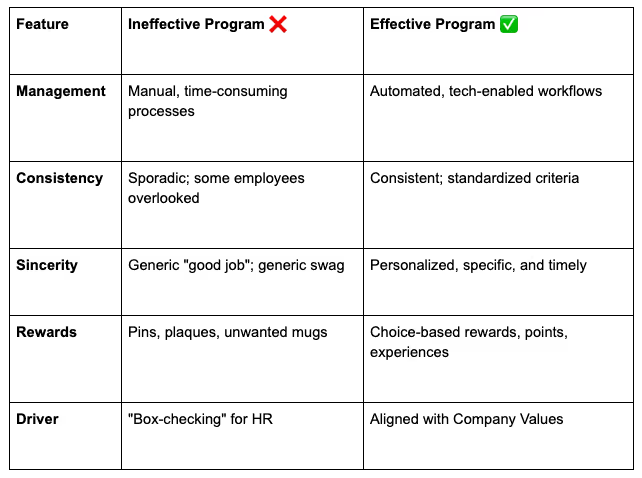
These are the foundational principles of a good employee recognition program. Engage leaders, reinforce values, make recognition genuine, and offer the best rewards—with these best practices, your recognition programs will be a success.
8-Step Guide to Build the Best Employee Recognition Programs
The best programs do not simply exist—they’re used often and well. Awardco removes friction so teams can recognize in-the-moment, automate milestones, and reward employees with the largest reward network in the world.
Below, we walk through eight steps to drive an effective program tailored to your organization. We encourage you to use these as your best practices and remain on track with your goals.
Step 1: Define the “why” behind your program
What is the reason you want to implement a new recognition program? Do you want more engaged employees? Do you want to offer more frequent rewards? Do you want to help remote employees feel more supported? Understanding the “why” gives you a goal to work toward and a direction to go.
Step 2: Strategize program objectives and focus
Figure out which types of behaviors you want to reward, how you want to reward them, and which rewards you’ll offer. Also consider the medium of recognition you want (physical or digital) and whether the recognition will be public or private. These logistics will ensure that the program has a clear goal and direction.
Understanding the program's goals will give you a bedrock of purpose to build upon.
Figure out which types of behaviors you want to reward, how you want to reward them, and which rewards you’ll offer. Also, consider the medium of recognition you want (physical or digital) and whether the recognition will be public or private.
Step 3: Develop a case and get leadership buy-in
Create a business case for the program that shows the projected desired outcomes. Familiarize yourself with the benefits of recognition and show your leadership team why the new program will be effective and impactful. (Use our handy-dandy employee recognition ROI calculator to help with this!)
Once leadership believes in your vision, things will go a lot smoother. Learn how to inspire leadership about elevating your recognition and rewards strategy.
Step 4: Create a team of recognition heroes
Select a few leaders and employees to serve as champions for the new recognition program. These employees will spread the good word and provide helpful insights. Also, ensure that they know the characteristics of effective employee recognition:
- Timely
- Specific
- Genuine
- Visible
- Value-driven
A recognition program built around a team of knowledgeable leaders will find success much easier than one without them.
Step 5: Train managers in the program
As mentioned above, leaders play a significant role in determining the effectiveness of a recognition program. If leaders and managers use the program and lead by example, most employees will follow suit. As you start to implement a new program, train your leaders on the why, when, and how of the program.

Step 6: Implement your program
Implementation needs to be an exciting event if you want the program to stick. If the program is introduced into employees’ day-to-day work without any fanfare, they are unlikely to notice the change, let alone buy into it.
Here are some strategies for implementing your new recognition program:
- Set up a countdown. For the weeks leading up to your official launch, develop marketing to spread the word and activities to get your people involved and excited.
- Build a brand. Design your recognition program with your brand’s colors and themes, and name the program something fun (for example, The Nest Schools calls their rewards “Nest Eggs”).
- Set up an initial event. A custom program that includes everyone with fun prizes or games is a great way to implement your program. For example, one Awardco client, All Access Staging, reached their manufacturing workforce with a St. Patrick’s Day program on the day of their launch—leaders dressed in green and handed out points to their employees.
Communicate consistently and effectively. This is the key to adoption and engagement. So choose the right channels for communication:
- Send out information in your company newsletter a few times leading up to the launch and a few times after the launch.
- Announce the new program in a company all-hands meeting.
- Create a hype video to share in-person and online.
- Use your chosen recognition platform’s automation system to send emails out to everyone as often as you like.
Step 7: Simplify participation for everyone
Make recognizing and rewarding a breeze for everyone. Digital tools, such as Awardco, make it easy to send genuine messages and points to peers and coworkers. Making it easy to participate in the new program is vital for getting everyone involved.
In fact, one of our clients, Paramount, used employee recognition to strengthen and reinforce their culture during a tumultuous merger. By making recognition easy to access for everyone, Paramount successfully brought its global workforce together.
Step 8: Remind, revisit, and revise regularly
No matter how much preparation you did, your program will probably need to adjust in time to suit shifting needs, new employees, or changed budgets:
- Establish a feedback loop with employees. Make sure employees have a way to give feedback on your recognition program. Do they feel recognized enough? Are the reward options satisfying? Are they comfortable with public recognition? All this feedback can help you refine your programs.
- Use KPIs to measure success. KPIs, such as recognition rate and employee engagement scores, can help you measure the success of your program. Set goals and frequently track your progress toward them.
- Make iterative changes based on the above. Based on feedback and results you see, make changes to your program to increase its effectiveness and better suit your people.
Keep your new employee recognition program at the top of people’s minds by sending out reminders frequently. As you get feedback on the program and see the results, don’t be afraid to revise it or the rewards to make things more effective.
The role of technology in employee recognition programs
The best recognition programs leverage the best technology. The Awardco platform centralizes recognition, rewards, automation, analytics, and communication—all in one ecosystem built for impact.
Awardco helps your recognition programs be more effective and reach a wider audience, especially remote and offline employees. You’ll not simply scale your program, but also amplify the positive impacts of the program by spreading the good word and making recognition more visible.
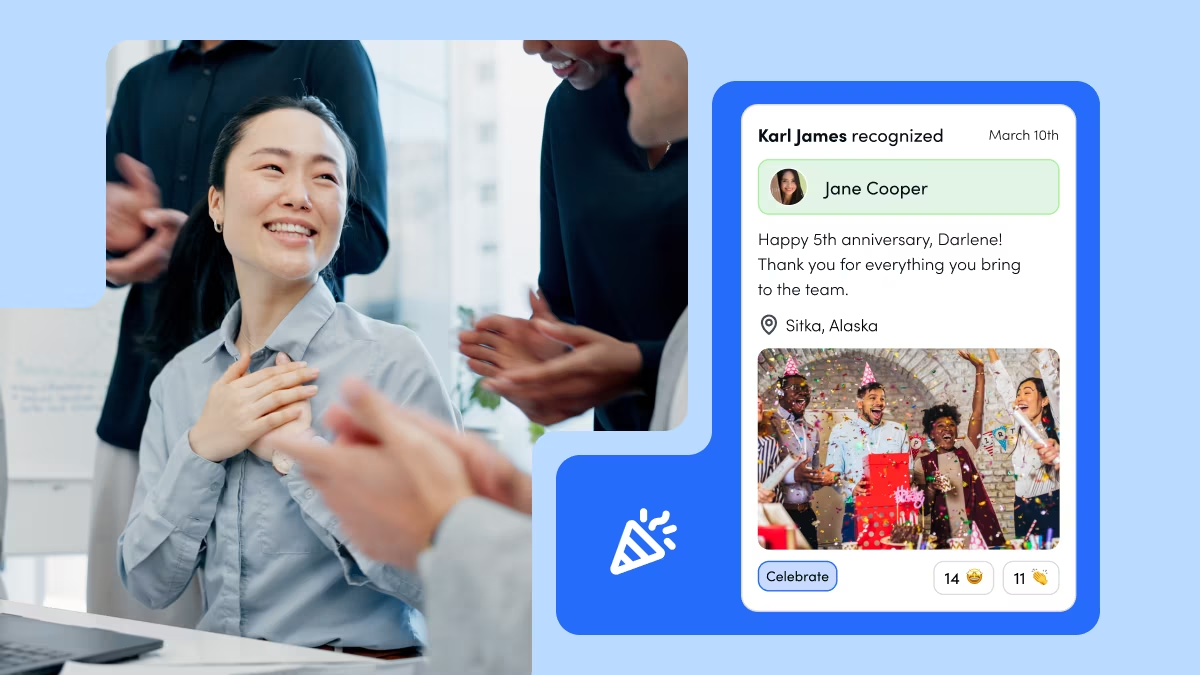
Our platform can also help remind employees about recognition, nudge managers to use their recognition budget, or elongate the good feelings associated with recognition by posting it to a social feed.
Do some research into which employee recognition platform is best for you so that you can utilize technology to make your program as effective as possible.
Maximize employee recognition programs today
If your goal is to build the best employee recognition program (not just a functional one), Awardco gives you the tools, automation, reward flexibility, and global support to make recognition effortless and meaningful every day.
Receive your demo to explore how our platform can help you reach your KPI goals.
Frequently Asked Questions about Employee Recognition
What is the most effective type of employee recognition?
While dependent on culture, peer-to-peer recognition is often cited as the most effective for daily engagement because it builds a sense of belonging and is perceived as more genuine than top-down recognition.
How much should a company spend on employee recognition?
Research suggests that companies spending at least 1% of payroll on recognition see an 85% boost in employee engagement.
What is the difference between recognition and rewards?
Recognition is the psychological component (feedback, praise, gratitude), while rewards are the tangible component (money, gifts, points). The best programs combine both.










.svg)


