

The best employee engagement ideas strengthen recognition, belonging, growth, feedback, flexibility, and trust. Effective programs are inclusive, easy to access, supported by managers, and measured over time.
Employee engagement ideas: the quick answer
Sustainable employee engagement doesn’t come from a single program or one big rollout moment. It’s built through consistent, intentional recognition that shows people they matter over time.
The challenge for most organizations isn’t finding employee engagement ideas. It’s finding ideas that actually work in real workplaces, across different teams, and throughout operational realities.
What makes an employee engagement idea effective?
Employee engagement is the extent to which employees are committed to their work and the organization they work for. Engaged employees feel a sense of purpose and motivation in their jobs and are willing to go above and beyond to contribute to their organization’s success.
Employee engagement is not the same as job satisfaction, and it runs deeper than office perks such as midweek pizza parties, a ball pit slide, or polyester team t-shirts. Employees really don’t want to spend their precious time on games and forced socialization; they prefer more purposeful professional and personal support, wellbeing, work-life balance, and rewards and recognition for a job well done.
To create truly sustainable engagement, forget one-off efforts and launch initiatives that are easily repeatable, hard-wired into your company values, supportive of individuals, backed by managers and inclusive of everyone—from the C-suite to your deskless frontline crews.
The test of your initiative is whether your idea can be scaled across your whole organization and properly measured (ROI and EX). And for long term engagement, weave recognition, communication, and opportunities for growth naturally into everyday employee experiences.
Recognition-based employee engagement ideas
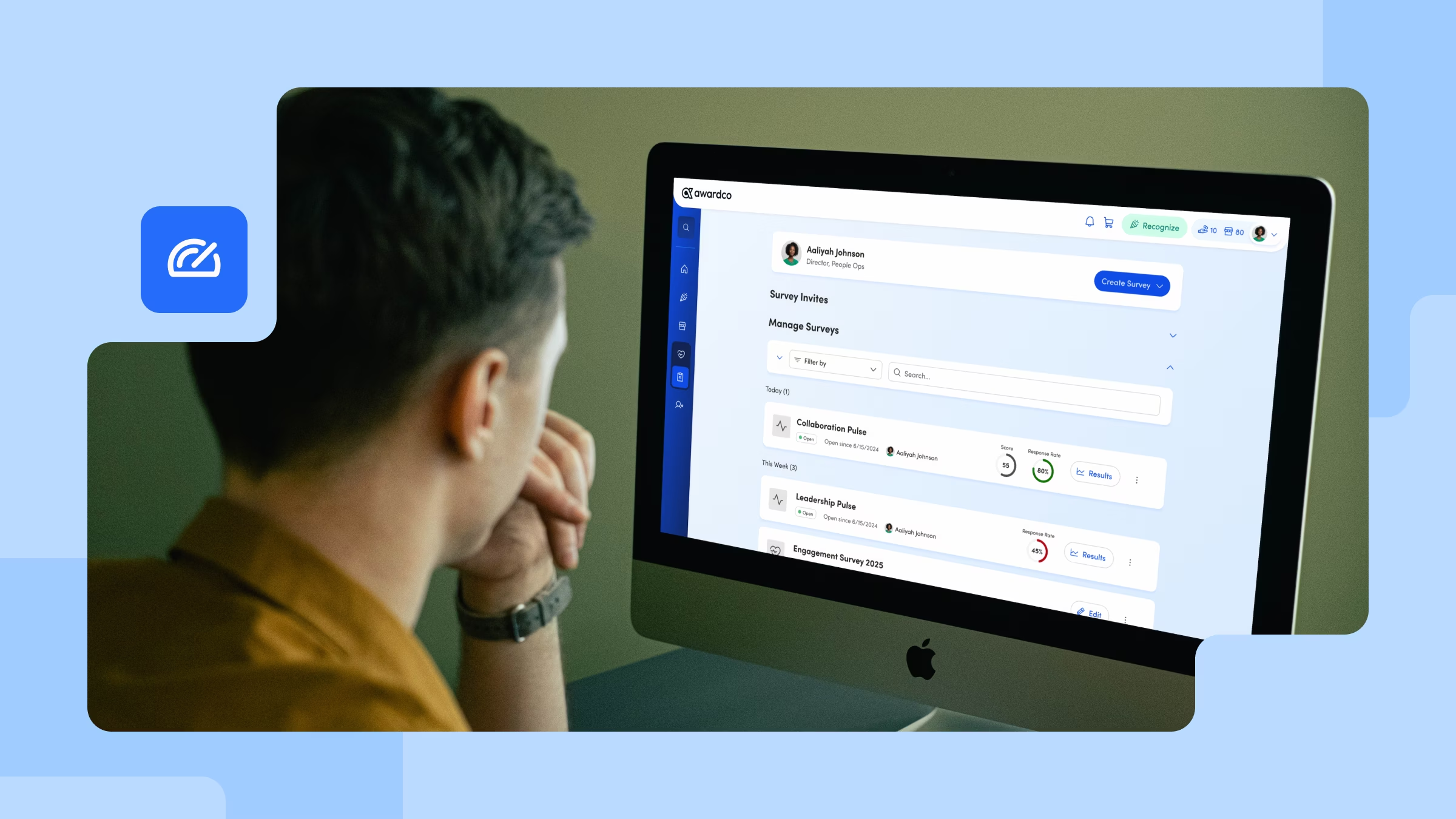
You no doubt already have surveys in place for listening to your employees, and you try to recognize and reward them. But have you linked the two together? If you haven’t, your expensive survey and recognition tools miss a vital connection, leading to some employees feeling invisible and let down by inaction.
Bring your employee listening and recognition tools together, and you have the perfect system for hearing and rewarding everyone. Engagement only works if recognition reaches everyone consistently, not just once at its launch.
Try these recognition-based ideas:
1. Values-based spotlight weeks
Every month, take a week to focus on one of your company values. Use employee recognition points to reward those who demonstrably live it.
Objective: Reinforce company values using recognition.
Best for: Reminding teams why they do the work they do.
Cost/effort: Low cost, low effort.
How to implement it: Spotlight one value each month and reward employees who embody that value.
How to measure it: Track recognition, participation numbers, and survey sentiment.
2. Peer-to-peer appreciation power hours
Schedule a dedicated 15-minute slot once a month for everyone across the organization to log in and send appreciative digital shoutouts.
Objective: Boost peer appreciation.
Best for: Remote, hybrid, and busy teams.
Cost/effort: Free to low cost, low effort.
How to implement: Schedule a monthly 15-minute shoutout slot.
How to measure: Track the number of shoutouts sent and team participation.
3. Set up ERGs and special interest communities
Employee Resource Groups (ERGs) foster a diverse, inclusive workplace, providing support and help with personal or career development. They create safe spaces where employees and their allies can bring their whole, authentic selves to work.
Objective: Build belonging, mattering, and inclusion.
Best for: Diverse or growing teams.
Cost/effort: Low cost, moderate effort.
How to implement: Support employee-led groups with clear sponsorship.
How to measure: Track membership, events, and belonging scores.
4. The ‘Unsung Hero’ Award
Sometimes, your backroom staff are even more overlooked than the frontline. Award this specifically for back-office or support roles that aren't customer-facing.
Objective: Recognize overlooked contributions.
Best for: Support staff and back office teams.
Cost/effort: Low cost, low effort.
How to implement it: Invite nominations for hidden impact workers.
How to measure it: Track nominations and role diversity.
5. Employee of the Month program
It’s a classic, but still effective when run consistently and transparently—ensuring it goes to different people each month.
Objective: Recognize consistent, standout performance.
Best for: Visible recognition.
Cost/effort: Low cost, low effort.
How to implement: Set clear criteria and select winners fairly.
How to measure: Track nominations, winners, and any repeat recognition.
6. Birthday recognition programs
Everybody has a birthday. That’s what makes this one so simple but effective when it’s consistent, centralised, and consolidated with your engagement program.
Objective: Celebrate every employee regularly.
Best for: All teams and departments.
Cost/effort: Low cost, low effort.
How to implement: Automate birthday rewards and messages.
How to measure: Track delivery, redemption, and feedback.
7. Holiday recognition and celebration programs
Similarly, everyone celebrates the holidays in some form or another. Holidays are recurring touch points, perfect for engagement moments.
Objective: Create inclusive seasonal moments.
Best for: Global or culturally diverse teams.
Cost/effort: Low to moderate cost and effort.
How to implement: Create flexible holiday rewards or celebrations.
How to measure: Track participation, redemption, and feedback.
8. Customer impact or customer satisfaction awards
Every employee has the end customer in mind. Spotlight employees who create great customer outcomes by helping customers have their say.
Objective: Link recognition to customer impact.
Best for: Customer-facing and service teams.
Cost/effort: Low to moderate cost and effort.
How to implement: Reward those employees named in customer feedback.
How to measure: Track feedback, CSAT, and recognitions.
9. Charity Days
Take engagement outside the organization and:
- either set up a company-wide goal or task that results in a donation to a cause voted for by all employees
- or give every employee a paid Volunteer Day to allow teams to give back to their local communities.
Objective: Connect engagement to social impact.
Best for: Purpose-led and community-minded teams.
Cost/effort: Low to moderate cost and effort.
How to implement: Offer and publicize volunteer days or donation challenges.
How to measure: Track participation, donations, and volunteer hours.
Frontline, deskless, remote, and hybrid engagement ideas
Busy, public-facing employees on production floors, in warehouses, retail locations, hospitals, vehicles, or across rotating shifts, are too often failed by office-based management. In fact, 49% of these deskless and frontline workers feel that there’s a cultural divide between themselves and their corporate, desk-based colleagues.
Deskless employees may not have desktop or email access, they may have to share devices, some shifts are more slack than others about appreciating their workers, and the appreciation platform may not be accessible to all. These are just some of the inequalities facing frontline and deskless workers.
Here are some engagement activities for hybrid teams, and creative recognition ideas for making frontline and deskless employees feel seen, included and appreciated:
10. AwardCode scavenger hunts
Hide physical AwardCodes around a warehouse or retail floor for employees to find and scan with their mobile devices, to pick up instant points.
11. Mobile-first pulse check-ins
Send single-question surveys that take only a few seconds to answer, using internal communication, to find out what’s going on with frontline employee engagement.
12. Shift-start shoutouts
Managers read out one peer recognition from the digital feed, getting the shift off to a great start. Make this a daily ritual.
13. On-the-spot recognition
Make appreciation happen in real time, using mobile or physical recognition tools. Make somebody’s day—don't wait until the night after the shift.
14. Remote and hybrid recognition rituals
Managers – treat your remote workers the same as your in-house staff. Send remote employees offline early, sanction longer lunch breaks, or consider gifting a Friday afternoon off or a late start Monday voucher so they feel included, too.
15. Manager-led recognition for frontline teams
Trust your managers to know their teams by giving them sanction and budget to celebrate daily frontline contribution wins easily, in ways that most resonate with these employees.
16. Seat at the table
Bring in a frontline or remote worker to participate in a high-level strategic or committee meeting. This gives them visibility and a voice, where normally they would be excluded.
17. Gear upgrade
Find out what specialized tools or high-performance clothing your frontline and deskless workers use in their daily work. Don't let this equipment wear out - upgrade the gear to make their job that bit easier.
18. Create champion roles
Elevate high-achieving employees to ‘Safety Champion’ or ‘Shift Expert’ to give them extra responsibility and resumé-standard leadership skills without needing formal promotion or title changes.

Growth, feedback, wellbeing, and innovation ideas
Employees want to learn and grow. Research shows that young workers are particularly eager to do so (63% of workers aged 18 to 24 and 53 % of workers aged 25 to 34). Not much drives engagement better than the opportunity to grow.
And when organizations invest in the growth of their employees, they’re 11% more profitable and 2X more likely to retain their employees.
Recognition works best across the entire employee lifecycle – from day one of a new hire’s journey, through key moments, all the way to exit. Employees need to see a path of growth for them to hit their personal goals, learn the skills they’re interested in, and reach the positions they hope to reach.
These ideas will help:
19. Choose your own learning stipends
Instead of a generic training course, give employees points that they can redeem for books or certifications of their choice.
20. Reverse mentorship
Pair Gen Z new hires with senior leadership to provide both learning and teaching opportunities. New hires can share their more modern, digital-focused ideas, while the senior leader can share their experience.
21. Skill-share marketplaces
Everybody loves finding out interesting things about their colleagues, and even better if there’s learning involved too. Employees host 15-minute ‘micro-teaches’ about their hobbies (e.g., ‘How to make kimchi’), their work tips (e.g., ‘Excel shortcuts’) or their expertise (e.g., ‘Get started with Python’.)
22. Recognition built into onboarding
Onboarding can be an underwhelming experience, with 54% of employees in one study dissatisfied with theirs. Make onboarding recognition part of your culture from day one by simply asking new hires how they like to be recognized, and with what. This personalization demonstrates you’re taking a genuine interest in your new employee.
23. ‘Heroic Failure’ award
Teams that never make mistakes never make anything. Reward a team or employee who took a brave, bold risk that didn’t succeed, but which gave the organization a valuable learning opportunity. This is great for fostering psychological safety and a growth mindset.
24. Inspirational book club
Reward high-performing employees with books on leadership and ask them to pass them onto other employees with their thoughts on a note inside.
25. Lunch and learns
When an employee has completed a training course, ask them to do a lunchtime presentation on it to their teams to give their own, unique perspective, and practice presentation skills.
26. Uninterrupted learning
Reward an employee with 3-hour blocks of time where they can unplug from work and use that time to study, research, or complete that online course they’ve wanted to do.
Employee engagement ideas by budget, effort, and workforce type
Engagement ideas don’t have to cost a fortune. Some simple ones cost nothing; more if budget allows you to make strategic investments:
Free or low-cost ideas
Ideas that require time, visibility, and manager consistency rather than extra budget include peer-to-peer appreciation power hours, shift-start shoutouts, seat at the table, reverse mentorship, lunch-and-learns, and onboarding recognition.
Moderate-budget ideas
When you have some budget to fund rewards, equipment, or program support, consider: holiday recognition, customer impact awards, charity days, manager-led recognition, gear upgrades, learning stipends, and uninterrupted learning time.
Strategic investments
Prioritize these when the goal is lasting culture change, stronger inclusion, or scalable engagement infrastructure: values-based spotlight weeks, ERGs and special interest communities, mobile-first pulse check-ins, champion roles, and skill-share marketplaces.
Real-world employee engagement examples
It’s often easier to visualize how employee engagement ideas work when you see how other companies have benefited from them. Here are some real-world examples for four types of recognition:
Lifecycle recognition
NIBCO, a manufacturing company, supports its employee growth using a scalable recognition and engagement system that connects milestones, learning, and career development – all stages of the employee lifecycle.
NIBCO built its recognition in stages, starting with automated milestones that made recognition easier for every employee to access: birthdays, service anniversaries, and new-hire onboarding.
The company then expanded into employee-driven programs, such as Associate of the Month, wellness micro-learning incentives, and safety and compliance rewards tied to training completion—turning skill-building into visible, rewarded progress. Manager spot awards also helped reinforce contributions across global and frontline teams in real time.
NIBCO then linked recognition to learning, volunteering, and growth opportunities at scale. The result was stronger engagement, motivation, and retention, including $5.79 million in turnover cost savings.
“Awardco has definitely helped us do recognition even better. Recognizing someone you work with, even if you don’t see them every day, has been empowering.” Ashley Martin, NIBCO President & CEO
Frontline/deskless engagement
Southern Oregon Head Start (SOHS) reimagined recognition for their distributed workforce of educators and frontline staff who often work isolated from central leadership.
With an accessible digital-first approach, SOHS made recognition easier, more consistent, and accessible across locations and roles through service awards, birthday shoutouts, and annual values awards.
The initiative strengthened visibility, connection, and appreciation across teams, contributing to higher engagement and an 82% decrease in annual attrition.
Non-monetary recognition
People want to recognize each other, and they do not always need an incentive to do it. Citizens Business Bank launched a peer-to-peer program tied to their core values that had no rewards attached. In the first week alone, more than 300 recognitions were sent.
“We knew people needed a way to say thank you, and this made it easy.” Citizens Business Bank team member.
Champion-led
To scale employee engagement, it needs to go through people, not platforms, and ambassadors are your friends here.
At Cardinal Health, HR business partners and operational leaders identify champions, who then receive training, ongoing communication, and simple data like login reports so they can support recognition adoption locally.
Want more real-world examples from HR practitioners? Watch the full discussion we had with admins from Cardinal Health and Citizen Business Bank as they talk engagement strategies.
How to build a 90-day employee engagement plan
New engagement ideas work best when they're rolled out in phases rather than all at once. A 90-day plan gives you room to listen first, test what resonates, then scale with confidence.
Days 1–30: Listen and prioritize
- Gather baseline data: Pull existing survey results, exit interview themes, and any current recognition or participation metrics to understand where engagement is falling short today.
- Talk to managers and frontline leaders: They see day-to-day morale up close and can flag which teams are most disengaged and why.
- Choose two or three ideas to pilot: Pick a mix that's low-cost and easy to launch, such as peer-to-peer shoutouts or manager-led recognition, so you can build momentum quickly.
- Assign ownership: Name who's responsible for each pilot, from launch through measurement, so nothing stalls after the first week.
Days 31–60: Pilot and communicate
- Launch your pilot programs: Roll them out to a smaller group, department, or location before going company-wide.
- Communicate early and often: Tell employees what's changing, why it matters to them, and how to participate. Silence is the fastest way to kill adoption.
- Equip managers: Give them simple scripts, budget, or tools to reinforce the new ideas in team meetings, shift huddles, or one-on-ones.
- Watch for friction: Note where participation is low or where deskless and frontline employees are struggling to access the program, and adjust in real time.
Days 61–90: Measure and expand
- Review participation and sentiment: Compare pilot data to your baseline to see if recognition frequency, survey scores, or engagement activity have moved.
- Ask for feedback directly: A short pulse survey or informal check-in will tell you what employees actually valued versus what fell flat.
- Refine before scaling: Cut what didn't work, double down on what did, and adjust access or format for frontline and remote teams if needed.
- Expand company-wide: Roll out the strongest ideas broadly, and set a cadence for revisiting the plan every quarter so engagement never goes stale.
How to measure whether engagement ideas are working
The most effective programs improve both workforce participation and performance over time.
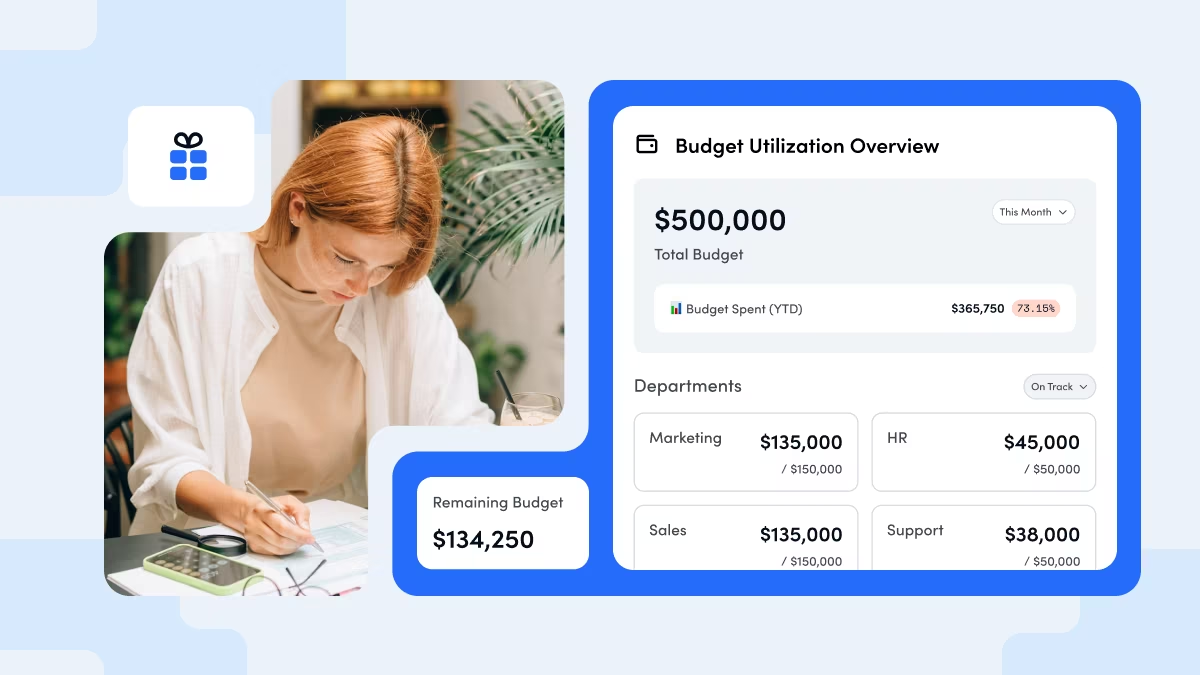
Measure engagement through both employee satisfaction and business outcomes using customizable surveys and AI-powered sentiment analysis. For a real, unfiltered overview of your current workplace culture, measure why employees feel the way they do by tracking sentiment shift and recognition frequency, and monitor how often employees get shout-outs for great work or attitude.
Include metrics such as:
- Employee participation rates (in recognition and/or engagement activities)
- Retention
- Absenteeism
- Survey results
You can use this free ROI calculator as a part of your program.
You can do all this with platforms such as Awardco that provide real-time dashboards to track employee experience. Incentivise performance, simplify admin, and deliver real, tangible rewards that employees love—anywhere in the world.
Don't let your engagement strategy live only in a PDF. Automate, scale,and measure your culture with Awardco.
FAQs
- What are the best employee engagement ideas?
- What are some free employee engagement ideas?
- What employee engagement ideas work for remote employees?
- What employee engagement ideas work for frontline and warehouse teams?
- How can small businesses improve employee engagement?
- How often should companies run employee engagement activities?
- How do you measure whether an engagement idea is working?
- What employee engagement activities should companies avoid?
What are the best employee engagement ideas?
The best employee engagement ideas build purpose, trust, and growth through consistent recognition, throughout the employee lifecycle.
High-impact ideas include:
- Peer shoutouts and values-based spotlight
- Automated birthday and service milestone celebrations
- Personalized growth, learning opportunities, and goal discussions
- Flexible work arrangements and holistic wellness challenges
- Two-way feedback through regular surveys and discussions
These approaches build sustainable, long-term connection across remote, office, and frontline teams.
What are some free employee engagement ideas?
- Peer-to-peer gratitude: Shoutouts acknowledging colleagues for daily support and teamwork don’t need points or budget.
- Value spotlights: Manager-led recognition to celebrate employees who embody company values.
- Two-way feedback: Anonymous surveys, executive Q&As, and 1 to 1 discussions to build open communication.
- Personal milestones: Public celebration of service anniversaries and birthdays.
What employee engagement ideas work for remote employees?
- Digital recognition: Peer-to-peer shoutouts, automated birthday celebrations, and manager value spotlights delivered via accessible online platforms.
- Flexible work and autonomy: Allowing remote work options and flexible scheduling to create work-life balance and prevent burnout.
- Wellness: Custom digital wellness challenges and incentives for personal health.
- Continuous Feedback: Regular surveys and virtual executive Q&A sessions.
What employee engagement ideas work for frontline and warehouse teams?
- Mobile-friendly recognition: Peer-to-peer shoutouts and manager-led recognition communicated via mobile access or personal email
- Real-time recognition: Spot awards for safety, performance, and training completion
- Local champions: Site ambassadors who drive adoption locally.
- Flexible rewards: Gifts such as A-Pay cards that employees can use to redeem rewards immediately in daily life.
How can small businesses improve employee engagement?
- Low-cost recognition: Peer-to-peer appreciation and manager value spotlights that build engagement with little budgets
- Two-way feedback: Regular surveys and conversations with leaders to build trust.
- Growth and milestones: Support employee development goals and celebrate birthdays and every service anniversary.
How often should companies run employee engagement activities?
Employee engagement shouldn't be treated as a periodic event or a single rollout. Instead, embed recognition and engagement continuously into daily operations and everyday employee experiences. To keep engagement sustainable and prevent it from stagnating, connect recognition into existing lifecycle touchpoints, with habitual appreciation from day one, and refresh it with periodic program updates.
How do you measure whether an engagement idea is working?
- Participation and sentiment: Track employee activity levels, recognition platform usage, and survey results.
- Business Impact: Monitor retention, turnover, and absenteeism data
Programs are successful when they improve both workforce participation and overall organizational performance over time.
What employee engagement activities should companies avoid?
Companies must avoid treating engagement as an isolated event, relying solely on single rollout moments, or using ‘one-size-fits-all’ tools tailored to office staff that exclude frontline and deskless workers. Avoid communication that doesn’t include two-way feedback channels, and activities that don’t fit with everyday employee experiences or encourage long-term growth.








.svg)