
Nomination programs are the crown jewels of employee recognition, but most organizations aren’t getting their full value.
Research from Awardco’s Center of Excellence shows that when recognition is delivered by senior leadership, it carries significantly more impact and can sustain engagement for up to a year after the moment has passed.
That’s the upside. But let’s be honest about what it takes to get to that moment when the CEO is presenting the Employee of the Year award on stage.
Behind the scenes, many nomination programs are a heavy lift. They are time-consuming to manage, difficult to scale, and often held together by a mix of forms, spreadsheets, manual follow-ups, and the sheer grit of an HR leader.
Many organizations are still trying to run modern recognition on outdated strategies. If you’ve ever run one of these programs, you know exactly what this looks like.
The reality of running nomination programs
You launch a nomination program for your company’s most prestigious award. Employees are encouraged to share success stories about their colleagues. Submissions begin coming in. At first, it feels like momentum is building.
Then the operational reality sets in:
- Nominations are collected through forms, emails, or shared documents
- Someone consolidates everything into a central spreadsheet
- Review committees are coordinated – with some people hard to loop in, and others insisting on being involved
- Leaders are asked to review raw, unstructured submissions in limited time
- Timelines begin to slip as you wait for everyone’s feedback
There’s friction at every step, and while all of this is happening, the employee experience is largely ignored.
From an employees’ perspective, they submit a nomination and then… nothing. No confirmation beyond a generic message. No visibility into what happens next. No sense of whether their effort mattered.
This is what I call the “black hole.”
What the “black hole” of nomination program visibility is really costing you
The black hole isn't just an operational issue, it’s also a cultural one.
When nominations disappear into a hidden process, a few things happen:
- The nominee never sees the appreciation unless they happen to win
- The nominator doesn’t know if their message was ever read or valued
- Managers miss valuable insight into what their team members are doing well
- The organization loses visibility into patterns of impact across teams and regions
As a practitioner, I’ve seen this firsthand. Once, while migrating historical nomination program data into a new digital system, a colleague discovered she had been nominated for the company award three times over the previous few years, yet she had no idea. Those nominators took the time to write thoughtful, detailed recognition of her work, but none of it ever reached her.
That is a missed opportunity at every level. Those moments could have reinforced engagement, strengthened manager awareness, and contributed to a stronger culture of recognition over years of this employee’s tenure. Instead, these stories, data points, and words of encouragement were effectively lost.
Nomination programs are an absolute goldmine of positive stories, but so many get left behind.
A different approach
This is where I’ll offer a hot take. What I’m about to suggest isn’t how most nomination programs are run today, but please don’t fall back on “the way we’ve always done it.”
So how might you actually capitalize on the full value of your nomination program? Treat the nomination itself as a part of the experience. More specifically, the nominee gets notified right away that they’ve been nominated, and they get to see what the nominator said about them. And their manager and team get to see it too. It’s a moment of celebration.
You might be thinking … “Doesn’t that take away the surprise?” or “Isn’t this program supposed to lead up to a big reveal moment?”
That’s fair, because it’s how most of us have seen these programs work.
But stick with me. Because in practice, that model is exactly where a lot of value is lost.
In the programs I’ve seen work best, the nomination itself becomes part of the recognition experience.
Imagine this shift:
- Nominations don’t disappear into a black hole. They create value immediately.
- The nominee receives immediate appreciation, and their manager gets instant insight into that person's impact.
- There’s a snowball effect. When people see others being nominated, they are inspired to add their own voices.
- There are more nominations overall (in my experience, this shift has created 3x nominations at two separate companies)
- Nominations are higher quality and more representative of your organization.
You don’t lose the final reveal moment. That still matters. But it’s no longer the only moment when recognition happens.
It’s about realizing the full return of your investment. No longer are you designing a program that delivers impact at the very end to a small group of people. You’re capturing value throughout the process, in moments that would have otherwise been missed.
More people participate. More stories surface. Managers get better insight into their teams. Individuals get to experience a recognition moment that would have otherwise gone into a black hole.
Making this work in practice
So, you’re sold on the idea of evolving your process, but you’re still thinking, but nomination programs are still so much work.
I can’t dispute that. However, they are one of the most powerful tools in your recognition strategy, so they’re well worth the effort.
And the right platform can remove some of the administrative burden and make this approach scalable. Awardco’s new nomination functionality can help in many ways:
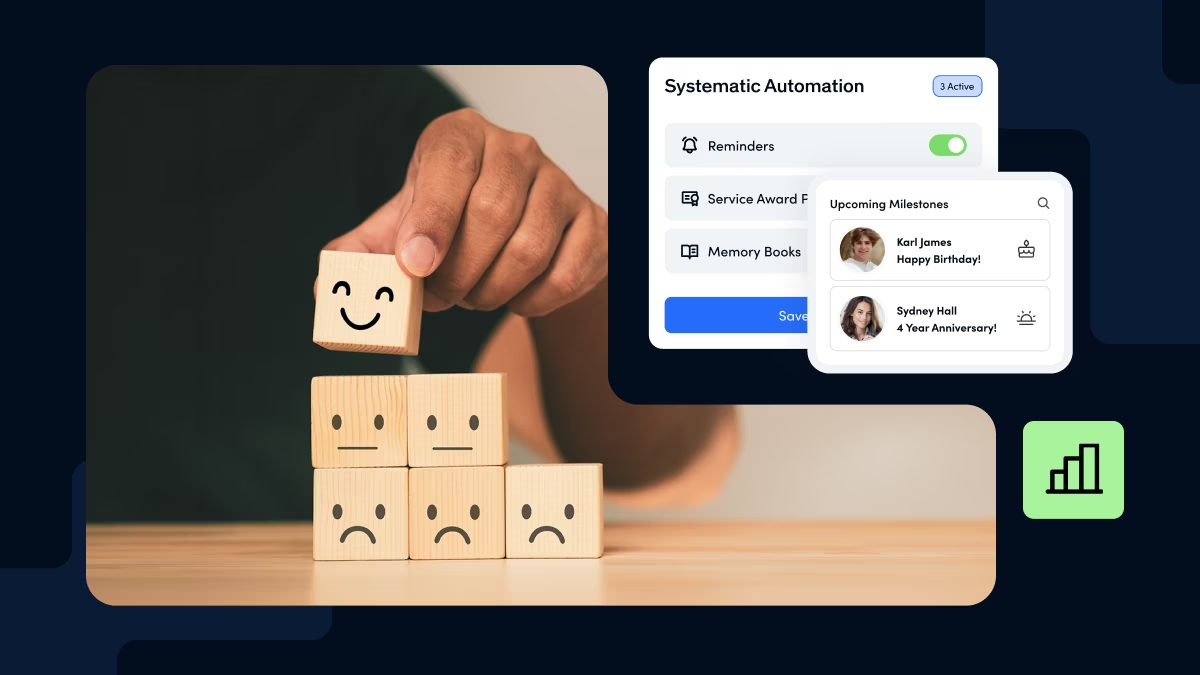
- Nominations can be visible as recognitions (when you want them to be) instead of disappearing into a black hole
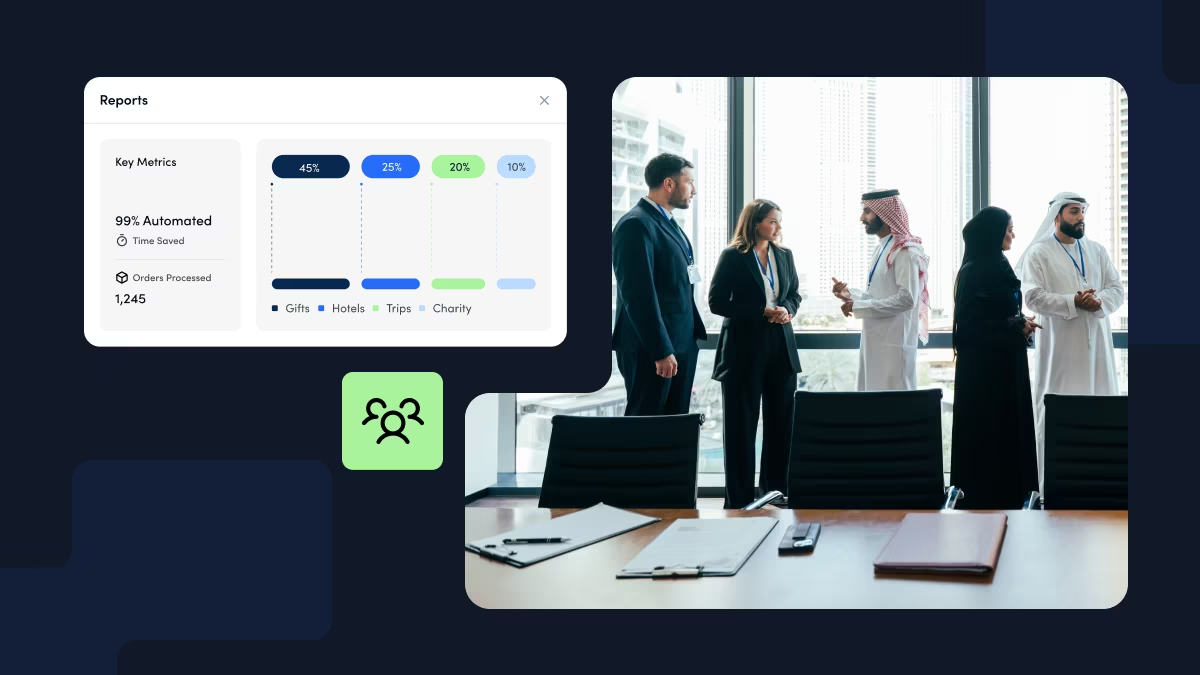
- Workflows are structured and automated, reducing the administrative burden on HR and program owners
- Review processes are streamlined, so leaders are evaluating clear, consistent information instead of raw inputs
- Data becomes actionable, helping organizations identify gaps, trends, and opportunities before the program ends
Where to go from here
The truth is, even in a 'black hole' process, final award recipients still receive meaningful recognition. Recognition from senior leadership is powerful no matter how it’s delivered.
So what kind of nomination program does your organization actually need?
In the next part of this series, we’ll break down different program types, structures, and use cases so you can design something that fits your culture, not just replicate what you’ve seen elsewhere.











.svg)


.svg)