

Eight years ago, I received a heart transplant. I'd spent my whole life planning to work in healthcare, and instead I ended up on the other side of it, as a patient watching an entire care team show up for me during some of my hardest days. That experience changed my career path and made the concept — and impact — of workplace recognition deeply personal.
So when I talk about recognition in healthcare, I’m not talking about a nice-to-have. I’m talking about a system designed to support the people who kept me alive, and the thousands more like them who show up exhausted, undervalued, and still choose to care.
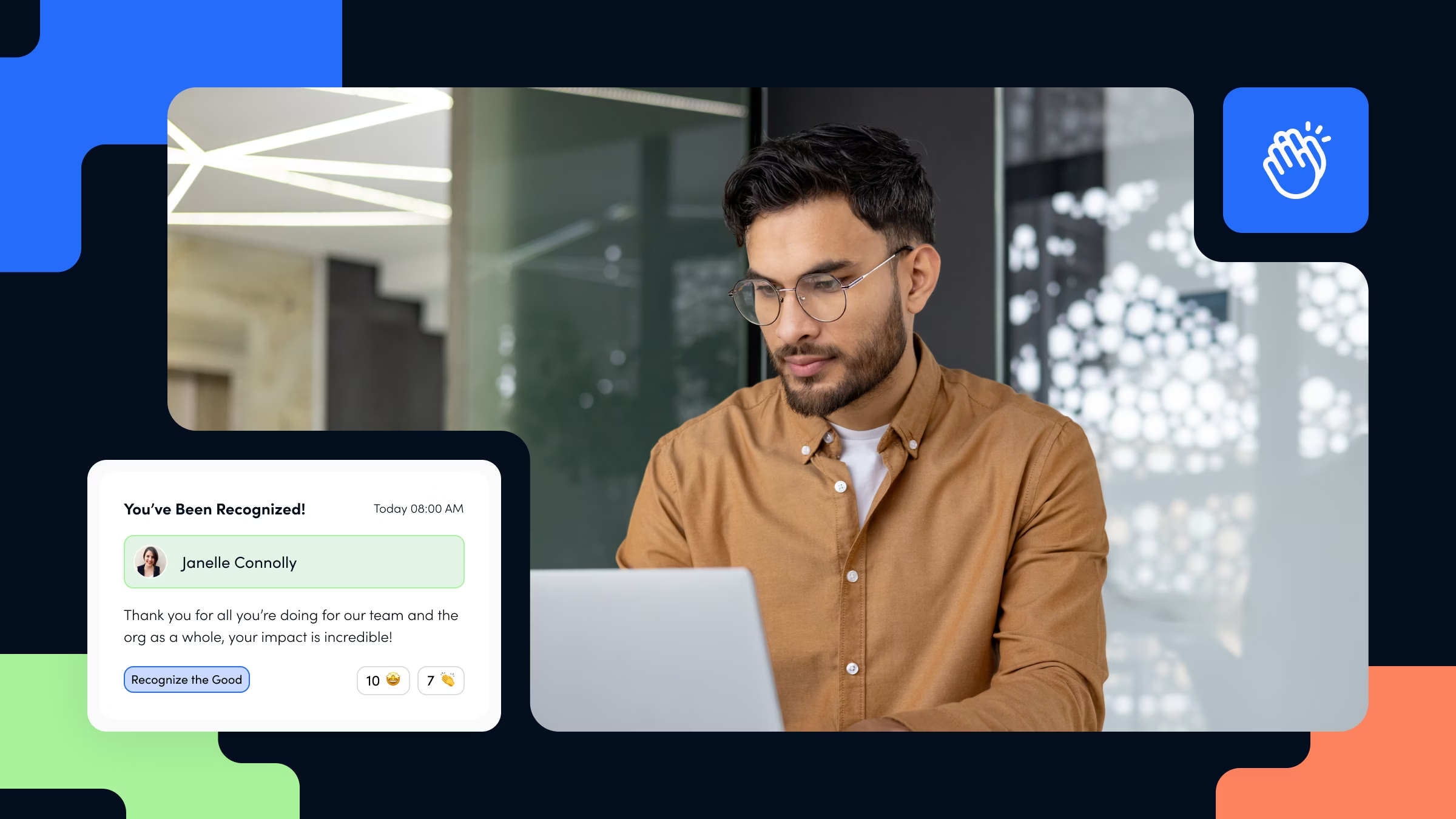
Healthcare employee recognition is the practice of frequently acknowledging caregivers and staff in ways that are timely, specific, and easy to access during daily work. Done well, it reduces burnout, improves engagement, and reinforces the behaviors that lead to better staff and patient experiences. Done poorly (or not at all), it becomes just one more thing that quietly tells your people they're replaceable.
This is the guide I wish every healthcare HR leader, nurse manager, and executive had on hand before they built (or rebuilt) their recognition strategy.
How does employee recognition reduce burnout in healthcare?
Employee recognition reduces burnout in healthcare by helping staff feel seen, valued, and connected to purpose. When recognition is timely and built into daily work, it sustains well-being, rebuilds caregiver confidence in the significance of their work, and fosters the social support necessary to fight the emotional fatigue that causes disengagement and turnover.
Real-world example
Americare’s story shows the impact recognition can have. Just months after implementing Awardco, they’ve achieved an 89% login rate and a 112% recognition rate, reinforcing the idea that healthcare employees want and need frequent recognition.
Additionally, early indicators show that the widespread and meaningful recognition facilitated by Awardco is already lowering Americare's overall turnover, including crucial first-90-day turnover.
Why healthcare employee recognition matters now
Let's dive into why this matters. Instead of tossing around vague recognition jargon, I want to focus on what healthcare leaders are actually experiencing right now: short staffing, emotional exhaustion, and a workforce that's stretched thinner than it's ever been:
- 3 in 5 physicians say they’ve suffered from burnout
- 54% of nurses report feeling burned out
- 7 in 10 clinicians don’t feel valued
When caregivers feel unseen and emotionally depleted, burnout compounds. Every unrecognized double shift, every hard conversation with a patient's family, every missed moment of "thank you" adds up. And when the people remaining in the field are already overworked, the absence of recognition makes an already heavy job feel unsustainable.
Here's what the data tells us about the impact recognition can have when it's done right:
- Employees who feel valued are 4x more likely to be engaged
- Hospitals with strong recognition cultures have lower rates of medical errors and faster incident reporting cycles.Employees who feel recognized are 48% less likely to feel burned out
- Caregivers from this Press Ganey study who reported frequent recognition were 2.3x more likely to say they felt empowered to provide exceptional patient care
- A Gallup review showed that hospitals in the top quartile for employee engagement (heavily influenced by recognition) saw:
- 21% higher profitability
- 17% higher productivity
- 10% higher patient loyalty
Healthcare workers, in particular, tend to value recognition even more than employees in other industries since so many of them chose this field because they wanted to help people, not just because they needed a paycheck.
That's exactly why recognition can't be treated as a seasonal appreciation campaign. It has to be operating infrastructure, something built into the day-to-day rhythm of the work, the same way scheduling or safety protocols are.

The link between employee experience and patient experience
Think about it. It's hard to deliver a calm, compassionate patient experience when the person delivering it is emotionally depleted and running on empty. Recognition reinforces the exact behaviors that support safety, teamwork, and consistent, compassionate care. Recognition is connected to patient outcomes, not separated from them.
That connection shows up in the data too. Health systems that pair recognition activity with patient experience metrics have found the two often move together. That doesn't prove recognition alone causes better patient outcomes, but the pattern is consistent enough that leaders are increasingly building their business case for recognition around it.
If you're trying to get buy-in from your C-suite, this is the argument that lands: recognition isn't just a culture play, it's a patient experience and profitability strategy.
The real recognition problem in healthcare
Here's something I want to push back on: I don't think healthcare organizations struggle with recognition because leaders don't care. Every leader I've worked with genuinely wants their people to feel appreciated. The problem is almost always structural.
Recognition breaks down in healthcare for a few very specific reasons:
- It's too manual. If recognition depends on someone remembering to write a card or send an email in the middle of a 12-hour shift, it's not going to happen consistently.
- It's too delayed. By the time a manager gets around to recognizing something that happened two weeks ago, the moment (and a lot of its impact) is gone.
- It's too manager-dependent. Managers are stretched too thin. If they're the only ones empowered to give recognition, the whole system has a bottleneck.
- It's too desk-bound. Nurses, techs, environmental services, and support staff aren't sitting in front of a computer where a typical recognition platform lives.
None of these are character flaws. They're workflow problems, and workflow problems have workflow solutions.
4 healthcare recognition practices that actually work
If you're building or refreshing a recognition strategy, here are the four practices I'd prioritize, in order.
1. Make recognition part of the clinical workflow
Recognition has to work during long shifts, unpredictable schedules, and the actual physical flow of patient care, not just in a browser tab someone might open at the end of the day. That means mobile-first tools and in-the-moment use cases: a nurse manager who can recognize someone from her phone between rounds, or a pre-printed physical card a shift lead can hand off on the spot.
See how Awardco prioritizes mobile-first solutions to empower deskless recognition.
2. Open recognition beyond the manager
Some of the most meaningful recognitions in healthcare never comes from a manager at all. Peer-to-peer recognition matters because coworkers see the small acts of teamwork and sacrifice that leadership often misses.
Patient and family recognition matters even more, because it reconnects staff to the reason they got into this work in the first place. I still think about the story of a social worker who almost left her job, until she received a message from a family she'd helped a year earlier. That single moment changed her trajectory.
Learn about External Recognition™ and how it empowers patients to recognize employees.
3. Automate milestones and recurring moments
Service anniversaries, birthdays, onboarding check-ins: these shouldn't rely on someone remembering to act. Automating the moments that are on a predictable calendar frees up your admin team to focus on the recognition that actually needs a human touch, and it makes sure nobody's five-year anniversary quietly slips through the cracks.
These milestones are low-hanging recognition fruits that your recognition platform should handle for you.
4. Connect listening to action
Recognition and employee listening should live in the same ecosystem. If you're running engagement surveys, add a question specific to recognition so you have a baseline to measure against. And when you hear from your people about what's not working, whether that's burnout, staffing gaps, or feeling disconnected from leadership, let recognition be part of how you respond, not just a separate initiative running in parallel.
See how Awardco Engage™ brings surveys, data analysis, and recognition together to bring employee listening full circle.

Recognition for deskless and frontline healthcare teams
I want to be really direct about this one: offline recognition in healthcare is a requirement, not an optional workaround. If a meaningful share of your workforce doesn't sit behind a desk—and in most health systems that's the majority—then a recognition strategy that solely lives on a computer screen is only reaching part of your organization.
Here's what actually closes that gap:
- AwardCodes™, physical, branded cards that let a leader hand someone recognition right on the spot, on the unit, in the hallway, or at the nurses' station, with points attached that the employee can redeem later on their own time.
- Digital signage and wall displays in break rooms and near time clocks, so service awards and spot recognitions are visible to people who can’t log into a platform during their shift.
- SMS and mobile notifications for staff who have a phone but not a computer, which covers a huge portion of frontline healthcare.
- External Recognition™, which lets patients, families, and visitors recognize the caregivers who made a difference in their experience, even when they can't remember a name.
That last one is personal for me. As a lifelong patient myself, I've walked into clinic rooms with QR codes for exactly this purpose, and it's genuinely moving to know that a patient or family navigating some of the hardest moments of their life still has an easy way to say thank you to the person who helped them through it. That's the kind of recognition that never loses its meaning, no matter how often it happens.
What healthcare leaders can learn from real programs
Talking about recognition in the abstract only gets you so far, so let me tell you about a health system that actually did this well.
Franciscan Missionaries of Our Lady Health System (FMOL Health) launched a structured recognition program through Awardco built around service awards, peer-to-peer recognition, and manager-led programs. A few things stood out in how they approached it:
- They created praise cards for contingent staff who didn't have platform access, so recognition still reached PRNs and non-badge employees, not just full-time staff.
- Every recognition was tagged to one of four guiding values (be the love, be the guide, be the catalyst, be the bridge), which kept the program tied to mission instead of feeling like a generic point system.
- Adoption was driven by real infrastructure: executive sponsorship from their VP of Total Rewards, a multi-channel communication plan across intranet, video, and webinars, and leadership development in partnership with Gallup so new managers were actually trained on how to recognize well.
A year in, survey participation had climbed into the high 80s, and leadership described a shift in the day-to-day energy of the organization, something they said was hard to put into words but easy to feel walking through the halls.
FMOL Health isn't the only example. Health systems like Children's Nebraska and New York-Presbyterian Hospital have found similar patterns: recognition sticks best when employees help shape it.
Peer recognition carries unique weight during periods of crisis or change, and the leaders with the strongest engagement scores are often the ones who simply schedule time on their calendar every week to give and respond to recognition.
Watch the webinar for the deeper discussion
Everything I've shared here is the strategic foundation, but if you want to hear how a real healthcare system built this from the ground up, including the budgeting decisions, the change management, and what they'd do differently, that's a conversation worth sitting in on directly.
Watch the on-demand webinar, Restoring Heart in Healthcare: How Recognition Combats Burnout and Builds Employee Resilience, to hear how healthcare leaders are using recognition to reduce burnout, strengthen resilience, extend appreciation beyond the organization, and build programs that improve retention and performance.
The takeaway
If there's one thing I want you to take from this, it’s that recognition in healthcare is not a seasonal campaign, a free snack, or a plaque on the wall. It's a continuous, frontline-friendly system that:
- Prevents burnout by helping caregivers feel seen and connected to purpose
- Strengthens patient experience by reinforcing the behaviors patients actually feel
- Reaches every employee, not just the ones sitting behind a desk
- Extends beyond your organization to the patients and families your teams serve
- Gets stronger over time when it's backed by leadership, automation, and real listening
Healthcare will always come with hard days. But when recognition is built into the fabric of how your organization operates, it becomes one of the few things that reminds your people why they chose this work in the first place.
Awardco is trusted by 3,000+ organizations worldwide to make recognition like this possible, at scale, for every type of employee. If you're ready to see what that could look like for your health system, schedule a demo or start with the webinar above.






.svg)