
When we began evaluating recognition platforms at one of the world’s largest banks—nearly 290,000 employees across more than 70 countries—we knew we weren't simply replacing technology.
We were looking for a platform and partner that could modernize a fragmented experience, embed recognition into the flow of work, deliver more value back to employees, and support the complexity of a global organization.
That experience continues to shape how I think about enterprise recognition today.
After spending 17 years at JPMorgan Chase, including my last eight years focused on employee experience and workforce strategy, I had the opportunity to join Awardco's Center of Excellence (COE).
Awardco’s COE is made up of former HR practitioners and subject matter experts who have led recognition and employee experience inside global organizations. We've been in the buyer's seat ourselves, which allows us to combine lived experience implementing and innovating with Awardco's technology to help organizations build successful recognition strategies.
Over the last two years at Awardco, I've had the privilege of partnering with many of the world's largest organizations as they design, launch, and evolve their recognition strategies.
Regardless of where they are in their journey, I hear many of the same questions:
- How do we demonstrate the business impact of recognition to leadership?
- How do we make recognition easy enough that employees actually use it?
- How do we deliver one global recognition strategy without sacrificing local flexibility?
- How do we reduce administrative overhead while improving governance?
- How do we manage recognition budgets at enterprise scale?
- How do we eliminate unnecessary markups and administrative costs?
Those are enterprise questions.
The platform you choose will absolutely influence your recognition strategy, but it shouldn't define it. The best technology gives you the flexibility to build the strategy that's right for your organization, not force your organization to adapt to the technology.
If I were sitting on the buyer's side of the table again today, looking for enterprise recognition software, these are the things I’d keep in mind.
Think globally, design locally
One mistake I see organizations make is assuming a global recognition program should create the exact same experience for every employee.
The goal isn't consistency. The goal is equity.
Employees in New York, Singapore, São Paulo, and London don't experience work the same way. They don't always communicate the same way, celebrate the same way, or even think about public recognition in the same way. Recognition shouldn't ignore those differences.
The key is this: flexibility doesn't require fragmentation.
I often describe the approach as Core + More: create one enterprise foundation built around your values and culture. Then, allow business units, regions, acquisitions, or employee populations the flexibility to tailor recognition to their unique needs.
At enterprise scale, you shouldn't have to choose between global consistency and local flexibility.
Recognition should fit the way people work
One conversation I have surprisingly often isn't about recognition at all.
It's about friction.
Employees already have enough systems to navigate throughout their workday. If recognizing a colleague requires leaving the work they're doing, opening another application, and remembering another password, participation will always be lower than it could be.
I've learned that increasing recognition isn't always about asking employees to do more. Sometimes it's simply about making recognition easier. Removing the friction.
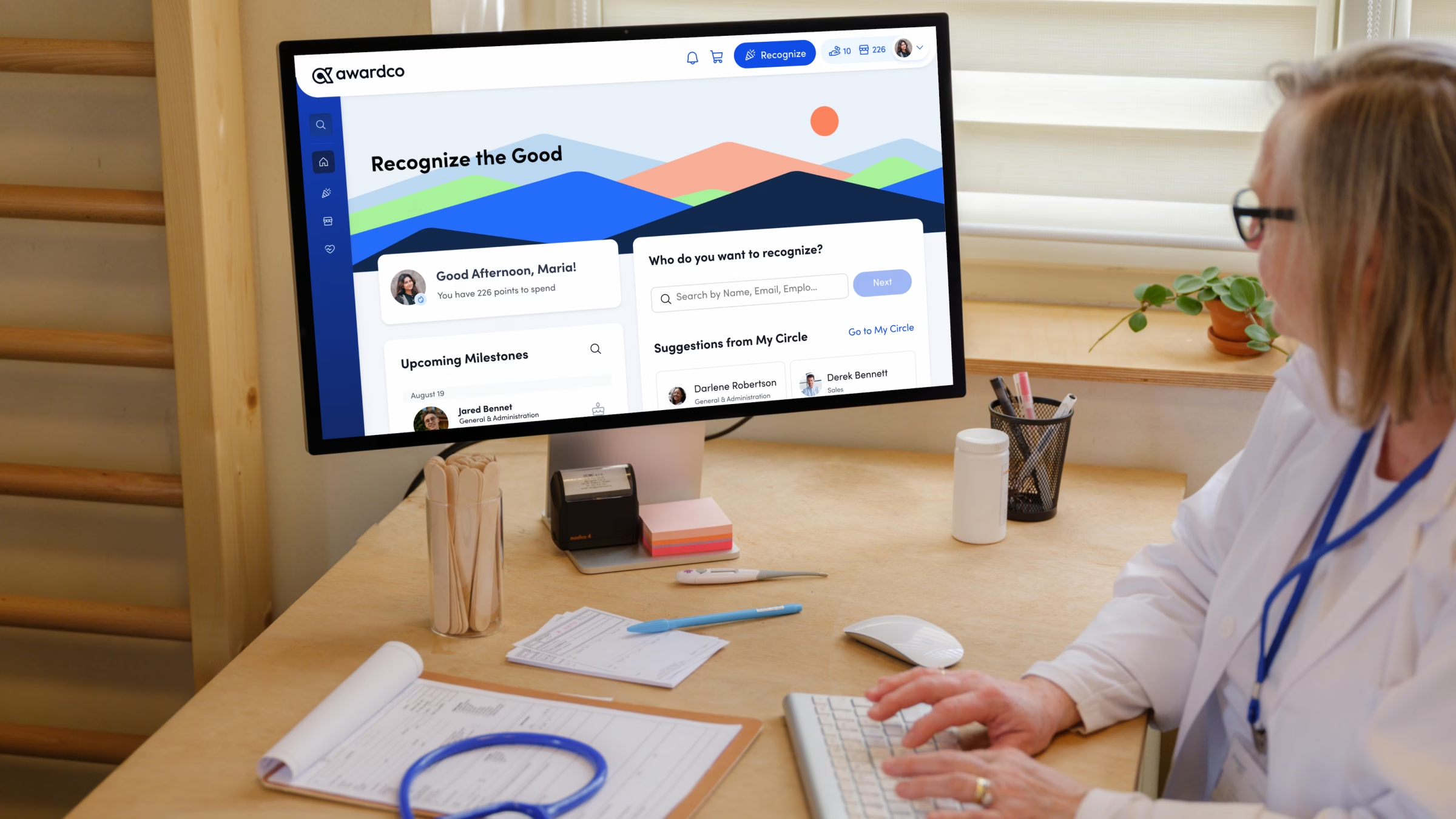
Whether employees spend their day in Microsoft Teams, Outlook, Slack, on a mobile device, or on the frontline without a desk, recognition should meet them where they already work.
The easier recognition becomes, the more naturally it becomes part of everyday culture.
Build governance that scales
Nobody begins designing a recognition strategy excited about governance.
But getting this piece right from the start can make or break your program's long-term success.
Recognition budgets sound straightforward until managers change roles, reporting structures shift, acquisitions happen, and multiple recognition programs begin operating simultaneously.
The real test isn't how a platform works on day one. It's how easily it adapts as your organization changes.
Strong governance goes well beyond budget automation. It includes reporting, compliance, approval workflows, tax considerations, and visibility into how investments are being used across the organization.
This isn't about creating more processes. It's about creating confidence. When HR, Finance, Payroll, IT, and leadership all have the visibility they need, recognition becomes much easier to manage, measure, and sustain as the organization grows.
Great governance is often invisible to employees — but invaluable to the teams running the program.
Maximize value through choice
Organizations often spend a lot of time trying to determine the "perfect" reward. In reality, employees would usually rather choose for themselves.
That becomes even more important globally.
Rather than trying to predict what employees value, I believe organizations should give employees access to localized reward options and a redemption experience that feels familiar — one that mirrors how they already shop in their everyday lives.
Delivering value, however, isn't just about offering more choices. It's also about ensuring more of your recognition budget actually reaches employees.
When organizations evaluate rewards platforms, I encourage them to look beyond the size of the marketplace and ask how much value employees truly receive. Product markups, transaction fees on gift cards, shipping costs, and other hidden fees can quietly reduce the purchasing power of every recognition dollar, meaning less of your investment ultimately benefits employees.
Transparency matters. Employees should understand exactly what their recognition is worth.
For global organizations, value isn't just about the amount awarded — it's about ensuring employees experience comparable purchasing power wherever they live. Purchasing Power Parity can help create that more equitable rewards experience.
The goal isn't simply to offer more rewards. It's to deliver more value, more choice, and a more equitable rewards experience to every employee.
Measure progress, not just participation
One of the biggest shifts I've seen over the past several years is how organizations think about measurement.
Recognition isn't successful simply because people are receiving awards.
The better question is: What changed because recognition became part of your culture?
Are managers participating consistently? Which business units are thriving? How does that correlate to engagement and retention? What behaviors are being called out? Are employees redeeming rewards? Are budgets being used effectively? Where should you focus next?
Recognition data should answer those questions.
I've always believed analytics are most valuable when they help leaders make better decisions. Dashboards shouldn't simply tell you what happened yesterday. They should help you decide what to do tomorrow.
The best analytics don't just measure success — they guide it.

Choose a partner you trust
Technology is only part of the decision.
You're also choosing the company you'll partner with for years to come.
I always encourage buyers to ask:
What will this relationship look like after implementation?
Ask yourself:
- Will they listen to customer feedback?
- Will this vendor continue investing in the product?
- Will they evolve alongside your business?
- Will they help you think strategically as your organization grows?
Enterprise recognition programs aren't static. Organizations evolve. Leadership changes. Business priorities shift. Acquisitions happen. Your recognition strategy should be able to evolve alongside them.
The right partner does more than provide software. They bring expertise, challenge your thinking, share best practices, and continue investing alongside you long after launch.
I also believe transparency matters.
Enterprise organizations should understand exactly how pricing works, what's included, and how costs change as their program grows. Hidden fees, unexpected implementation costs, product markups, or pricing models that become more complicated over time can erode trust quickly.
The strongest partnerships are built on transparency, trust, and a shared commitment to long-term success.
Final thoughts
Looking back, our decision to select a recognition platform didn't come down to one feature.
We were looking for a platform that could support a complex, global organization while giving us the flexibility to evolve over time. We wanted stronger governance, meaningful rewards, actionable insights, and a recognition experience employees would actually use.
Technology will always be part of the decision.
But after sitting on both sides of the table, I've learned you're choosing much more than software.
You're choosing a partner.
You're choosing a pricing model.
You're choosing a product roadmap.
Choose a platform—and a partner—that can grow alongside your organization, support the realities of enterprise complexity, and continue evolving as your needs change.
When you find that combination, recognition becomes much more than a program.
It becomes part of how your culture comes to life every day.
A message from Awardco
Awardco is built to be the most flexible, scalable, and powerful recognition platform on the market. From 10 to 100,000 employees, see how Awardco helps you:
- Support global workforces
- Integrate into existing workflows
- Reach offline, frontline, and remote workforces equitably
- Offer millions of localized rewards in 160+ countries
- Gather recognition data and act on detailed analytics
Get a demo to see Awardco in action.


.avif)


.svg)

.svg)