




Nous étions en avril 2014 et je venais tout juste de commencer mon nouvel emploi en tant que gestionnaire de l'équilibre travail-vie personnelle chez Qualcomm, à San Diego.
Plusieurs personnes se sont interrogées sur ce virage. J'occupais auparavant un poste de direction dans le milieu de l'enseignement supérieur, après un passage dans l'investissement immobilier, pour me retrouver dans un rôle de contributrice individuelle au sein d'une entreprise technologique, avec ce que je qualifierais généreusement de titre « léger ». Des collègues m'ont gentiment fait savoir que ce poste était largement perçu comme un rôle de « directrice de croisière » : tables de ping-pong, collations, groupes de musique sur la pelouse et l'événement annuel « Amenez vos enfants au travail ».
Je voyais les choses différemment. Mes années dans l'éducation parascolaire, entourée d'étudiants et de professeurs brillants à l'UC San Diego, m'avaient convaincue que les liens et la communauté ne sont pas des éléments accessoires. Ils constituent le fondement des cultures hautement performantes. Un rôle axé sur l'équilibre travail-vie personnelle me semblait être une page blanche. C'était avant que l'« expérience employé », l'« engagement des employés » et la notion d'« employé dans sa globalité » ne deviennent des incontournables de toutes les conférences en ressources humaines.
Alors, je me suis lancée. J'ai géré des clubs sociaux, remboursé des abonnements au gym, planifié des événements, commandé des t-shirts et des camions de cuisine de rue et, oui, je me suis assurée que les tables de ping-pong étaient en bon état.
Sur le mur de mon bureau, j'avais accroché une citation encadrée tirée de l'ouvrage de Mihaly Csikszentmihalyi, Flow : La psychologie de l'expérience optimale, qui résumait ce que je considérais comme étant le cœur même de mon travail :
« Une communauté ne devrait pas être jugée bonne parce qu'elle est technologiquement avancée ou riche en biens matériels ; elle est bonne si elle offre aux gens la possibilité de profiter d'autant d'aspects de leur vie que possible, tout en leur permettant de développer leur potentiel dans la poursuite de défis toujours plus grands. »
Place à la Qualcomm Cup
Mon premier grand projet interfonctionnel était une « Coupe du monde » mondiale pour les employés de Qualcomm, initiée par la direction. Le concept était ambitieux : organiser un tournoi mondial pour dénicher les meilleurs joueurs de soccer parmi nos employés à tous les niveaux de l'entreprise, les faire venir à San Diego et mettre sur pied notre propre version de la Coupe du monde. Comme tout chez Qualcomm devait porter un « Q », nous l'avons appelée la Qualcomm Cup.
Nous avions un budget important, un mandat encore plus vaste et 90 jours pour réussir. Les RH, les communications, les experts en soccer et l'équipe des événements mondiaux travaillaient tous en heures supplémentaires.
La réponse a été phénoménale. Les candidatures ont afflué des bureaux du monde entier, révélant une passion pour le soccer que nous n'avions pas pleinement mesurée. Ce fut une course folle pour sélectionner les joueurs, confirmer qu'ils étaient en règle, les faire voyager, coordonner l'hébergement et les repas, les répartir en équipes, les équiper et chorégraphier chaque match.
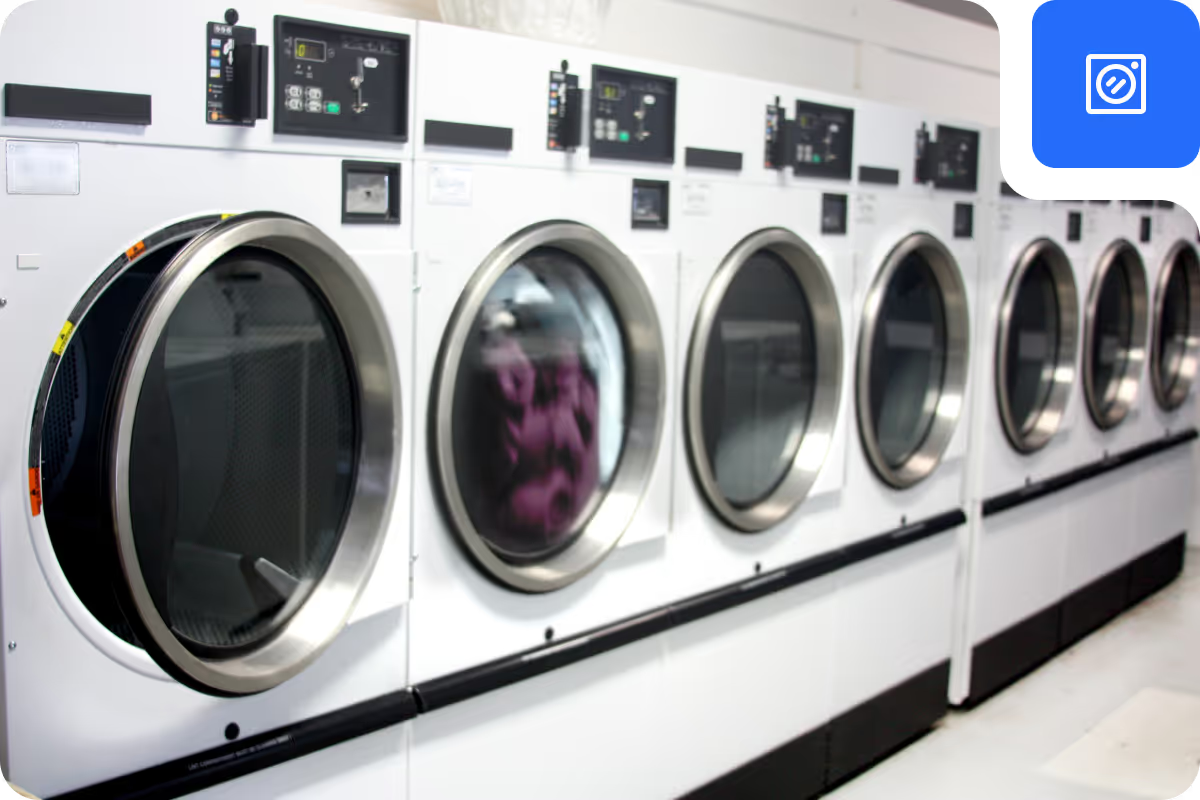
Il y a eu des autobus. Il y a eu un terrain de polo loué. Il y a eu des noms d'équipes sur le thème des dragons (un clin d'œil à la marque Snapdragon de Qualcomm). Il y a eu des repas, des dortoirs et la question logistique très réelle de savoir comment plus de 40 employés-athlètes allaient faire laver leurs uniformes entre les matchs.
Autres tâches connexes
Peut-être parce que j'étais la nouvelle. Peut-être parce que je me suis portée volontaire un peu trop rapidement. Quoi qu'il en soit, j'ai accepté de gérer le projet de la lessive.
La théorie était élégante. Chaque joueur recevait un sac en filet de type camping pour son uniforme, devait le fermer et le laisser devant sa chambre de dortoir chaque soir. J'ai embauché un membre du personnel d'entretien du dortoir, recruté ma fille de 11 ans comme assistante junior et créé une feuille de calcul avec chaque joueur, sa taille d'uniforme et son numéro de chambre. Qu'est-ce qui pourrait mal tourner ?
Eh bien, même si j'avais décroché un emploi dans la technologie, je ne suis absolument pas ingénieure. Je n'avais fait aucune préparation et encore moins de tests. Et il s'avère que les sacs en filet ne restent pas fermés pendant le cycle de séchage. Les 40 sacs et plus se sont tous ouverts. L'uniforme de chaque joueur, ainsi que les articles bonus qu'ils avaient glissés en douce (plus d'une paire de caleçons Disney a fait son apparition), sont sortis des sécheuses industrielles dans un grand tas coloré et mélangé.
J'ai renvoyé mon assistant chez lui, j'ai gardé ma fille pour m'aider et je suis restée debout presque toute la nuit à trier les maillots par taille, à croiser les données de ma feuille de calcul et à essayer de m'assurer que le bon équipement se retrouvait au bon étage pour le bon joueur. Ma fille, perchée sur une laveuse, épuisée et en larmes, n'arrêtait pas de demander : « C'est ça ton nouvel emploi ? Pourquoi est-ce que tu dois faire toute cette lessive ? »
Je me souviens m'être dit : c'est l'interprétation la plus littérale de « autres tâches connexes » que je vivrai jamais.
Le moment qui a changé ma vision de la reconnaissance
Pour faire court : les joueurs ont retrouvé leurs équipements (presque tous au bon endroit), l'événement a été une réussite totale et des vice-présidents de Qualcomm venus d'Italie ont joué aux côtés de jeunes ingénieurs de Chine. Nous avons conclu le tout en invitant les joueurs, leurs familles et les employés à regarder l'Allemagne battre l'Argentine sur un écran géant au siège social. Ces semaines m'ont permis de nouer des amitiés étroites que je chéris encore aujourd'hui, dont une avec un collègue actuel. Le plaisir, il s'avère, demande beaucoup de travail, mais il permet aussi de créer des liens profonds.
Peu après l’événement, j’ai reçu une invitation inattendue à déjeuner avec le PDG. Le PDG. Il a réuni l’équipe de l’événement de la Coupe Qualcomm, nous a remerciés personnellement et a parlé de culture, de travail d’équipe et de la collaboration mondiale qui alimente la véritable innovation. Nous sommes tous repartis avec un certificat papier et une récompense monétaire envoyée par courriel, échangeable dans un catalogue en ligne.
Je n’avais jamais utilisé de plateforme de reconnaissance des employés auparavant. Je me suis assise pour réclamer ma récompense (un montant vraiment généreux) et j’ai ri aux éclats en voyant que l’une des options du catalogue était, sans blague, une laveuse et une sécheuse neuves. (Je vous avais dit que c’était généreux.) Comme je louais mon logement à l’époque, j’ai opté pour la carte-cadeau Visa. Mais cette expérience m’a marquée.
Le déjeuner. Les paroles du PDG. Le cadeau qui semblait réellement à la hauteur de l’effort fourni. Rapide, personnel, venant de la haute direction et suffisamment concret pour avoir de l’importance. Cette combinaison était puissante d’une manière que je n’avais jamais ressentie auparavant, et je ne l’ai jamais oubliée.
Pourquoi je fais ce travail
Aujourd’hui, je travaille dans le domaine de la reconnaissance et des récompenses des employés au sein du Centre d’excellence d’Awardco, où j’aide les organisations à concevoir des programmes de reconnaissance qui font bouger les choses en matière de culture, d’engagement et de performance. Lorsque les clients me demandent pourquoi je crois si fermement en ce travail, je peux retracer la réponse à travers chaque chapitre de ma carrière, mais surtout, et de façon très vivante, à un emploi axé sur l’équilibre travail-vie personnelle, à une croyance dans le plaisir et la fluidité, et à une très longue nuit passée à trier des maillots de soccer.
Une reconnaissance bien faite change la façon dont les gens perçoivent leur travail, leurs dirigeants et leurs collègues. Elle n’a pas besoin d’être complexe. Mais elle doit être opportune, précise, sincère et proportionnelle à l’effort qu’elle souligne.
Et à l’occasion, si vous êtes très chanceux, elle vient avec une laveuse et une sécheuse.









.svg)





.svg)


