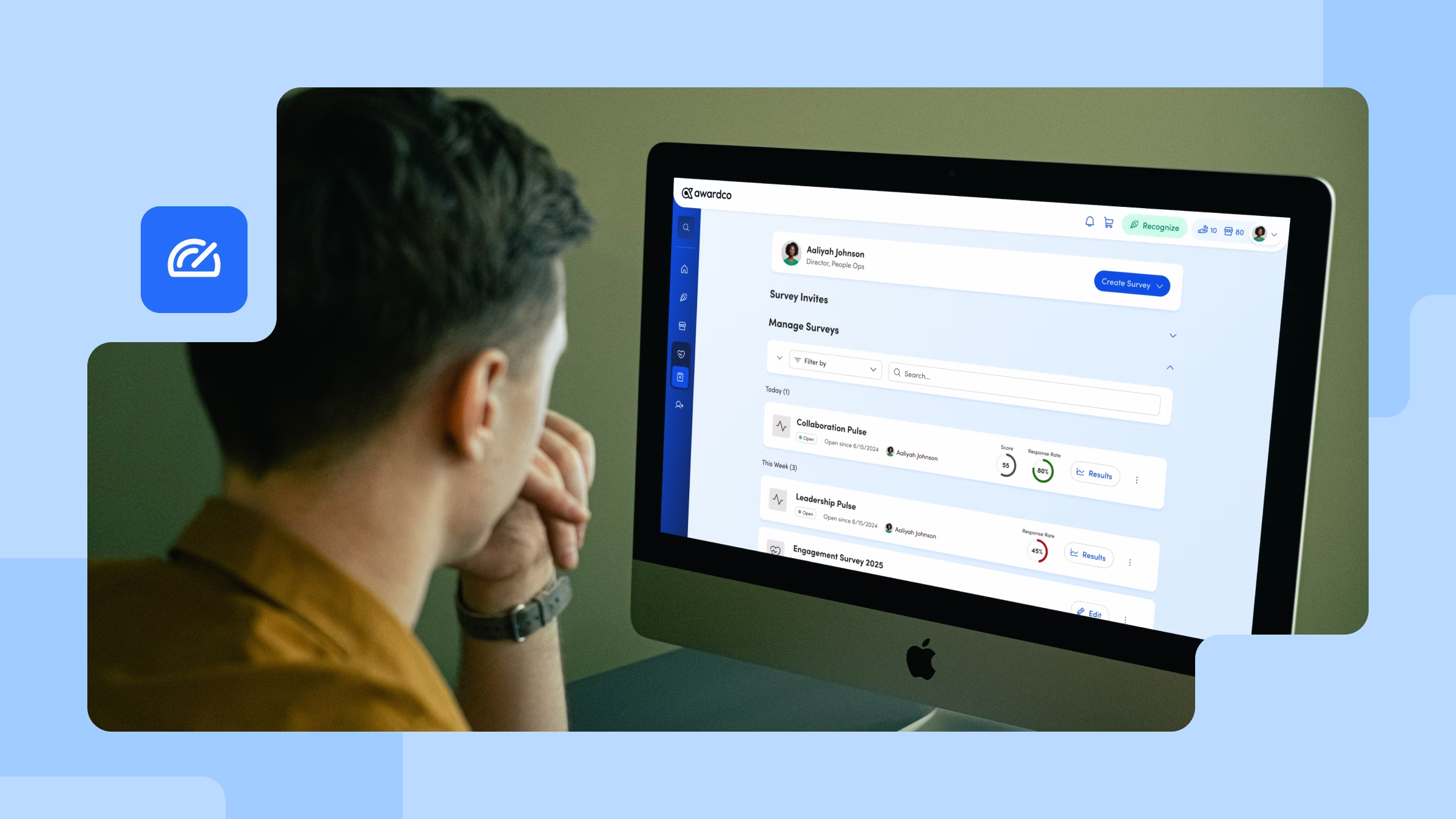


Une plateforme d'engagement des employés est un système qui aide les organisations à recueillir les commentaires du personnel, à suivre l'engagement au fil du temps et à transformer les idées en actions concrètes. Mais les meilleures plateformes font bien plus que mener des sondages. Elles améliorent la participation, font ressortir des tendances utiles, soutiennent la planification des mesures à prendre et relient l'écoute des employés à des changements visibles grâce à la reconnaissance, à la communication et au suivi par les gestionnaires.
Si votre équipe réalise déjà des sondages, mais ne constate pas l'impact souhaité sur la culture ou la rétention, ce guide explique ce qu'est réellement une plateforme d'engagement, pourquoi un système connecté est supérieur à une pile d'outils déconnectés et ce qu'il faut rechercher avant d'acheter.
Qu'est-ce qu'une plateforme d'engagement des employés?
Une plateforme d'engagement des employés centralise la façon dont une organisation écoute ses employés et agit en fonction de ce qu'elle entend : sondages d'engagement, sondages éclairs, rapports, planification d'actions et reconnaissance qui renforce le changement. C'est la couche opérationnelle qui transforme le « nous vous avons entendus » en actions que vos employés peuvent réellement constater.
Il est utile de distinguer quatre termes souvent regroupés :
- Les outils de sondage recueillent des commentaires au moyen de questions structurées.
- Les plateformes de reconnaissance renforcent les comportements et l'appréciation.
- Les systèmes de communication diffusent l'information dans toute l'organisation.
- Les plateformes d'engagement relient les signaux, les idées et les actions entre ces trois éléments, de sorte que l'écoute mène à des résultats concrets plutôt que de se limiter à un tableau de bord.
La plupart des fournisseurs dans ce domaine commercialisent leurs services uniquement sur la base de leurs capacités de sondage. C'est une promesse plus limitée que ce dont la plupart des acheteurs ont réellement besoin. La plateforme d'engagement d'Awardco définit la catégorie de la même manière que ce guide : une plateforme n'a de valeur que par ce qui se passe une fois les résultats obtenus.
Pourquoi les entreprises ont besoin d'une plateforme dédiée à l'engagement des employés
Un sondage annuel unique, ou un assemblage d'outils déconnectés, finit invariablement par échouer pour les mêmes raisons : faible participation, rapports difficiles à exploiter et absence de moyen cohérent pour boucler la boucle avec les employés une fois les résultats obtenus.
Les recherches de Gallup expliquent pourquoi il est si important de boucler la boucle : les dirigeants utilisent fréquemment les sondages éclairs à outrance pour obtenir des commentaires immédiats, mais agissent rarement en fonction des résultats, ce qui érode la confiance même que les sondages étaient censés bâtir. Des commentaires qui ne mènent nulle part indiquent clairement aux employés que leur opinion n'a pas d'importance, ce qui rend plus difficile l'obtention d'une réelle participation au prochain sondage.
Une plateforme dédiée permet aux équipes des RH et du personnel de connecter l'écoute, la reconnaissance et l'action sans avoir à changer d'outil, ce qui permet de boucler la boucle de manière visible plutôt que de l'abandonner discrètement.
Que rechercher dans une plateforme d'engagement des employés
Une fois que vous comparez les fournisseurs, évaluez-les selon un cadre cohérent plutôt que par une simple liste de fonctionnalités. Les plateformes les plus performantes excellent dans ces sept domaines :
- Flexibilité des sondages et soutien à la fréquence : la plateforme doit prendre en charge les sondages d'engagement annuels, les sondages éclairs et tout ce qui se trouve entre les deux.
- Participation et expérience de diffusion : les sondages doivent atteindre les employés là où ils travaillent, y compris les équipes sans bureau fixe et à distance, sinon les taux de réponse en souffriront.
- Clarté des rapports et des perspectives : les résultats doivent faire ressortir des tendances claires, et non des données brutes nécessitant un analyste pour être interprétées.
- Planification des actions et suivi par les gestionnaires : les gestionnaires ont besoin d'outils pour transformer les résultats en étapes concrètes, pas seulement d'un PDF de scores.
- Flexibilité selon les équipes, les rôles et les lieux : l'engagement varie au sein d'une main-d'œuvre mondiale ou hybride, et la plateforme doit en tenir compte.
- Simplicité administrative et consolidation de la plateforme : moins de connexions et moins d'outils déconnectés rendent le programme plus facile à gérer et plus digne de confiance.
La présentation de la plateforme d'Awardco est articulée autour de ces mêmes priorités, reliant l'écoute et l'action au lieu de les traiter comme des achats distincts.
Plateforme d'engagement des employés vs outil de sondage
C'est la distinction qui compte le plus lorsque vous commencez à comparer les fournisseurs. Un outil de sondage recueille des réponses. Une plateforme d'engagement vous aide à interpréter les résultats, à comparer les tendances au fil du temps et à relier les commentaires à des actions visibles.
La différence apparaît clairement dans les recherches de Gallup sur les gestionnaires : les gestionnaires expliquent environ 70 % de la variance de l'engagement des équipes au sein des unités commerciales. Cela signifie que la couche logicielle importe moins que ce que les gestionnaires sont équipés pour faire avec les résultats. Un outil de sondage remet un rapport au gestionnaire. Une plateforme d'engagement donne à ce gestionnaire une étape suivante claire, ainsi qu'un moyen de renforcer toute action qui en découle par une reconnaissance que les employés peuvent réellement constater.
Si votre processus d'évaluation ne compare que les bibliothèques de questions de sondage et l'esthétique des tableaux de bord, vous comparez ce qu'il y a de plus facile. La question la plus difficile et la plus importante est de savoir ce que fait la plateforme une fois le sondage terminé.
Why recognition matters in employee engagement software
Feedback alone doesn't build trust. Employees need to see what leadership does with what they hear, and that's where recognition becomes part of the engagement conversation rather than a separate program running on its own.
Gallup's research backs this up directly: employees who report receiving meaningful feedback in the past week are far more likely to be fully engaged, regardless of other workplace factors. Recognition is one of the clearest, most visible ways to deliver that kind of meaningful follow-through at scale, especially when it's tied directly to the behaviors and outcomes a survey surfaced.
This is the idea behind Awardco's Better Together approach: feedback tells you what matters to employees, and recognition is how you show them you acted on it. Treating listening and recognition as two ends of the same workflow, instead of two separate purchases, is what turns a survey program into an engagement strategy.
Is it better to buy one engagement platform or several tools?
This is a real tradeoff worth thinking through before you buy, not after.
An all-in-one platform simplifies administration, keeps analytics in one place, and gives Finance a single line item and a single source of reporting truth. A stack of specialized point tools can offer deeper functionality in a narrow area, but that depth often comes with fragmented data, multiple logins, and reporting that has to be manually stitched together across systems.
For most mid-size and enterprise organizations, consolidation tends to win on total cost and usability, especially once you account for the administrative time spent maintaining integrations between separate survey, recognition, and communication tools.
The right call still depends on your specific needs; a highly specialized workforce or a company with mature, deeply embedded point solutions might reasonably choose otherwise. But it's worth running the math on total administrative overhead, not just per-tool pricing, before deciding.
How to evaluate ROI, budget, and implementation fit
ROI for an engagement platform comes from better action and consolidation, not simply from having surveys. A few metrics matter more than participation counts alone:
- Retention and productivity impact: is engagement data correlating with the outcomes leadership actually tracks?
- Survey response rates: are employees participating at meaningful rates, or has survey fatigue set in?
- Recognition frequency: is feedback translating into visible, consistent recognition, or staying stuck in a report?
- Employee sentiment change over time: are the same questions trending in the right direction quarter over quarter?
- Implementation complexity: how much overlap exists with tools you're already paying for, and what would consolidation actually save?
Awardco's ROI calculator is built to help teams model this before committing to a platform, so the business case is built on your numbers rather than a vendor's average.
What questions should buyers ask vendors?
Bring these questions to every vendor conversation:
- Does the platform support both engagement surveys and pulse surveys?
- How are results displayed and shared? Are there company benchmarks or comparisons to visualize progress?
- How does it help leaders act on results, not just view them?
- How does it protect confidentiality while still preserving useful, actionable reporting?
- Is this platform better suited to consolidation, or would a specialized stack genuinely serve us better?
Vendors who can answer all five with specifics, rather than a general "yes, we do that," are usually the ones built for the full listening-to-action cycle.
How Awardco approaches employee engagement platforms
Awardco treats employee engagement as a connected system for listening and action, not a tool for measuring sentiment in isolation. Its platform runs engagement and pulse surveys, surfaces meaningful insights, and connects those insights to visible action through recognition in the same system employees already use.
Feedback tells you what matters, and recognition is how you act on it. That combination is what helps employees feel both seen and heard, rather than surveyed and forgotten.
Si vous évaluez actuellement des plateformes, découvrez Awardco Engage™ ou réservez une démo pour la voir en action.
Foire aux questions
Qu'est-ce qu'une plateforme d'engagement des employés ? C'est un système qui aide les organisations à recueillir les commentaires des employés, à suivre l'engagement au fil du temps et à transformer les idées en actions concrètes grâce à des rapports, à la planification d'actions et à la reconnaissance.
Que devrais-je rechercher dans une plateforme d'engagement des employés ? Donnez la priorité à la flexibilité des sondages, à une expérience de participation optimale, à des rapports clairs, au soutien à la planification d'actions, à l'intégration de la reconnaissance et à la simplicité administrative pour toutes les équipes et tous les sites.
En quoi une plateforme d'engagement diffère-t-elle d'un outil de sondage ? Un outil de sondage recueille des réponses. Une plateforme d'engagement vous aide à interpréter ces résultats, à suivre les tendances au fil du temps et à lier les commentaires à des actions visibles et appuyées par la reconnaissance.
Est-il préférable d'utiliser une seule plateforme d'engagement ou plusieurs outils ? Pour la plupart des organisations, une plateforme consolidée réduit la charge administrative et centralise les rapports, bien que des besoins très spécialisés puissent justifier une solution ponctuelle.
Pourquoi un logiciel d'engagement des employés devrait-il inclure la reconnaissance ? Parce que les commentaires seuls ne renforcent pas la confiance. La reconnaissance permet aux employés de constater que la direction a agi en fonction de ce qu'ils ont partagé, ce qui transforme un sondage en une stratégie d'engagement.
Comment mesurer le retour sur investissement d'une plateforme d'engagement des employés ? Suivez l'impact sur la rétention et la productivité, les taux de réponse aux sondages, la fréquence de reconnaissance et les tendances de sentiment au fil du temps, en les comparant aux économies réalisées grâce à la mise en œuvre et à la consolidation.








.svg)


.svg)