

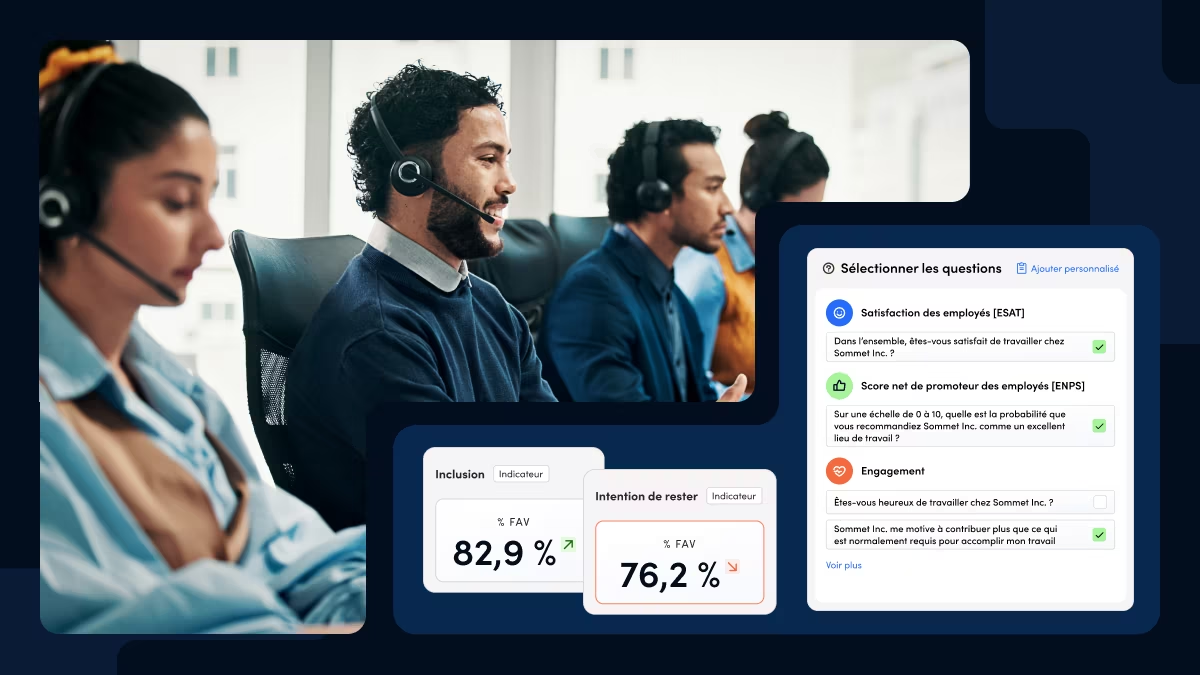

While most companies collect employee feedback, few act on it visibly and meaningfully.
Employees have seen it all before: a survey goes out, scores come back, and nothing changes. As a result, the next one receives fewer responses, employees grow more cynical, and the gap between feedback and action grows wider.
Recognition is one of the most visible ways to respond to what employees tell you, and our data shows why engagement and recognition work better together.
Employee engagement and recognition data: the quick answer
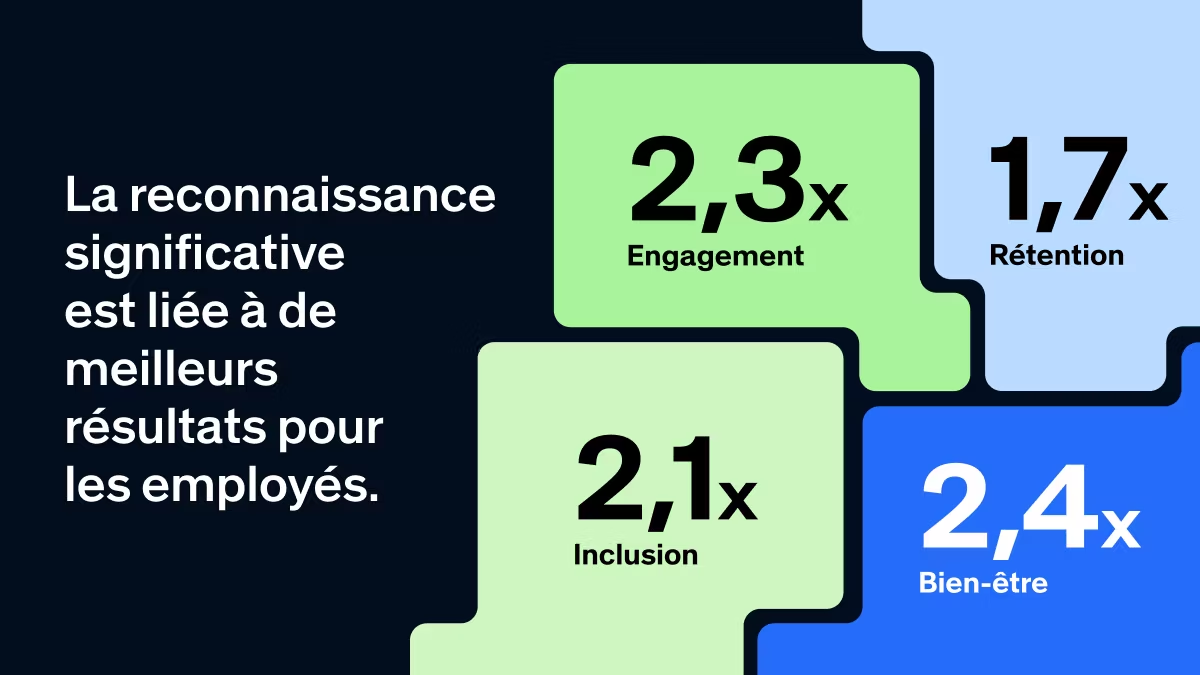
Engagement and recognition data are more useful together than apart. Our Better Together white paper, Employee Feedback & Recognition, written by our Center of Excellence, found that employees who feel meaningfully recognized are:
- 2.3x more likely to be engaged
- 1.7x more likely to want to stay with the company
- 2.1x more likely to feel a sense of inclusion
- 2.4x more likely to have high well-being
It's important to note that these numbers show an association between engagement and recognition, not proof that recognition alone drives these outcomes. Still, the pattern is useful: feedback tells you what people need, and recognition is a visible way to respond.
Want to learn more about modernizing recognition, engagement, and reward strategies? Check out our research, reports, and thought leadership from experts.
The four findings leaders should know
Recognition is linked to 2.3x higher engagement
Engagement is a signal of connection, commitment, and willingness to contribute. Our data shows that employees who feel recognized are 2.3x more likely to feel engaged than those who don't.
Recognition is one of several factors that drive engagement, alongside pay, manager quality, workload, and role clarity. What sets it apart is speed: managers can act on it now, again and again, without waiting for a budget cycle or a reorg.
Recognition is linked to 1.7x stronger retention
People who feel seen and valued tend to stay longer, but recognition alone will not stop people from leaving.
Pay, progression, and management all weigh heavily on the decision to go. What recognition data does well is paint a picture when read alongside intent-to-stay scores, tenure, and exit feedback. When those line up, managers can see where appreciation is thin and where the risk of losing people is real.
Recognition is linked to 2.1x stronger inclusion
Inclusion comes down to whether people feel their contributions are seen and count for something. Our data shows that employees who feel recognized are 2.1x more likely to feel included.
Program design matters more here than anywhere else. Recognition that is timely, specific, and available to everyone can surface good work that would otherwise go unnoticed, especially among frontline, deskless, remote, and global employees who sit outside the usual line of sight. Build a program that only reaches head office or the most visible roles, and you widen the gap you were trying to close.
Recognition is linked to 2.4x better well-being
Our data shows that employees who feel recognized are 2.4x more likely to have high well-being.
Recognition is one contributor to a healthier employee experience, and it works best next to manageable workloads, fair benefits, good managers, and real mental-health support, not as a stand-in for any of them. It also has to be real: superficial or forced positivity does little for well-being and can quietly chip away at trust.
Why engagement data alone is not enough
Collecting feedback and acting on it are two very different things. Employees answer surveys, then watch to see what happens. If the answer is nothing, participation and honesty both fall away the next time you ask.
Say a team's survey shows low manager connection. The score by itself changes nothing. The value comes from treating it as a signal, choosing a visible response, whether recognition, manager coaching, or a change in how you communicate, and measuring that same team again to see if it helped.
Want to act on insights faster? Awardco Engage™ gathers employee sentiment through surveys and pulse feedback, giving managers clear intelligence that they can act on.
Why recognition data alone is not enough
Recognition data is rich. Volume, frequency, who is giving and receiving, and what people are recognized for are all useful signals. What they cannot tell you, on their own, is how people actually feel.
That is why recognition data becomes far more useful paired with engagement responses and a bit of workforce context.
Turning that raw data into a clear signal is where Awardco Intelligence helps, surfacing the patterns worth acting on without hours of manual digging.
High recognition volume on one team might mean a healthy culture. It might also mean a couple of enthusiastic teammates and a lot of people left out. The number alone won't say which, and chasing volume is a trap anyway: quality, specificity, reach, and equity all matter more than a rising count.
What happens when feedback and recognition work together
The reason feedback often goes nowhere is that there's no process connecting what employees say to what leaders do. The Better Together loop is the process of taking engagement and recognition data out of their separate dashboards and turning them into five repeatable steps.
Recognition is one mechanism within that loop, and, depending on the signal, it sits alongside coaching, workload changes, or policy action. The discipline is simple to state and harder to keep: match the response to the signal, then go back to the data to see if it landed.
Learn how to use engagement and recognition data to improve the employee experience in our white paper.
How leaders can use engagement and recognition data together
Start with a specific question
Decide what you are trying to learn before you collect another round of data. "Do frontline employees feel seen?" or "Are managers recognizing the behaviors tied to our values?" will yield more actionable insight than "Let's run a survey."
Segment responsibly
Comparing groups by location, role, workforce type, tenure, or manager can turn a flat average into something you can act on, but only where sample sizes and privacy protections allow. Use aggregated results, respect minimum group sizes, keep individual responses private, and steer clear of using recognition data to infer anything sensitive about a person.
Match the response to the signal
Recognition is the right tool for visible appreciation, reinforcing values, strengthening peer connection, and lifting participation. When the data points to something bigger, pair it with manager coaching, clearer communication, workload changes, learning, or policy action. Let the signal decide the response.
Close the loop visibly
Tell employees what you learned and what you did about it, and make the response easy for the people who raised the issue to see. Then return to the data and check whether it worked.
A practical example of the Better Together model
Picture a company that runs its engagement survey and finds one location trailing the others on morale, traced back to low manager-connection scores. The company-wide average hid it. The segmented signal made it visible.
Rather than a blanket fix, leaders act on that specific signal. They set up recognition programs built around peer support and the behaviors that matter most in that location, and pair them with manager enablement so recognition isn't left to carry a management problem. Then they survey again and look at what changed: recognition reach, sentiment, participation.
The takeaway is that a specific signal earned a specific, visible response, and the follow-up showed whether it worked. This scenario is illustrative, not a customer account.
What to measure after connecting engagement and recognition
A useful measurement set spans leading and lagging indicators, without stretching into a causal claim you cannot support:
Measurement here should show progress and guide the next move, not manufacture proof that recognition caused a result it only helped along.
Frequently asked questions about engagement and recognition data
How does recognition affect employee engagement? Our Better Together data shows that meaningful recognition is associated with 2.3x higher engagement. It is one lever among several, but an easy one to apply quickly and consistently.
What is the relationship between recognition and retention? Meaningful recognition is linked to 1.7x stronger retention in our data. It works best read alongside intent-to-stay, tenure, and exit feedback.
Can recognition improve inclusion at work? Our data shows that meaningful recognition is linked to 2.1x stronger inclusion, especially when recognition is timely, specific, and reaches frontline, deskless, remote, and global employees.
How do you connect employee feedback to recognition? Treat feedback as a signal, not a score. Surface the pattern, choose a visible response that fits it, tell people what changed, and measure again.
What employee engagement metrics should leaders track? Engagement score, eNPS or eSAT, sense of belonging, manager effectiveness, and intent to stay, alongside recognition metrics like reach, frequency, specificity, and participation.
How can leaders use recognition data responsibly? Protect confidentiality, use aggregated results, respect minimum group sizes, and avoid inferring sensitive personal information. Aim for equitable reach over raw volume.
Go deeper into the data. Our Better Together white paper walks through how employee feedback, reinforced by recognition, creates a clearer system of action.







.svg)











.svg)


