.avif)

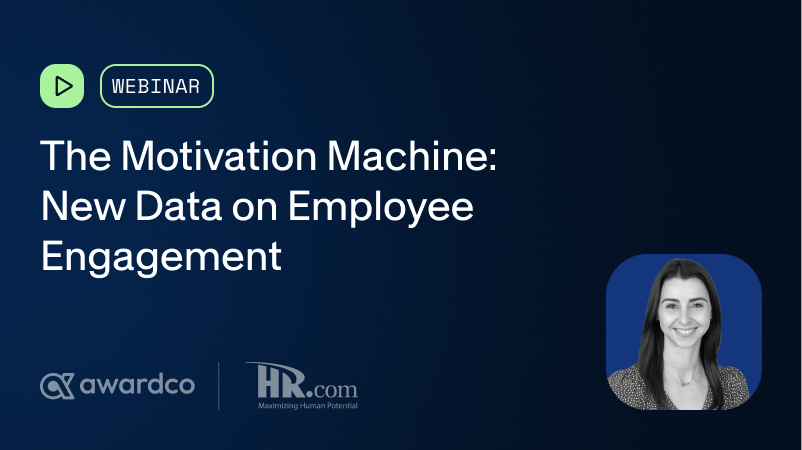
Deskless, distributed, and remote employees make up a huge share of the global workforce, nearly 80% by some estimates, yet most employee recognition strategies are still built with a desk-bound employee in mind. On a recent Awardco webinar, Kelly Satterfield sat down with Christina Gallagher, who has led recognition strategy at JPMorgan Chase for the past seven years, to talk through how a company with over 300,000 employees across 60-plus countries actually makes recognition work at scale.
Here's a look at what they covered.
Start small, then build a tiered structure
Chase didn't launch with everything at once. The program started with two simple tools everyone could use: ecards and peer-to-peer recognition. From there, it grew into a tiered system:
- Everyday recognition: Available to everyone, for everyday moments.
- Peer recognition: Built specifically because employees asked for a way to recognize colleagues, not just managers recognizing direct reports.
- Line of business programs: Tailored to specific teams or roles, while still connecting back to company values.
- Elite programs: Nomination-based awards reviewed by a leadership committee, reserved for standout contributions.
The goal isn't a different program for every team. It's a consistent experience and philosophy that flexes just enough to feel relevant to different roles.
Set guardrails so recognition stays meaningful
Guardrails matter as much as the programs themselves. At Chase, that means:
- Reserving point-based awards for work that goes above and beyond someone's regular scope, not for simply doing the job.
- Keeping recognition separate from things like team parties or general morale events.
- Requiring new program requests to align with what already exists, rather than adding another one-off initiative to the pile.
Make it feel personal, not performative
The single biggest challenge Chase runs into isn't access, it's authenticity. A recognition message that just says "great job" doesn't land the same way as one that names the specific contribution and its impact. To help managers with this consistently, Chase has:
- Sent nudges to managers who haven't used their recognition budget for the quarter.
- Built values-based prompts tied to daily themes to help managers recognize specific behaviors.
- Used tagging so recognitions map to a specific company value, both to reinforce culture and to make the recognition feed more visually engaging.
Keep it consistent across a global, always-changing organization
With that many countries and business lines, consistency takes real intention. Chase centralized its recognition budget rather than managing it business by business, which made both governance and equity far easier. They also lean on a network of roughly 200 program contacts who meet quarterly to share what's working across the business.
And when it comes to remote and deskless employees specifically, small things go a long way. During Chase's annual Employee Appreciation Week, every employee gets a gift, including a shipped package for anyone working from home or without a site to visit.
Where AI fits in
Chase's team is experimenting carefully. Full automation isn't available yet due to internal compliance requirements, but employees can use an internal AI tool to turn bullet points into a polished recognition message, and a separate tool helps employees see how the recognition they've received throughout the year connects back to their stated goals, useful context heading into performance reviews.
There's a lot more in the full conversation, including how Chase measures the business impact of recognition, how they handle nomination-based awards, and specific tactics for keeping recognition alive between big company-wide moments. Watch the full webinar on demand for the complete conversation.








.svg)





.svg)