

Les programmes de motivation des employés sont des structures conçues pour récompenser le personnel lorsqu'il atteint des objectifs définis, accomplit des tâches précises ou adopte des comportements qu'une organisation souhaite encourager. Ces programmes peuvent être monétaires, comme des primes ou l'intéressement aux bénéfices, ou non monétaires, comme la reconnaissance, les opportunités de développement, le soutien au bien-être, des congés payés supplémentaires ou des expériences.
Les organisations utilisent ces programmes pour clarifier les attentes en matière de performance, lier les efforts aux résultats et donner aux employés une raison de s'investir dans les objectifs les plus importants pour l'entreprise. Ce guide présente 18 types de programmes, explique comment choisir entre des récompenses monétaires et non monétaires, et propose un cadre pour mesurer le rendement réel d'un programme.
Qu'est-ce qu'un programme de motivation des employés
Un programme de motivation des employés est une structure définie qui associe une récompense à une action, un objectif ou un comportement spécifique, mis en place à l'avance pour favoriser ce résultat. Ce timing est crucial, car c'est ce qui distingue les mesures incitatives de certains termes connexes souvent utilisés de manière interchangeable.
- Les mesures incitatives sont établies avant l'action et visent à motiver la participation ou la performance. Les employés savent ce qui est attendu et ce qu'ils gagneront en atteignant ces objectifs.
- La reconnaissance est une marque d'appréciation exprimée après une action ou une contribution. Elle est réactive et relationnelle, plutôt que liée à un objectif prédéterminé.
- Les récompenses sont la valeur tangible reçue par l'employé. Une récompense peut être le versement lié à un programme de motivation ou l'expression d'une reconnaissance ; il s'agit du « quoi », et non du « pourquoi » ou du « quand ».
- La rémunération et les avantages sociaux constituent les fondements de la relation d'emploi. À l'inverse, les mesures incitatives sont généralement variables, liées à des objectifs ou à des comportements, et viennent s'ajouter à la relation de travail de base.
Les programmes les plus efficaces associent un comportement ou un résultat clair à une récompense significative, un calendrier défini et un moyen de mesurer les résultats.
Aperçu des programmes de motivation des employés
Le niveau de soutien d'Awardco reflète l'adéquation documentée de la plateforme, et non une prétention à ce qu'Awardco gère tous les processus de paie, d'avantages sociaux ou de rémunération sous-jacents. Fort signifie que la plateforme peut configurer, distribuer, suivre ou générer des rapports sur le flux de travail de motivation directement. Partiel signifie qu'Awardco prend en charge la couche de récompense, de reconnaissance, de points, de budget ou de rapport, tandis que le programme principal nécessite toujours une gestion de la paie, des avantages sociaux, du SIRH ou des aspects juridiques.
Pourquoi les programmes de motivation des employés sont importants
L'engagement des employés à l'échelle mondiale est tombé à 20 % en 2024, son niveau le plus bas depuis 2020 et une deuxième année consécutive de baisse, selon le rapport State of the Global Workplace de Gallup. Gallup estime également que ce faible engagement coûte à l'économie mondiale environ 10 000 milliards de dollars en perte de productivité par an, soit environ 9 % du PIB mondial. À l'inverse, les conclusions clés de Gallup sur le milieu de travail mondial révèlent qu'un engagement élevé est associé à une augmentation de 23 % de la productivité et à une réduction de 51 % du roulement de personnel.
Les programmes de motivation ne combleront pas cet écart à eux seuls, mais ils offrent aux organisations un moyen concret d'essayer. Bien conçus, ils peuvent :
- Rendre les efforts visibles. Lorsque des comportements spécifiques sont récompensés, les employés se sentent davantage reconnus pour le travail qu'ils accomplissent réellement.
- Clarifier les attentes. Un programme bien conçu définit ce qu'est une bonne performance et rend explicite le lien entre l'effort et le résultat, plutôt que de le laisser implicite.
- Renforcer la culture. Récompenser les comportements qui reflètent vos valeurs aide à bâtir la culture que vous cherchez à créer, plutôt que de simplement la décrire.
- Soutenir la participation dans les programmes de vente, de sécurité, de bien-être, de formation, de reconnaissance et de recommandation, où la visibilité et la cohérence génèrent la plupart des résultats.
Voici quelques exemples concrets de ce à quoi cela ressemble dans la pratique :
- BPM, l'un des plus grands cabinets de comptabilité et de conseil aux États-Unis, gère 34 programmes de reconnaissance actifs via Awardco et a atteint un taux de reconnaissance des employés de 98 %, ce qui signifie que presque chaque employé a été reconnu sur la plateforme.
- Aptive, qui gère une main-d'œuvre sur le terrain importante et saisonnière, a obtenu une visibilité et un contrôle complets sur les budgets de motivation qui étaient auparavant suivis manuellement par des équipes décentralisées, éliminant ainsi les pertes de récompenses.
- WOW! mobile boutique a vu la performance de ses employés augmenter de 120 % d'une année à l'autre, ses scores d'engagement progresser de 10 % et son taux de roulement chuter de 30 % après le lancement d'un programme de motivation plus personnalisé lié à son modèle de rémunération.
- Lineage, une entreprise mondiale de logistique et d'entreposage frigorifique comptant plus de 26 000 employés (dont la plupart travaillent sans bureau), a constaté que les employés reconnus une fois au cours de leurs trois premiers mois avaient un taux de roulement environ 20 % plus faible après 12 à 15 mois, et que ceux reconnus deux fois ou plus voyaient ce taux diminuer de 30 %. Les reconnaissances d'une année à l'autre ont augmenté de 133 %.
- Southern Oregon Head Start (SOHS) a utilisé Awardco sur 25 sites pour réduire le roulement de 45 % à 8 % en deux ans, avec un taux d'adoption de connexion de 80 à 85 % et un retour sur investissement estimé à 8x.
- America First Credit Union (AFCU) a adapté son programme de primes biannuelles très personnalisé pour plus de 1 800 employés nouvellement en télétravail en seulement deux semaines, réduisant le temps administratif d'environ 93 % et augmentant les reconnaissances mensuelles de 307 %.
Il est important de dire clairement ce que les mesures incitatives ne peuvent pas régler. Elles ne remplacent pas une rémunération équitable, une charge de travail raisonnable, une bonne gestion ou une expérience employé saine. Un catalogue de points ne réparera pas une relation brisée avec un gestionnaire, et aucun programme de motivation ne devrait porter ce fardeau. Les programmes les plus efficaces reposent sur des bases déjà solides.
Mesures incitatives monétaires vs non monétaires
Les programmes de points occupent une place intéressante : ils ne sont pas versés en espèces, mais ils ont une valeur monétaire réelle une fois que l'employé les échange. Il est important de garder cela à l'esprit lors de l'élaboration du budget de votre programme.
Les portefeuilles de motivation les plus efficaces ne se limitent pas à une seule catégorie. Ils adaptent la récompense au comportement, aux préférences de l'employé et aux objectifs commerciaux, ce qui signifie généralement combiner des options monétaires et non monétaires plutôt que de choisir entre les deux.
18 types de programmes de motivation des employés
1. Points-based incentive programs
- What it is: A system where employees earn points for completing tasks, reaching goals, participating in programs, or demonstrating specific behaviors, then redeem those points from a rewards catalog.
- Best for: Repeated behaviors and broad participation across roles.
- Example program design: Employees earn points for training completion, peer recognition, and safety milestones, redeemable through a flexible catalog.
- Implementation effort: Low–medium. Most of the complexity is in initial setup, not ongoing administration.
- Expected ROI lens: Participation rate, redemption velocity, repeat participation, and cost per completed action.
- Awardco fit: Strong. Configurable points, employee reward choice, automated distribution, budgets, and reporting.
2. Performance bonus programs
- What it is: One-time bonuses tied to individual, team, or company performance against defined targets.
- Best for: Clear, measurable performance goals with a direct payout.
- Example program design: A quarterly bonus tied to hitting 100% of a department's operational targets.
- Implementation effort: Medium–high, largely due to payroll and compensation coordination.
- Expected ROI lens: Goal attainment, incremental output, quality, and cost per outcome.
- Awardco fit: Partial. Payroll and compensation administration typically remain outside the rewards platform. However, Awardco strongly supports performance bonuses if points are the bonus payment.
3. Sales commissions and SPIFFs
- What it is: Commission structures and short-term, targeted incentives (SPIFFs) that reward specific sales behaviors or results.
- Best for: Revenue targets, pipeline movement, and time-boxed sales contests.
- Example program design: A tiered bonus for reps who hit 100%, 110%, and 120% of quota, plus a short SPIFF for a new product launch.
- Implementation effort: Medium.
- Expected ROI lens: Pipeline growth, conversion rate, revenue, and quota attainment.
- Awardco fit: Strong. Configurable sales incentives, points, reward choice, and reporting.
4. Profit-sharing programs
- What it is: Distribution of a portion of company profit to employees according to a defined formula.
- Best for: Company-wide performance and a sense of shared ownership.
- Example program design: An annual profit-sharing payout calculated as a percentage of net income, distributed based on tenure and role.
- Implementation effort: High. Legal, payroll, finance, and plan governance requirements are significant.
- Expected ROI lens: Profitability, retention, participation, and employee understanding of business performance.
- Awardco fit: Partial/adjacent workflow, unless the program uses Awardco only for an approved reward or recognition layer.
5. Safety and quality incentives
- What it is: Rewards for safety observations, incident reduction, quality scores, compliance completion, and improvement suggestions.
- Best for: Physical or field-based roles where safe practices and quality outcomes are measurable.
- Example program design: Points awarded for completed safety audits and near-miss reporting, structured to avoid discouraging incident disclosure.
- Implementation effort: Medium.
- Expected ROI lens: Incident rate, quality defects, near-miss reporting, and audit completion.
- Awardco fit: Strong. Safety and quality incentive programs, points, recognition, and reporting.
6. Wellness and fitness incentives
- What it is: Rewards for participation in fitness challenges, health screenings, healthy habits, or mental wellness programs.
- Best for: Supporting employee health and encouraging voluntary participation.
- Example program design: Points earned for completing a wellness challenge or a preventive screening, redeemable through the rewards catalog.
- Implementation effort: Low–Medium. Avoid requiring disclosure of sensitive health information.
- Expected ROI lens: Participation, completion rate, absenteeism, and program engagement — not medical outcomes, unless properly sourced and approved.
- Awardco fit: Strong. Wellness programs, goal-oriented incentives, points, reward choice, and participation reporting.
7. Training and certification incentives
- What it is: Rewards for completing compliance training, certifications, product learning, or required coursework.
- Best for: Compliance deadlines and skill development.
- Example program design: Points and leaderboard recognition for completing certification modules ahead of schedule.
- Implementation effort: Low–Medium.
- Expected ROI lens: Completion rate, time to completion, assessment scores, and post-training performance.
- Awardco fit: Strong. Training incentives, points, leaderboards, automation, and reporting.
8. Tuition reimbursement and learning stipends
- What it is: Financial support for tuition, certifications, conferences, books, or employee-directed learning.
- Best for: Career growth, internal mobility, and long-term retention.
- Example program design: An annual learning stipend employees can apply toward approved courses or certifications.
- Implementation effort: Medium. Reimbursement policy and payroll administration typically sit outside Awardco.
- Expected ROI lens: Participation, skill attainment, internal mobility, promotion rate, and retention.
- Awardco fit: Partial/workflow support.
9. Additional PTO and time-off incentives
- What it is: Extra PTO, floating holidays, recovery time, or milestone days awarded as an incentive.
- Best for: Rest, work-life balance, and milestone recognition.
- Example program design: An extra day off awarded for hitting a quarterly team goal.
- Implementation effort: Medium–High, given policy, scheduling, and regional considerations.
- Expected ROI lens: PTO utilization, burnout indicators, absenteeism, and retention.
- Awardco fit: Partial/policy-dependent. Awardco can support the reward or recognition layer, not time-off administration itself.
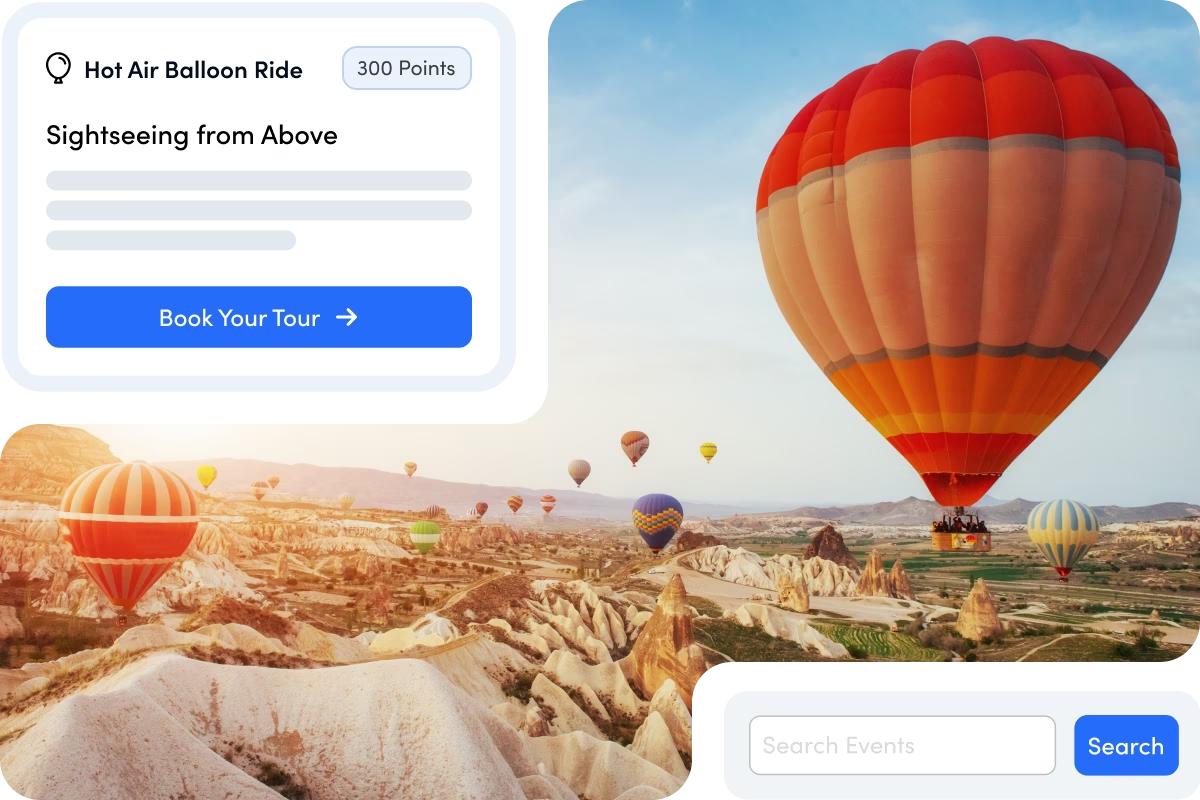
10. Experience-based incentives
- What it is: Travel, concerts, events, hotel stays, and other memorable experiences offered as a reward.
- Best for: Major milestones and top-tier achievements.
- Example program design: A top-performer trip awarded annually to employees who exceed a defined performance threshold.
- Implementation effort: Medium. Availability and fulfillment should be verified by region.
- Expected ROI lens: Participation, redemption rate, perceived value, and repeat performance.
- Awardco fit: Strong for travel and experience reward delivery.
11. Gift and rewards marketplace programs
- What it is: Gift cards, merchandise, custom swag, charitable giving, and other employee-selected rewards.
- Best for: Broad appeal and personal choice across a diverse workforce.
- Example program design: A points catalog offering gift cards, merchandise, and charity donation options side by side.
- Implementation effort: Low–Medium.
- Expected ROI lens: Redemption velocity, reward relevance, participation, and administrative time saved.
- Awardco fit: Strong. Rewards marketplace, custom catalogs, global and local options, and redemption reporting.
12. Employee referral incentives
- What it is: Bonuses or rewards for referrals that meet defined hiring and retention criteria.
- Best for: Expanding the talent pipeline through employee networks.
- Example program design: A referral bonus split between the hire date and a 90-day retention milestone, aligning the incentive with quality rather than volume.
- Implementation effort: Medium. Eligibility, timing, and payroll or tax review require attention.
- Expected ROI lens: Qualified applicants, time to fill, cost per hire, and 90-day retention.
- Awardco fit: Strong for reward delivery.
13. Team-based incentive programs
- What it is: Shared goals, team challenges, and collective milestones rewarded at the group level.
- Best for: Building collaboration and shared accountability.
- Example program design: A department-wide goal with a shared reward pool, distributed evenly once the milestone is hit.
- Implementation effort: Medium. Clear contribution criteria help avoid free-rider concerns and winner-take-all dynamics.
- Expected ROI lens: Team participation, shared goal attainment, and quality outcomes.
- Awardco fit: Strong. Team recognition, points, contests, and reporting.
14. Innovation and idea incentives
- What it is: Rewards for ideas that improve processes, reduce costs, increase safety, or enhance customer experience.
- Best for: Surfacing frontline knowledge and process improvement.
- Example program design: Points awarded when a submitted idea is formally implemented, with a clear submission and evaluation process.
- Implementation effort: Medium. Requires a defined submission, evaluation, and reward workflow.
- Expected ROI lens: Ideas submitted, ideas implemented, cost savings, and participation.
- Awardco fit: Strong.
15. Customer service incentives
- What it is: Rewards for customer satisfaction, service quality, response time, and resolution outcomes.
- Best for: Support and success teams where service quality is measurable.
- Example program design: Team-level rewards tied to CSAT thresholds over a rolling period, designed to avoid individual gaming.
- Implementation effort: Medium. Metric selection matters; rewarding speed or ratings alone can encourage poor service.
- Expected ROI lens: CSAT, first-contact resolution, quality review scores, and customer retention.
- Awardco fit: Strong. Configurable goals, recognition, points, and reporting.
16. Milestone and tenure incentives
- What it is: Rewards for onboarding completion, service anniversaries, project milestones, and role achievements.
- Best for: Lifecycle moments that deserve consistent, automated recognition.
- Example program design: Automated point awards and gifts triggered by tenure anniversaries and onboarding completion.
- Implementation effort: Low–medium.
- Expected ROI lens: Completion rate, participation, redemption, and retention.
- Awardco fit: Strong. Automated milestones, points, gifts, recognition, and global delivery.
17. Flexible work and autonomy incentives
- What it is: Project choice, schedule flexibility, remote-work options, and stretch assignments offered as a reward.
- Best for: Building trust and ownership, particularly for high performers.
- Example program design: Top performers earn first choice of project assignments or a flexible schedule for a defined period.
- Implementation effort: High. These are often policy or manager practices rather than rewards administered through a marketplace.
- Expected ROI lens: Productivity, engagement, retention, and absenteeism.
- Awardco fit: Partial/policy-dependent.
18. Family and lifestyle support incentives
- What it is: Dependent-care support, family experiences, commuting assistance, charitable giving, and lifestyle spending accounts.
- Best for: Holistic support that reflects a diverse workforce's needs.
- Example program design: A lifestyle spending account employees can apply toward family, wellness, or personal expenses of their choosing.
- Implementation effort: High. Inclusivity and equitable access matter; not every employee has the same family or lifestyle needs.
- Expected ROI lens: Participation, perceived value, retention, and equitable access.
- Awardco fit: Strong for lifestyle spending, charity, and experiences where documented; broader benefits administration sits outside the platform.
How to choose the right employee incentive program
Start with these six questions before building anything:
- Business objective: Are you solving for performance, participation, safety, sales, learning, wellness, retention, or culture?
- Employee population: Is your workforce office-based, remote, frontline, deskless, seasonal, or global?
- Desired behavior: Are you rewarding a one-time action, a repeated habit, a team outcome, or a long-term contribution?
- Reward preference: Would cash, points, choice, experiences, development, or time off matter most to this group?
- Program constraints: What budget, payroll, tax, policy, privacy, or regional requirements apply?
- Measurement plan: What's your baseline, target, timeframe, owner, and review cadence?
The programs that hold up over time are the ones where every one of these questions has a clear answer before launch, not after.
How to build the business case for an employee incentive program
Build the business case by linking one specific employee behavior to one measurable business outcome, establishing a baseline, estimating the full program cost, and defining how you'll evaluate incremental value after launch.
- Define the business problem. Is it low sales attainment, poor training completion, weak safety participation, high turnover, or decentralized spend with no visibility?
- Establish the baseline. Document current participation, performance, turnover, redemption, administrative time, or cost before you launch anything.
- Design the smallest useful pilot. Pick one audience, one behavior, one time frame, and one reward structure. Resist the urge to launch five programs at once.
- Estimate total cost. Include rewards, platform costs, administration, payroll and tax handling, communications, and manager time.
- Evaluate incremental value. Compare the pilot against your baseline or an appropriate control group, and document your assumptions along the way.
How to calculate incentive program ROI
The basic formula:
ROI = (Incremental value created − Total program cost) ÷ Total program cost
A few things to define before you run the math:
- Incremental value can include additional revenue, productivity, retained employees, avoided cost, quality improvement, or administrative time saved.
- Total program cost includes reward value, platform and implementation cost, administration, communications, payroll and tax handling, and manager time.
- Time frame should be stated clearly, whether monthly, quarterly, annual, or pre/post launch.
- Comparison method should use a baseline, historical comparison, or a pilot-versus-control approach, whichever is most defensible for your data.
Awardco's ROI calculator can help model expected return before you commit budget to a full rollout.
A handful of metrics show up across nearly every program type and are worth tracking regardless of which incentive you're running:
- Participation rate: eligible employees who complete the target action.
- Redemption velocity: how quickly earned rewards are redeemed after issuance.
- Retention lift: change in retention or intent to stay for the relevant population, compared with baseline.
- Recognition reach: percentage of eligible employees receiving recognition or rewards.
- Cost per completed action: total program cost divided by completed actions.
- Administrative efficiency: hours or manual steps saved.
How to implement an employee incentive program
- Define the objective and target behavior.
- Identify the eligible audience and access requirements.
- Choose monetary, non-monetary, or blended incentives.
- Set rules, thresholds, time frame, budget, approvals, and exclusions.
- Confirm payroll, tax, legal, privacy, accessibility, and regional requirements.
- Communicate the program clearly, with examples and an obvious earning path.
- Launch, monitor, re-measure, and revise.
A platform like Awardco incentives can support several of these steps directly: configuring programs around goals, behaviors, eligibility, and budgets; giving employees meaningful reward choice; automating distribution to cut manual work; and reporting on participation, redemption, reach, and budget usage. Just as important, design for frontline and remote access from the start, rather than assuming everyone checks a corporate inbox.
Common employee incentive program mistakes
- Rewarding activity instead of outcome. Track the result that actually matters, not just the action that's easiest to measure.
- Using one reward type for every employee. A single reward option only motivates the slice of your workforce that happens to want that thing.
- Creating rules employees can't follow. If people have to ask what counts, the program isn't ready to launch.
- Excluding frontline or global employees. Programs built only for desk-based, English-speaking, corporate-email employees leave out a large share of most workforces.
- Rewarding speed or scores in ways that invite gaming. Metrics like CSAT or safety streaks can backfire if the incentive structure encourages underreporting or shortcuts.
- Ignoring tax, payroll, and privacy requirements. These considerations need review before launch, not after a payout.
- Measuring distribution instead of impact. Knowing how many rewards went out tells you less than knowing whether behavior or outcomes actually changed.
- Treating incentives as a substitute for fundamentals. No program compensates for unfair pay, poor management, or unsustainable workloads.
- Launching too many programs without clear ownership. Every active program needs a named owner and a visible budget, or it quietly stops getting attention.
Frequently asked questions about employee incentive programs
What is an employee incentive program? An employee incentive program is a structured system that offers monetary or non-monetary rewards for achieving defined goals, completing specific actions, or demonstrating desired behaviors. Unlike recognition, which happens after the fact, incentive programs are designed in advance to motivate a specific outcome and are typically measured against a clear baseline.
What are the different types of employee incentive programs? Common types include points-based programs, performance bonuses, sales commissions and SPIFFs, profit sharing, safety and quality incentives, wellness incentives, training incentives, tuition reimbursement, additional PTO, experience-based rewards, referral incentives, team-based programs, innovation incentives, customer service incentives, and milestone recognition. The right mix depends on your business goals and workforce.
What are examples of monetary employee incentives? Monetary incentives include performance bonuses, sales commissions, SPIFFs, profit-sharing payouts, and cash-equivalent rewards tied to a defined goal. These work well for clear, measurable targets like revenue or productivity, though they carry more cost, tax, and payroll complexity than non-monetary options.
Quels sont des exemples de mesures incitatives non monétaires pour les employés? Les mesures incitatives non monétaires comprennent des points échangeables contre des récompenses, la reconnaissance, des congés payés supplémentaires, des possibilités de perfectionnement professionnel, des modalités de travail flexibles et des expériences comme des voyages ou des billets pour des événements. Ces mesures tendent à favoriser un engagement durable et sont plus faciles à personnaliser pour une main-d'œuvre diversifiée.
Quels sont les programmes de mesures incitatives indispensables pour les employés? La plupart des organisations bénéficient d'une combinaison de base composée d'un système de reconnaissance par points, de l'automatisation des jalons et de l'ancienneté, et d'au moins un programme lié à la performance pertinent pour leur secteur, comme des incitatifs à la vente ou à la sécurité. Au-delà de cela, le choix du programme doit répondre à vos objectifs, à votre main-d'œuvre et à votre budget spécifiques plutôt que de suivre un modèle fixe.
Comment créer un programme de mesures incitatives pour les employés? Commencez par définir l'objectif commercial et le comportement spécifique que vous souhaitez encourager. Établissez des règles et des critères d'admissibilité clairs et mesurables, choisissez des récompenses que vos employés apprécient réellement, communiquez le programme en détail et suivez la participation dès le premier jour. Intégrez un cycle d'examen afin de pouvoir apporter des ajustements en fonction des premiers résultats.
Comment mesurer le retour sur investissement d'un programme de mesures incitatives pour les employés? Comparez la valeur ajoutée créée, comme l'augmentation des revenus, la rétention des employés ou le temps économisé, au coût total du programme, incluant les récompenses, l'administration et les coûts de la plateforme, en utilisant la formule : (valeur ajoutée − coût total) ÷ coût total. Établissez votre base de référence avant le lancement pour que la comparaison soit défendable.
Les mesures incitatives pour les employés sont-elles imposables? Dans de nombreuses juridictions, les mesures incitatives en espèces ou équivalentes sont généralement considérées comme un revenu imposable, et même les récompenses non monétaires peuvent avoir des implications fiscales selon leur valeur et leur structure. Les exigences varient selon le pays et la région; consultez donc un professionnel de la fiscalité ou du droit avant de finaliser la conception du programme.
Quelle est la différence entre les mesures incitatives et la reconnaissance des employés? Les mesures incitatives sont mises en place à l'avance pour motiver une action définie; les employés savent ce qu'ils doivent faire et ce qu'ils obtiendront. La reconnaissance est une marque d'appréciation donnée après coup, souvent liée à des jalons ou à des moments personnels plutôt qu'à un objectif prédéterminé. Les deux sont importantes, et les cultures d'entreprise les plus fortes les utilisent conjointement.
Quelles sont les meilleures mesures incitatives pour les employés de première ligne? Les employés de première ligne réagissent généralement bien aux programmes qui ne nécessitent pas de bureau ou d'adresse courriel d'entreprise, comme les programmes de points accessibles sur mobile, les incitatifs liés à la sécurité et à l'assiduité, et la reconnaissance des jalons. La flexibilité des récompenses est également importante, car les cartes-cadeaux, la marchandise et les expériences ont tendance à être plus attrayantes que les options nécessitant une utilisation exclusivement numérique.
Comment fonctionnent les programmes de mesures incitatives par points pour les employés? Les employés accumulent des points en accomplissant des actions définies, comme terminer une formation, atteindre un jalon de sécurité ou recevoir une reconnaissance de leurs pairs. Les points s'accumulent et sont échangeables via un catalogue de récompenses, ce qui donne aux employés le choix de ce qu'ils reçoivent tout en offrant aux RH un moyen cohérent de suivre la participation et le coût par action.
Comment les entreprises peuvent-elles encourager la participation au mieux-être ou à la formation? Offrez des points, de petites primes ou une reconnaissance des jalons liés à la participation volontaire à des défis de mieux-être ou à la réussite d'une formation, en gardant les exigences réalisables et en évitant toute nécessité de divulguer des informations de santé sensibles. Associer les incitatifs à la formation à un parcours de développement professionnel visible tend à améliorer davantage les taux de réussite.
Les meilleurs programmes de mesures incitatives pour les employés relient un objectif commercial clair à une action significative de l'employé, offrent des récompenses appréciées et mesurent l'impact global, de la participation et de l'échange des points à la rétention, à la performance et à l'efficacité administrative.
Prêt à créer un programme qui est réellement mesurable? Planifiez une démonstration.