
If your small business doesn't have an HR department, employee recognition often falls to an owner, office manager, operations leader—or whichever manager happens to remember.
That might work in the short run. But eventually, birthdays get missed, work anniversaries live in someone's spreadsheet, and no one is quite sure who is responsible for keeping recognition on track.
This situation doesn’t merit a large HR function or complicated strategy. It requires a small operating system for recognition:
- One person who owns the process
- A few simple ways to recognize employees
- Clear expectations for managers
- Just enough tracking to ensure people aren't overlooked
This employee recognition program template gives you exactly that. Use it to decide who owns recognition, how much time it should take, what to spend on it, what to automate, and when a manual system is more work than it's worth.
The takeaway: Great recognition doesn’t require an HR team.
TL;DR: How do you run an employee recognition program without HR?
Start with:
- Owner: 1 leader in charge of the program’s operations
- Programs: 2–3, including manager recognition + milestones + optional peer recognition
- Consistent manager habit: A few minutes of intentional recognition each week
- Budget: Pre-set and predictable per-employee or annual cap
- Metrics: Recognition reach, manager participation, and employee feedback
- Review: Monthly review to look for improvement opportunities
With a simple structure in place, small businesses can make recognition consistent without needing a dedicated HR team.
Download the employee recognition program template
Who should manage employee recognition when there is no HR department?
Give one person operational ownership, but don't make that person responsible for all of the recognition.
If the person who manages recognition also has to recognize every employee personally, the program will quickly become another job. Instead, one person should manage the system while managers and leaders handle the personalized recognition.
Recognition owner manages the process
Your recognition owner could be:
- COO or operations leader
- Office manager
- Executive assistant
- Founder
- Finance or administrative lead
- People Ops generalist
Their job is to keep the program moving. That might include:
- Maintaining the recognition calendar
- Tracking the budget
- Sending manager reminders
- Reviewing basic participation
- Keeping program guidelines consistent
- Fixing administrative problems
In other words, they don't need to be the person giving most of the recognition.
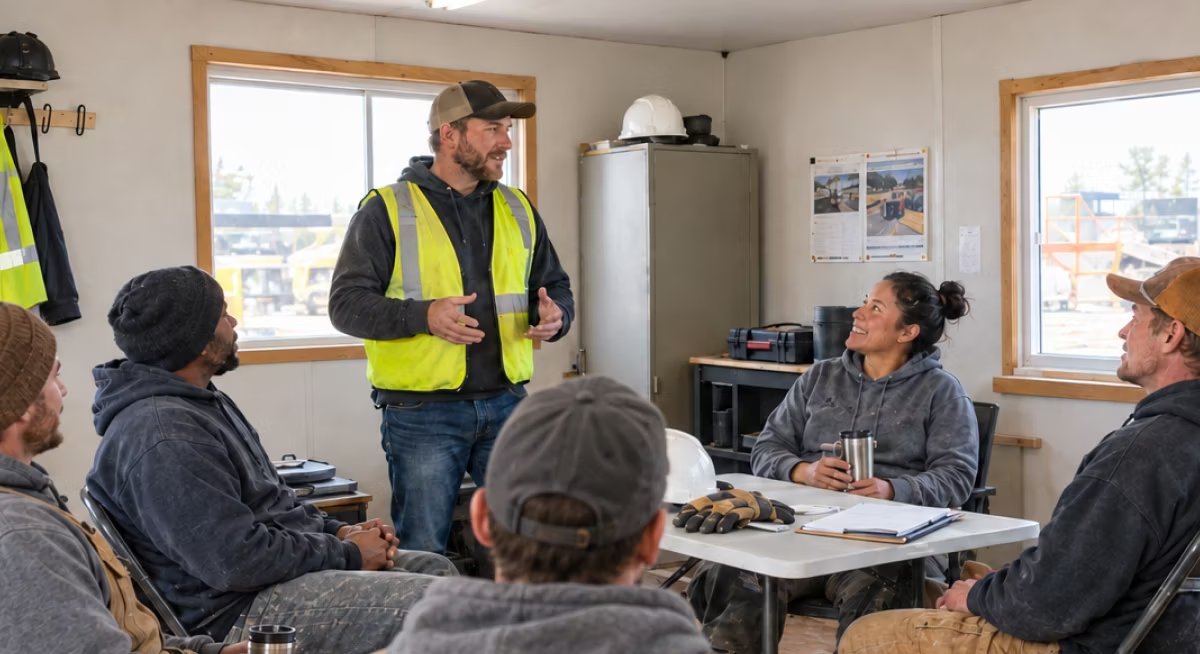
Managers execute recognition
Managers are closest to the work, so they should be responsible for noticing and recognizing meaningful contributions.
Their role is to:
- Give specific recognition
- Notice good work and effort
- Participate consistently
- Encourage peer recognition
Recognition should be part of normal management, not an administrative task that gets handed off to someone else.
Leaders set the example
A founder, owner, or executive sponsor should approve the budget and model the behavior they want managers to follow.
They can:
- Sponsor the program
- Participate in recognition
- Amplify meaningful wins
- Reinforce why recognition matters
The takeaway: Centralize administration. Distribute recognition. You don't need a recognition committee unless your business genuinely needs one.
How much time should a small business employee recognition program take?
If recognition requires several hours of administrative work every week, it may be too complicated for a lean organization.
For this starter model, aim for roughly 50–60 minutes per week for the program owner. This is an operating target, not an industry benchmark.
That might look like:
- 10 minutes reviewing participation
- 10 minutes checking upcoming milestones
- 10 minutes sending manager reminders
- 10–15 minutes handling reward/admin needs
- 10–15 minutes reviewing issues or examples
Managers should need roughly 5–10 minutes per week to execute their part of recognition. That doesn't mean they need to schedule a separate "recognition session." Recognition should happen while work is happening or when a contribution is still fresh.
Awardco customer CloudFit Software reports saving 5–8 hours of administrative work per week after moving from a more manual recognition process to Awardco automation.
Start with only 2 or 3 recognition programs
When you're starting from scratch, don't try to account for every possible recognition moment. You can always expand later.
Start with small business employee recognition programs that are easiest to understand and maintain.
1. Everyday manager recognition
Make this the foundation.
Managers recognize employees for specific contributions, effort, or behaviors that reflect your company's values.
This can start at $0. A specific thank you can be more meaningful than a generic reward. For example:
"Thank you for jumping in to help resolve that client issue. You made a stressful situation much easier for the rest of the team."
The point is to make recognition specific enough that employees know what they did well and why it mattered.
2. Milestone recognition
If someone can reliably maintain the dates, add recognition for:
- Work anniversaries
- Birthdays, if appropriate for your workplace
- Onboarding milestones
The important part is sustainability. If birthdays and anniversaries are already getting missed, don't make the process more complicated by adding more manual tracking. That's a good place to organize program frameworks and leverage automation.
3. Peer-to-peer recognition
Give employees a lightweight way to thank their coworkers.
You don't need a dedicated platform to start. Recognition could happen through:
- Team meetings
- Slack or Teams
- A shared recognition channel
And you don't need to attach a reward to every recognition. Sometimes the ability to simply say, "I noticed what you did," is enough.
Use this basic manager recognition cadence
Recognition doesn't require another meeting on the calendar. A simple, consistent cadence can keep it going.
Weekly
Managers should intentionally recognize meaningful contributions while they're still fresh. Send one reminder or prompt each week, such as: “Who made your team's work better this week?”
You can also add a short peer-recognition shoutout in an existing team meeting rather than creating a new meeting.
Monthly
The program owner should take a quick look at:
- Are all managers participating?
- Are some employees consistently receiving no recognition?
- What examples are worth highlighting across the company?
A senior leader can amplify a few meaningful examples when appropriate.
Quarterly
Ask employees one or two simple questions:
- Do you feel your contributions are recognized?
- Is the recognition you receive meaningful?
Use what you hear to improve the program. And avoid recognition quotas—requiring managers to give a certain number of recognitions can encourage generic or forced praise. Build a habit of noticing good work rather than trying to hit a recognition target.
Build a starter employee recognition budget
Before you launch rewards, decide the maximum amount you're willing to spend.
Recognition doesn't have to involve money. But if you plan to offer monetary rewards, setting a clear budget upfront keeps spending predictable.
Your budget should reflect your company's size, goals, workforce, and available resources.
Awardco's budgeting calculator offers several ways to approach recognition spending rather than prescribing one amount for every organization.
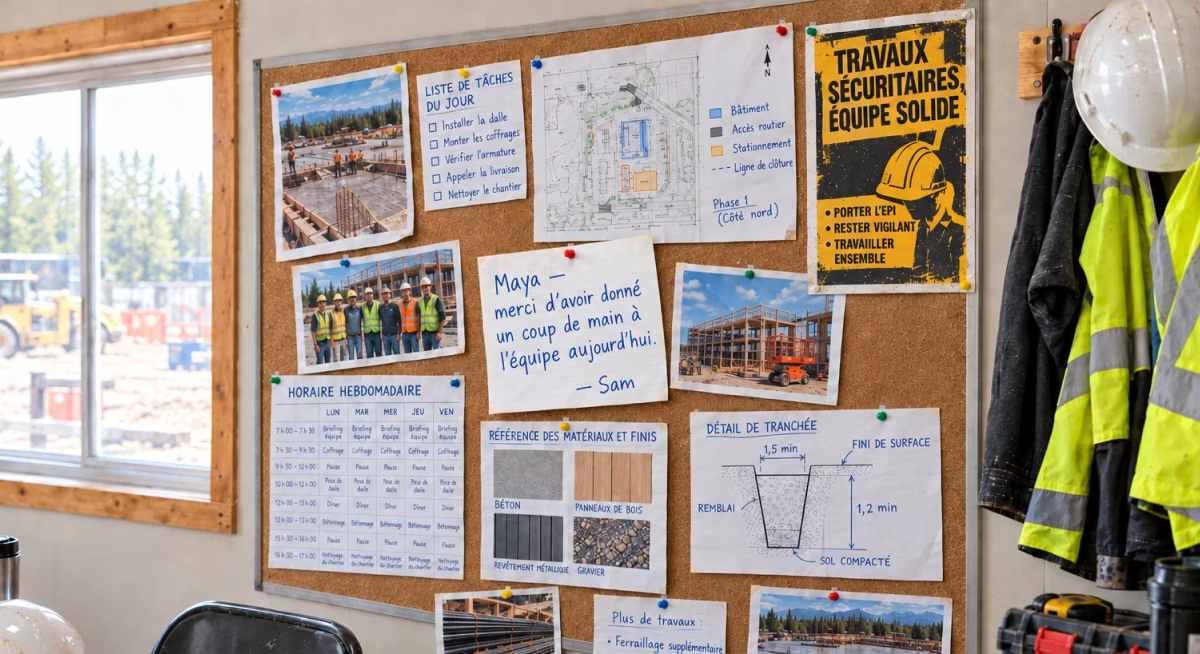
Use both monetary and non-monetary recognition
Money can make certain moments more meaningful, but it shouldn't be the only way employees receive recognition.
Non-monetary recognition
Good options for everyday recognition include:
- A specific thank you
- A team shoutout
- Executive acknowledgement
- A handwritten note
- A development opportunity
- Greater visibility for someone's contribution
Monetary recognition
Consider reserving rewards for moments such as:
- Spot awards
- Significant achievements
- Values awards
- Milestones
- Special contributions
The key is matching the reward to the unique moment.
One note on compliance: Tax and payroll treatment can vary. Employers should confirm the appropriate treatment of employee rewards with their payroll, tax, or legal professional. In the U.S., cash and many cash-equivalent awards may be taxable compensation.
See more employee reward ideas
What should stay manual—and what should you automate?
Here's the simplest rule to remember: Automate administration, not appreciation.
The parts of recognition that require human judgment should stay human. Repetitive administrative work is where automation can help.
Keep manual when it adds value
- Writing personal recognition
- Offering one-on-one praise
- Conducting team meeting shoutouts
- Asking employees about their preferences
- Deciding why someone deserves recognition
- Reviewing the program and making improvements
Why? Because human judgment and specificity are what give recognition its meaning.
Automate when it saves recurring administrative work
- Birthday and anniversary reminders
- Onboarding milestones
- Reward fulfillment
- Budget balances
- Participation tracking
- Repetitive manager reminders
- Reporting
- Employee directory or HRIS updates
- Recognition through Slack or Teams
For example, a structured recognition platform can remind you when someone's work anniversary is coming up. But it shouldn't replace the manager's personal message about what that employee has contributed over the past year.
That's the balance to aim for: technology handles the repetition so people have more time for the meaningful parts.
As your program becomes more structured, tools such as integrations, reporting, and nominations can help centralize processes that would otherwise live across spreadsheets and separate systems.
A 30-day employee recognition program rollout
You don't need months to build a basic program. Here’s a 30-day rollout plan to help your team get started on the right track. For more guidance, explore this guide on recognition programs that work.
Week 1: Decide
- Name one program owner
- Define one business goal
- Choose two or three recognition programs
- Determine which behaviors and values deserve recognition
- Set the budget cap
Leadership and managers need to be on board and on the same page from the start if the program is going to succeed.
Week 2: Build
- Create basic guidelines
- Decide where recognition will happen (in-person, Slack, etc.)
- Set the manager cadence
- Gather employee recognition and reward preferences
- Create a simple tracking sheet
Keep the rules short. Employees and managers should be able to understand the program without having to read a 20-page policy.
Week 3: Test
- Brief managers
- Give examples of meaningful recognition
- Test the process with a small group
- Fix anything confusing or time-consuming
- Confirm the reward and payroll process if money is involved
This is where a simple process on paper gets tested in the real world.
Week 4: Launch
- Explain the program to employees
- Have leadership model the behavior
- Start manager and peer recognition
- Track participation
- Review the first month for areas of friction and improvement
The first 30 days aren't about getting everything perfect. They're about creating a system people will actually continue using.
See the full employee recognition program go-live checklist
Start by tracking 4 metrics
As you’re rolling out your recognition program, don’t overwhelm yourself with too many metrics. Start simple with a few key metrics:
1. Recognition reach
What percentage of employees received meaningful recognition during the period?
This catches gaps that a simple recognition count can miss.
For example, 50 recognitions might sound great. But if 10 employees received five recognitions each while 40 received none, your program isn't reaching everyone equally.
2. Manager participation
What percentage of managers participated in recognition?
This helps you understand whether recognition is becoming part of management habits or is dependent on a few enthusiastic leaders.
3. Employee perception
Ask employees to rate one recurring pulse statement: "I receive meaningful recognition for my contributions."
Track whether that score improves over time.
4. Administrative time
Admin time doesn't need to be one of your top effectiveness metrics. But the program owner should still watch it.
If the time required to maintain recognition keeps increasing, that's a signal to simplify or automate.
A bird’s-eye view
Here's what a simple program could look like in practice.
Note: This is an illustrative example, not an Awardco customer case study.
You can see that the program stays deliberately small. The COO oversees the process, managers handle everyday recognition, employees recognize one another, and work anniversaries are tracked consistently.
After 30 days, the company checks what’s working, where there’s friction, and whether anything needs to be simplified or automated.
Real-world proof: CloudFit Software
CloudFit Software provides a useful example of what can happen when a small business reduces the administrative burden around recognition.
After moving from a more manual process to Awardco, CloudFit reports increasing recognition engagement from 20% to 90% and saving 5–8 hours of administrative work per week.
While this isn't a no-HR case study (CloudFit has a People Ops/Employee Experience function), there’s value in showing how automation can reduce the recurring work involved in managing recognition.
When should a small business move from manual recognition to a platform?
There's no employee-count threshold that tells you when it's time to use a recognition platform. A small company can successfully manage recognition manually if the system remains simple.
However, a platform can also make sense from day one for a small team that wants to avoid manual milestone tracking, reward reconciliation, or fragmented spreadsheets. Software doesn’t have to be a maturity milestone—it can simply be the easier way to start.
Manual recognition may still be enough when:
- One person can manage it easily.
- Managers participate consistently.
- Milestones aren't being missed.
- Rewards are occasional.
- Tracking requires little effort.
- Everyone has roughly equal access to recognition.
Consider a platform when:
- The program owner is spending hours on repetitive administration.
- Managers repeatedly need reminders.
- Birthdays or anniversaries are being missed.
- Gift cards or rewards require regular purchasing and reconciliation.
- You can't tell which employees are being overlooked.
- Multiple locations or remote and frontline employees have inconsistent access.
- Budgets are becoming difficult to track.
- Recognition, gifting, awards, and milestones are spread across different tools.
- You want reporting without maintaining it manually.
The switch point is when recognition becomes harder to repeat, track, fulfill, or administer consistently.
That's also where a platform can become more than another piece of software. It can give a lean team the structure and automation needed to keep recognition running without adding another major administrative responsibility.
You don't need HR. You need ownership and consistency.
When administering recognition starts taking more time than actually recognizing people, that's your signal to simplify or automate.








.svg)
.svg)