



Employee recognition and rewards platforms are systems that help organizations recognize employees, deliver meaningful rewards, and manage recognition programs at scale. The best employee recognition platforms for 2026 do more than just offer points or gift cards. They combine recognition, rewards, reporting, system integrations, and employee choice in ways that are easy to use for both employees and admins.
What are employee recognition and rewards platforms?
Employee recognition platforms are centralized software systems designed to help organizations celebrate, acknowledge and appreciate their employees. Forget unwieldy spreadsheets and manually ordering gift cards. These platforms help manage every aspect of employee recognition and appreciation from one dedicated hub.
From this hub, organizations can easily run:
- Peer-to-peer recognition: Team members celebrate each other’s contributions and daily ‘wins’.
- Manager-led recognition: Leaders can instantly reward great effort and performance, and reinforce company values.
- Service awards and milestones: By automating work anniversaries, birthdays, and major career achievements, no milestone gets forgotten.
- Incentives and rewards: Customize goal-based incentives and flexible reward catalogs, such as gift cards, company swag or experiences.
When searching for recognition software, today’s buyers are in fact looking for a combined system that includes recognition (meaningful appreciation) and rewards (actual gifts). The best recognition platforms combine the two, making appreciation personal, visible, and rewarding.
What makes the best employee recognition software 2026?
When you come to choose the recognition software that’s right for your organization, you’ll need to find a balance between employee flexibility, and control and ease of use for the admin team.
To evaluate all the available modern platforms out there, look at these eight core criteria as your framework:
1. Recognition flexibility
Does the platform support multiple appreciation workflows? We’re talking about peer-to-peer shoutouts, manager-led spot awards, automated milestone celebrations and goal-focused incentive programs.
2. Reward variety and employee choice
Do your employees get rewards they actually want? Check that the platform offers a wideselection of rewards, from gift cards to experiences, to company swag, custom perks and even charity donations.
3. Global reward reach
Can your distributed or international employees be rewarded equitably? Check that the platform can offer localized reward options and handle currency conversions fairly, ensuring reward impact is equitable across borders.
4. App and mobile access:
Is recognition effortless for your frontline and deskless workers too? Make sure the software features iOS and Android apps, and integrations with tools like Slack, Teams and email.
5. Reporting and analytics
Can the system reveal actionable insights? You'll want reporting and data that's deeper than surface level. Look for participation rates, recognition frequency, manager adoption, and employee engagement trends.
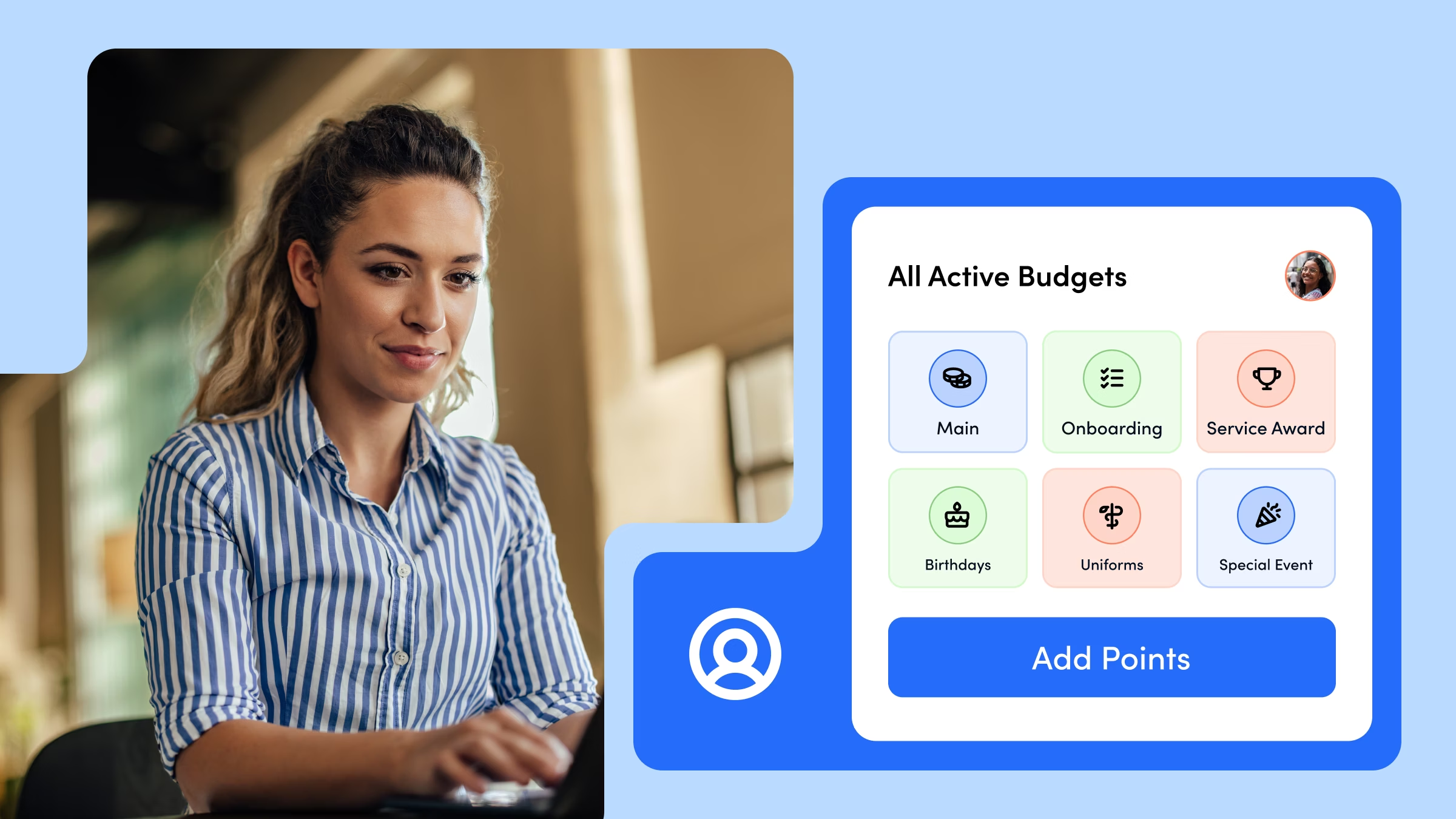
6. Budget visibility
Does the system have robust financial safeguards? Look for point allocation limits, automated quarterly or monthly budget resets, and tracked spending across all departments. Watch out for vendors that have a breakage policy, where they get to keep any budget in the platform if you ever decide to leave.
7. Compliance and controls
Does the software have strong security credentials? Look for SOC 2 and GDPR, SSO (single sign on), support and customizable approval permissions for higher-value rewards.
8. Segment fit (SMB vs. enterprise)
Can the platform scale with your organization? Small companies may only need quick implementation and low administrative overheads, whereas enterprise organizations may need complex HRIS integrations and thousands of user accounts.
Best employee recognition platforms for 2026
You’re spoiled for choice when it comes to selecting a recognition platform in 2026. The technologies are now such that most platforms will do a decent job of recognizing and rewarding your employees.
So, instead of a like-for-like comparison of the top platforms, you need to look at these top options in terms of fit for your organization. There's not really a single overall winner. All of these excellent platforms have noticeably different sweet spots—it’s just a question of finding the one that chimes best with your organizational needs.

1. Awardco: an all-rounder for flexibility and scale
Best for: SMBs, mid-market and enterprise; growing organizations with that need robust recognition and rewards that scale with your business. Offers a highly configurable, scalable recognition and rewards platform that’s easy to administer and control.
Core strengths: Awardco consolidates recognition, rewards, incentives, celebrations and engagement in a single powerful platform, and it offers unmatched global reward choice; strong program configurability; global, deskless and frontline worker support, with robust reporting and budget controls.
2. Bonusly: simple to set up
Best for: SMB & Mid-market; organizations whose priority is getting lots of employees regularly recognizing one another using simple, frequent, social peer-to-peer recognition, rather than building a highly complex rewards program.
Core strengths: Very easy to adopt; focus is strongly on peer recognition using the Slack/Teams/mobile experience. Bonusly offers automated milestones, straightforward rewards, and builds strong engagement with a community feel.
Tradeoffs: Bonusly is less suited to hosting complex, multi-program, or global recognition requirements, and is comparatively lightweight when it comes to administration and reporting.
3. Achievers: complex enterprise recognition
Best for: enterprise; larger organization HR departments who want a recognition platform recognition to become part of a broader people/employee engagement strategy rather than a standalone rewards tool. Recognition ties into engagement, performance and employee listening.
Core strengths: High-frequency recognition; global rewards; strong integrations with other tools; deep analytics; employee listening/feedback; sophisticated governance and support.
Tradeoffs: A bigger platform than smaller organizations may need; inflated reward prices compared to external retail prices lower the value of rewards; complex to administer because of its breadth of functionality.
4. Nectar: accessible SMB/mid-market alternative
Best for: SMB & Mid-market; When you want more than basic recognition, including rewards and engagement in one relatively accessible platform, but don't need enterprise-scale recognition architecture.
Core strengths: A balance of recognition and engagement, easy to implement; peer recognition; customizable rewards; employee challenges; communications/surveys.
Tradeoffs: You’ll find less depth and flexibility for programs, and the reporting/analytics and customization are not as strong as the enterprise leaders.
5. Workhuman: complex enterprise recognition
Best for: Enterprise; Large multinationals where recognition is strategically important enough to invest in a major enterprise program.
Core strengths: Established recognition; global rewards; Social feed recognition; complex enterprise capabilities; strong people-data and insights.
Tradeoffs: More expensive and complex to implement than user friendly alternatives, less suitable if you simply need simple recognition; restrictive redemption process and catalogs.
6. O.C. Tanner: culture with milestone and service recognition
Best for: Enterprise; Bigger organizations that prioritize cultural transformation and service award recognition experiences.
Core strengths: Over 100 years of experience, traditional service award expertise; Culture Cloud®; service/milestone recognition, custom awards and experiences, global reach, culture-building tools to strengthen engagement and retention.
Trade offs: Enterprise-orientated, so potentially more complex than you may need for a straightforward peer-recognition programs; requires dedicated effort to implement and maintain to get the most from it.
7. TerryBerry: employee experience and wellbeing
Best for: SMB & Mid-market; Small-to-midsize companies that want recognition to sit alongside wellbeing and employee experience, but don’t want to invest in a heavyweight enterprise platform.
Core strengths: a scalable combination of recognition, awards, rewards, wellbeing and employee listening, with sentiment-driven analytics.
Tradeoffs: potentially more platform capability than needed if recognition alone is your goal, more emphasis on physical than digital-first rewards.
Employee recognition software reviews: what buyers should actually look for
When you’re looking at employee recognition software reviews, star ratings are only part of the story. A 4.8 rating says that customers are generally pretty satisfied, but that tells you little about how the platform will be suitable for your organizational needs.
You need to take a look at these five specific areas:
1. Review volume
A high volume of reviews means the platform has been available for a while and received plenty of real user testing. For example, Awardco holds G2's #1 Highest-Rated positioning in employee recognition, based on more than 6,000+ verified user reviews; a large enough sample size for the feedback to indicate solid performance.
2. Review freshness
Check the latest feedback from the past 6 to 12 months. New reviews reflect how quickly a provider updates its software, responds to trends and maintains quality as it develops.
3. Reporting and admin comments
Look for comments from platform admins and HR staff, and notice how they describe features such as back-end usability, report generation and budget management.
4. Global reward comments
If you manage an international workforce, filter reviews by location, checking feedback about local gift availability, shipping reliability and currency conversion.
5. Adoption and usability patterns
Read comments from employees to ascertain how easy the platform is to use. Note recurring comments about app and mobile access, redeeming points and how recognition fits into daily work.
Employee recognition app and mobile access: why it matters
Not all employees sit at desks in offices all day. Mobile recognition apps ensure you can reach every worker on whatever device they use in their daily work cadence.
With mobile-first access you can:
- Reach remote teams: Keep distributed employees feeling connected to their company and culture and visible to their peers and leaders, regardless of time zone or geographical distance.
- Reach frontline and deskless teams: Give healthcare professionals, retail staff, field technicians and manufacturing teams who don’t have regular access to email or a desktop station the ability to send and receive appreciation.
- Enable faster flow of work recognition: Managers and peers can capture and celebrate achievements instantly with mobile functionality.
- Make day-to-day adoption stronger: Push notifications and intuitive mobile interfaces make participation easier, leading to higher engagement and platform use by everyone in the organization.
When searching for a recognition and rewards vendor, make sure to get a demo of their mobile app and offline features designed for frontline workers. If they don't have an app, or it loses a lot of its features on mobile, consider looking for a different vendor.
Low-cost recognition platform vs. lower total value
Choosing a low-cost recognition platform may initially seem like a budgetary win for your HR department, but choosing software by price alone may be a false economy. When you’re investing in employee recognition software, you’ll need to weigh up the trade-offs:
- Lower license price vs. total spend: A platform with a lower monthly subscription may have higher back-end fees or redemption costs.
- Simpler feature set: Cheaper platforms may not have advanced automation, detailed reporting or sufficient HRIS integration. As your organization grows, administrative overheads to make up the shortfall manually may outweigh the savings made by buying basic software.
- Smaller reward catalog: Lower cost software may mean limited reward options, such as offering only basic vouchers. They may exclude international redemption, custom company swag, or much choice at all.
- Hidden markups or fees on rewards: Vendors may subsidize low software licensing fees by adding substantial markups to catalog items, and charging a premium for shipping and handling.
This is why evaluating total value and reward economics is essential. By looking at overall cost (including software fees, catalog markups, and administrative ease) you make sure your budget goes into employee appreciation rather than vendor profit margins.
Alternatives pages, comparison pages, and when buyers need them to choose the best employee rewards platform
Once you’ve narrowed down a list of potential employee recognition platforms, you’ll need to make a more detailed evaluation. Generic feature lists are no longer enough—you’ll need targeted, practical comparisons to validate your choices.
Buyers usually want:
- Recognition software alternatives content: Dedicated breakdowns that explore alternative options for specific platforms, ensuring all viable market solutions are considered.
- Vendor-vs-vendor comparisons: Side-by-side comparisons showing key differentiators, pricing models, feature sets, and implementation timelines.
- App-specific detail: Exploration of mobile functionality, deskless and frontline accessibility, and user-experience nuances to guarantee seamless adoption.
- Reviews: Verified feedback from similar organizations detailing their customer satisfaction and opinions on administrative support.
- Low-cost options: Which are the cheapest? And why are they cheap…?
How Awardco approaches employee recognition platforms
At Awardco, we approach employee recognition platforms as connected systems, rather than point solutions. We focus on giving organizations a single platform for recognition, rewards, incentives, engagement, budget control, reporting, and global reach, with strong employee choice, and ease of use for your admin team.
To see all of this in action, book your Awardco demo now.
FAQs
What is the best employee recognition software for 2026?
The best employee recognition software for 2026 is the one that fits your team, budget, and recognition goals. For many mid-market and enterprise organizations, Awardco is a strong all-round choice, combining recognition, rewards, incentives, reporting, budget controls, and global reward options in one flexible platform. Smaller teams may prefer Bonusly or Nectar, while larger enterprises may also consider Achievers, Workhuman, or O.C. Tanner.
What should I look for in employee recognition software reviews?
Look beyond star ratings and focus on reviews that show real fit for your organization. The most useful employee recognition software reviews mention review volume, recent customer feedback, admin usability, reporting, budget controls, global reward options, mobile access, and employee adoption. Themes matter - if customers consistently praise ease of use, flexible rewards, and strong support, that is a good sign the platform works well day-to-day.
What makes a good employee recognition app?
A good employee recognition app makes appreciation easy, timely, and accessible for everyone. Look for simple mobile access, push notifications, intuitive recognition flows, and integrations with the tools that employees already use, such as Teams, Slack, and email. The best apps help remote, frontline, deskless, and office-based teams send and receive recognition in their flow of work, making adoption stronger and appreciation more consistent.
What is a low-cost recognition platform?
A low-cost recognition platform is software that helps companies run employee recognition with a lower upfront license fee or simpler feature set. It can be a good fit for smaller teams that need easy peer recognition, basic rewards, and quick setup. Do look beyond the monthly price, though: limited reporting, smaller reward catalogues, hidden reward markups, or extra admin work can reduce its overall value as your program grows.
How do you compare employee recognition platforms?
Compare employee recognition platforms by organizational fit, not just features. Start with your team size, budget, locations, and recognition goals, then review each platform’s reward choices, mobile access, reporting, integrations, budget controls, compliance, and ease of use. The best comparison also looks at trade-offs: a simple platform may be faster to launch, while one with more configurable features may be better value as your program grows.
Are rewards platforms different from recognition platforms?
Yes, but the best solutions bring both platforms together. Recognition platforms focus on meaningful appreciation, such as peer shoutouts, manager-led awards, milestones, and values-based recognition. Rewards platforms focus on what employees receive, such as gift cards, experiences, company swag, or charitable donations. A strong employee recognition platform connects the two, making appreciation easy to give and rewarding to receive.




.svg)











.svg)

