
Sustainable engagement does not come from a single program or a big rollout moment. It is built through consistent, intentional recognition that shows people they matter over time.
In a panel moderated by Awardco’s Director of Content, Bronson Dameron, two recognition leaders shared how they drive long-term engagement in very different organizations:
- Jenny Ketchpaw, VP of Talent Engagement at Citizens Business Bank
- Alicia Taranto, Recognition Lead at Cardinal Health
Their industries, workforce sizes, and challenges differ, but their approaches converge in meaningful ways.
But before we dive into their panel recap, let’s go over the basics.
What is employee engagement?
When employees are engaged, they’re more invested in their work and motivated to go above and beyond. They care about the success of their teams and the company, and they are more likely to drive innovation.
Achieving employee engagement takes more than a sporadic effort to temporarily boost satisfaction—it takes full-time striving to make sure employees feel invested in their work and happy with their overall situation.
What drives employee engagement?
We’ll dive into engagement strategies and ideas a little lower down, but before that, it’s crucial to understand what drives employee engagement. Top drivers include:
- Purpose and meaning: Employees have to know that their work means something and has a real impact.
- Good leadership: Managers who genuinely care, listen to, and support employees are key for engagement.
- Continual development: Employees need to have opportunities to learn new skills and grow in their role, including frequent feedback and mentoring.
- Unique strengths: Employees need to be encouraged and recognized for their strengths and their efforts.
While you can point to almost any workplace factor and say it drives engagement, these four keys are where it all begins.
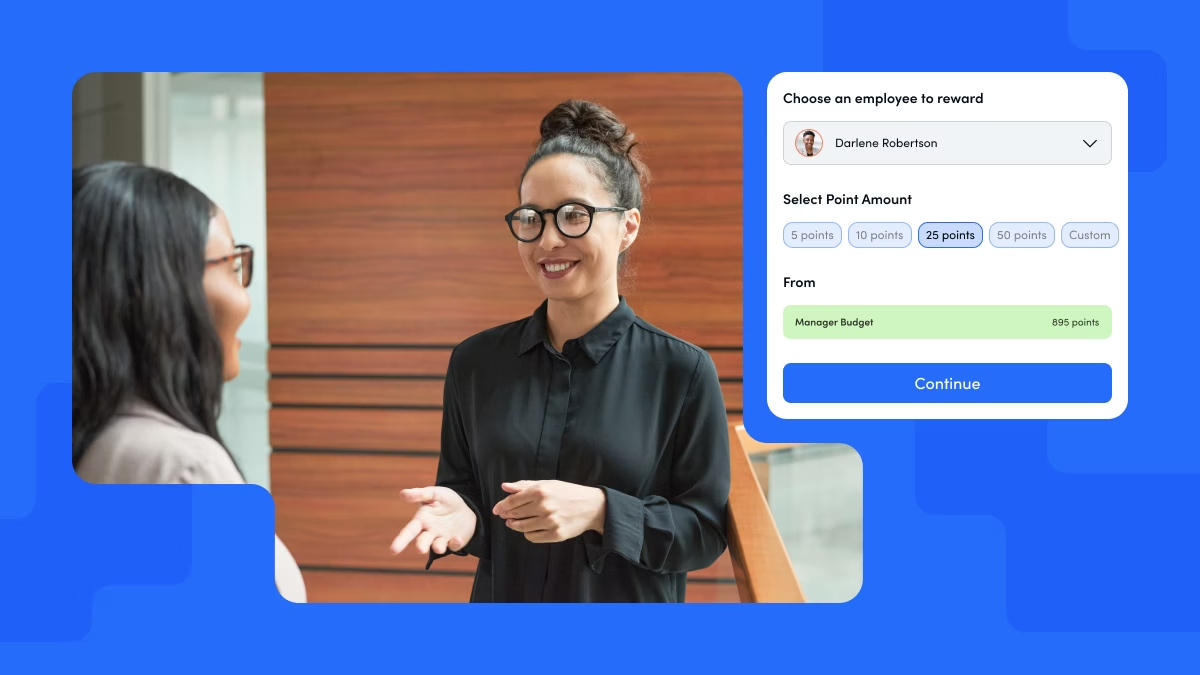
Awardco’s recognition tool makes it easy to reinforce company values to deepen work’s purpose, recognize employee strengths, and reward employee development.
What long-term engagement really means
With that background in mind, let’s dive into what Jenny and Alicia had to say from their personal experiences with engagement and recognition at their workplaces.
For both leaders, lasting engagement goes beyond participation metrics.
For Jenny, it comes down to mattering. Belonging is important, but mattering is deeper. It is the feeling that your absence would be noticed, that your work has weight, and that your presence contributes to something larger.
For Alicia, long-term engagement means ongoing connection across a highly diverse workforce. Cardinal Health employees range from corporate teams to warehouse associates to frontline healthcare delivery roles. Engagement only works if recognition reaches everyone consistently, not just once at launch.

Recognition works best across the entire employee lifecycle
Both organizations embed recognition from day one and reinforce it at key moments.
At Cardinal Health, recognition starts during the first week and continues through:
- early check-ins at 30 and 90 days
- birthdays and milestones
- incentive programs tied to community impact, well-being, and peer support
The goal is to make recognition habitual, not transactional. Employees learn quickly that recognition is something they participate in, not something that happens to them.
Citizens Business Bank follows a similar approach, layering recognition into existing HR touchpoints rather than introducing it as a standalone tool. New hires are welcomed digitally and then personally contacted by a volunteer welcoming committee. Every anniversary is recognized, not just milestone years. Non-monetary recognition sits alongside points-based programs to keep appreciation frequent and authentic.
Non-monetary recognition creates momentum
One of the most surprising insights shared was the impact of recognition without points.
Citizens Business Bank launched a peer-to-peer program tied to core values with no rewards attached. In the first week alone, more than 300 recognitions were sent. That early adoption showed something important: people want to recognize each other. They do not always need an incentive to do it.
At Cardinal Health, incentive programs serve a similar purpose. Self-driven recognition ensures employees are seen even when a manager might miss a moment. This is especially critical in large, distributed organizations where visibility is uneven.
Deskless and frontline workers require different access
For Cardinal Health, accessibility was a deciding factor in their recognition strategy.
Many employees do not have corporate email addresses or easy desktop access. Features like personal email notifications, mobile access, and A-Pay Cards helped close that gap. Employees could use rewards immediately in their daily lives instead of navigating extra steps.
Recognition champions played a critical role here. Local ambassadors helped translate the program for their sites, answered questions, and encouraged adoption in ways a central team could not do alone.
Champions turn programs into movements
Both leaders emphasized the importance of ambassadors.
At Citizens Business Bank, engagement councils made up of volunteers drive communication, celebrate peers, and keep recognition visible. These groups shape campaigns, write internal spotlights, and model the behaviors they want others to follow.
At Cardinal Health, champions are identified by HR business partners and operational leaders. They receive training, ongoing communication, and simple data like login reports so they can support adoption locally.
The common thread: engagement scales through people, not platforms.
Data builds credibility and unlocks buy-in
Recognition became easier to defend and expand once leaders could connect it to data.
Citizens Business Bank saw steady year-over-year increases in engagement scores, with recognition moving from one of the lowest-rated areas to one of the strongest. High participation rates in engagement surveys gave leaders confidence that the feedback reflected reality.
Cardinal Health reported more than a 300 percent increase in recognition activity compared to their previous platform. The number of employees giving recognition also rose sharply, showing that appreciation was no longer concentrated among a small group.
Data strengthened storytelling, not weakened it.
Keeping engagement from going stale
Neither organization rushed to launch everything at once. Instead, they focused on pacing.
- Start with a few foundational programs
- Layer in new features aligned to business priorities
- Reinforce through education and manager training
- Keep introducing small changes to maintain interest
Both leaders stressed that recognition is never finished. It evolves as the organization evolves.
17 creative employee engagement ideas for 2026
After reading about the experiences of Jenny and Alicia, you may be inspired to make changes directed at boost engagement levels in your workplace. But what are the specifics for accomplishing that?
These are the strategies that will help build feelings of purpose, trust, growth, and recognition in your organization for 2026 and beyond.
Robust monetary and non-monetary recognition programs
Recognition isn’t a nice-to-have—it’s the strategic cornerstone that holds up the rest of your engagement strategies. Recent research has proven that recognition is the strongest driver of engagement and is a key driver in the workplace, and when managers are good at recognizing, employees are 40% more engaged.
The best part is, recognition doesn’t have to be complex or expensive to be effective. Here are ideas for both monetary and non-monetary recognition programs:
- Service awards: Break away from traditional plaques or trophies every five years, and offer personalized recognition for every service award. Awardco’s service award feature lets you offer tailored reward amounts and automates the process to make it easy.
- Birthdays and personal milestones: Never miss a birthday, a graduation, a marriage, or similar big events. Offer points and access to a custom catalog designed to fit each milestone.
- Peer-to-peer: Allow employees to formally recognize each other for the little things they do for each other each day. Gratitude from colleagues is a big motivator, no budget needed.
- Incentives: Drive wellness, productivity, safe behaviors, personal growth, and more with rewarding incentives.
- Spirit week: Design a week full of fun games, activities, contests, and raffles, and manage everything in one place.
- Manager-driven value spotlights: Let managers recognize their employees for exemplifying company values in their work and behaviors. Reinforce values and show that managers truly care.

Growth opportunities personalized to employees’ goals
Title bumps are great, but when an employee’s responsibilities don’t fit what they enjoy or aspire to, work can feel meaningless.
Employees need to see a path of growth for them to hit their personal goals, learn the skills they’re interested in, and reach the positions they hope to reach.
Strategies to accomplish this include:
- Quarterly review cycles where managers can sit down with employees and give them feedback about where they’re excelling and where they can improve.
- Monthly manager discussions about employee goals and growth
- Bi-annual review cycles driven by the company, that reward employees with merit increases based on manager and colleague feedback.
- Development resources, such as a stipend for courses, a LinkedIn Learning membership, or a robust internal mentorship system.
When organizations invest in the growth of their employees, they’re 11% more profitable and 2X more likely to retain their employees. It’s that simple.
True work-life balance that fits any lifestyle
Stress and burnout are the ultimate killers of employee engagement. 77% of Americans report feeling stressed at work in the last month, and 57% indicate they’ve felt burned out because of work-related stress.
Here are ways you can minimize stress and eliminate burnout at work:
- Invest in flexible arrangements: Allow remote work in some capacity. For positions that don’t work with remote work, allow flexible start times or end times. Give employees the autonomy to choose when and where they work best.
- Offer sufficient time off: Employees should never feel bad about taking time off to recharge. Whether it’s a day to attend a child’s recital or a two-week break for a much-needed vacation, empower employees to step back when they need to.
- Support employee interests: Employees have a life outside of work—and when their work allows them to indulge in and share those interests, they’ll love you for it. Personal project time, hobby lunches, and clubs are great ideas.
- Build effective wellness programs: Wellness programs should include mental, physical, and financial wellbeing. Awardco lets you build custom wellness programs, complete with amazing rewards, to drive any healthy behaviors.
Two-way feedback that builds trust
Open top-down communication is vital, but so is bottom-up communication channels that allow employees to give feedback, share ideas, and ask questions (knowing they’ll get answers). There’s a reason that companies with effective internal communication systems are 3.5x more likely to have better results and 50% more likely to have lower turnover.
Here are communication strategies that will make communication more effective in your workplace:
- Set up regular anonymous surveys: Employees should have an avenue to share their honest thoughts while knowing their responses are anonymous.
- Host quarterly leadership Q&A sessions: Foster open communication from the very top by allowing employees to ask the executive team questions. Make sure difficult questions aren’t ignored.
- Always respond to feedback: When possible, implement changes based on common employee feedback. This shows that the company listens and is willing to change. When change isn’t feasible, have leadership explain why.
Improve employee engagement for better business results
These employee engagement ideas are designed to holistically improve the employee experience, alleviating stressors and frustrations to allow employees to focus on what they enjoy at work.
While employee engagement has dropped to an 11-year low of 30%, you can buck the trend and enjoy benefits such as higher productivity, lower turnover, reduced absenteeism, and overall better productivity.
Awardco allows you to not only gather employee engagement data, but act on it with customizable recognition programs, powerful incentives, worldwide rewards, personalized perks, and more. Get a demo to see for yourself. And you can watch the recording of Jenny and Alicia's panel here.






.svg)








.svg)